MinuteRead
30 min
Book summary
by Yuen Yuen Ang
Premium summary · Opens in the app · 30 min read
Every year, billions of dollars flow into development programs designed to lift poor countries out of poverty. The prescriptions are familiar: establish the rule of law, protect property rights, eliminate corruption, build professional bureaucracies, and create transparent institutions. The logic seems unassailable. Wealthy countries have these things. Poor countries lack them. Therefore, poor countries must acquire them before they can grow.
**Author:** Yuen Yuen Ang
**Estimated Reading Time:** 45 minutes
**What You'll Learn:**
* Why development is not a linear path from poverty to wealth * How "weak" institutions can become unexpected engines of growth * The three-step formula that transformed China's economy * Why directed improvisation matters more than rigid planning * How regional inequality can paradoxically drive national success
**Who This Book Is For:**
This book is for anyone who has ever wondered why some countries grow rich while others remain poor. It is for policymakers frustrated by cookie-cutter development prescriptions that fail in practice. It is for entrepreneurs, students of political economy, and curious readers who want to understand how China achieved the largest poverty reduction in human history without following the rules that Western experts insisted were necessary. If you have ever suspected that the standard advice about good governance and strong institutions might be incomplete, this book will give you a new way of seeing the problem.
Every year, billions of dollars flow into development programs designed to lift poor countries out of poverty. The prescriptions are familiar: establish the rule of law, protect property rights, eliminate corruption, build professional bureaucracies, and create transparent institutions. The logic seems unassailable. Wealthy countries have these things. Poor countries lack them. Therefore, poor countries must acquire them before they can grow. But there is a problem. This formula has failed repeatedly across the developing world. Countries that adopted textbook reforms often stagnated. Meanwhile, countries that defied the prescriptions sometimes flourished. Nowhere is this paradox more striking than in China. When China began its economic reforms in 1978, it was one of the poorest countries on earth. Its institutions were, by any Western standard, deeply flawed. Property rights were insecure. The legal system was weak. Corruption was rampant. The bureaucracy was enormous, unwieldy, and frequently predatory. According to conventional development theory, China should have remained trapped in poverty. Instead, China engineered the most dramatic economic transformation in modern history. Over four decades, it lifted more than 800 million people out of extreme poverty. It built cities, highways, ports, and industrial zones at a pace unprecedented in human experience. It became the world's second-largest economy and its largest manufacturing power. And it did all this while maintaining institutions that Western experts continued to describe as weak, opaque, and unaccountable. How is this possible? Yuen Yuen Ang, a political scientist at the University of Michigan, spent years wrestling with this question. Her answer challenges the fundamental assumptions of development economics. The problem, she argues, is not that China succeeded despite its weak institutions. The problem is that our understanding of institutions and development is wrong. The conventional view treats development as a…
Continue reading in the MinuteRead app
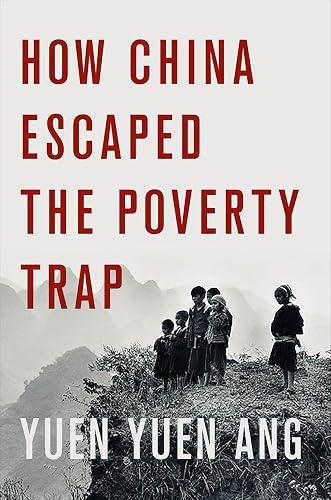
Get the complete 30-minute summary of How China Escaped the Poverty Trap
Get the complete summary in the appDevelopment is a coevolutionary process between states and markets, not a linear sequence from poverty to wealth.
Weak institutions can be harnessed to build markets where none exist. They are raw materials, not just obstacles.
Strong institutions are a product of growth, not a prerequisite. Markets stimulate institutional development, not the ot
The three-step formula: harness weak institutions to build markets, emerging markets stimulate strong institutions, stro
Directed improvisation combines top-down direction with bottom-up experimentation. The center sets goals; the periphery
The balance between variety and uniformity is crucial. Too much variety leads to chaos; too much uniformity stifles inno
"How China Escaped the Poverty Trap" is a strong fit if you want practical ideas around china, economics, politics, especially themes like development is a coevolutionary process between states and markets, not a linear sequence from poverty to wealth; weak institutions can be harnessed to build markets where none exist. they are raw materials, not just obstacles. The MinuteRead summary distills these concepts into a focused read, whether you're deciding whether to buy the book or applying its lessons at work.
Motivated to help readers with in fact, Yuen Yuen Ang wrote “How China Escaped the Poverty Trap” to package those ideas for a fast, focused read. In “How China Escaped the Poverty Trap”, Yuen Yuen Ang focuses on in fact. Through “How China Escaped the Poverty Trap”, Yuen Yuen Ang distills the core ideas on china into lessons readers can absorb in a single short sitting. Readers turn to this work when they want Yuen Yuen Ang's perspective on the subject without working through the entire original…
Continue Reading
Access the complete 30-minute summary and thousands more nonfiction books in the MinuteRead app.

Continue reading the complete summary in the MinuteRead app.