MinuteRead
30 min
Book summary
by Chris Wiggins
Premium summary · Opens in the app · 30 min read
Every day, you generate data. Your phone records where you go. Your searches reveal what you wonder. Your purchases expose what you desire. Your social media activity maps your relationships, your moods, your political leanings. This data feeds systems that predict your behavior, target your attention, and shape your choices.
**Author:** Chris Wiggins
**Estimated Reading Time:** 45 minutes
**What You'll Learn:**
How the modern data age emerged from centuries of political ambition, scientific rivalry, wartime necessity, and commercial competition. You will understand why data is never neutral, how statistical methods shaped social policy for better and worse, and what the history of data reveals about the choices we face today.
**Who This Book Is For:**
Anyone who works with data, lives under its influence, or wants to understand how we arrived at a world where algorithms shape what we see, what we buy, and how we are governed. No technical background required.
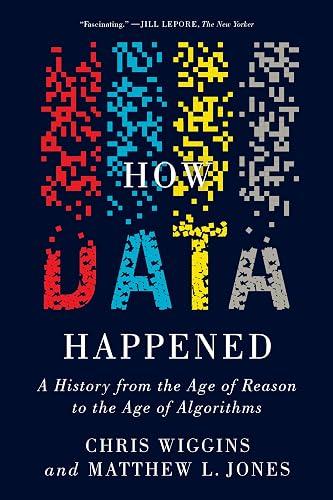
Every day, you generate data. Your phone records where you go. Your searches reveal what you wonder. Your purchases expose what you desire. Your social media activity maps your relationships, your moods, your political leanings. This data feeds systems that predict your behavior, target your attention, and shape your choices. It feels new. It feels unprecedented. It feels like something that arrived with smartphones and social media, with Silicon Valley and the cloud. But data has a history. And that history matters more than most people realize. The word "statistics" comes from the German word *Statistik*, which originally meant "the science of the state." Before statistics meant numbers, before it meant probability distributions and regression models, it meant something simpler and more political: knowledge about a nation and its resources. The first statisticians were not mathematicians. They were civil servants, bureaucrats, and scholars tasked with answering a single question: What does the state possess? This origin story matters because it reveals something essential about data. Data has never been neutral. Data has never been merely descriptive. From its earliest days, data has been collected for purposes, by people with interests, to serve particular ends. The questions we ask with data, the categories we create, the measurements we take, and the conclusions we draw all reflect choices made by humans with power, priorities, and blind spots. Chris Wiggins, a professor at Columbia University, wrote *How Data Happened* to excavate this history. He wants readers to understand that the data-driven world we inhabit did not emerge inevitably from technological progress. It emerged from specific decisions made by specific people in specific historical moments. Kings needed to tax. Generals needed to decode. Advertisers needed to persuade. Companies needed to predict. Understanding this history changes how you see the present. When you know that the census was created to allocate political power, you see why questions about who counts and how they are counted remain contested. When you know that statistical methods were used to justify racial hierarchies, you understand why algorithms can reproduce discrimination even when no one intends them to.…
Continue reading in the MinuteRead app
Get the complete 30-minute summary of How Data Happened
Get the complete summary in the appData is made, not found. Every dataset reflects choices made by people with interests.
Statistics began as knowledge of the state, and the connection between data and power persists.
The categories used to count people are political choices with real consequences.
The tools of data science carry the traces of their origins, including origins in eugenics.
Correlation is not causation, and this lesson remains central to data analysis.
Wartime codebreaking drove the development of data processing and machine learning.
"How Data Happened" is a strong fit if you want practical ideas around history, technology, science, especially themes like data is made, not found. every dataset reflects choices made by people with interests; statistics began as knowledge of the state, and the connection between data and power persists. The MinuteRead summary distills these concepts into a focused read, whether you're deciding whether to buy the book or applying its lessons at work.
Motivated to help readers with statistics was originally knowledge of the state and its resources, Chris Wiggins wrote “How Data Happened” to package those ideas for a fast, focused read. In “How Data Happened”, Chris Wiggins focuses on statistics was originally knowledge of the state and its resources. Through “How Data Happened”, Chris Wiggins distills the core ideas on history into lessons readers can absorb in a single short sitting. Readers turn to this work when they want Chris Wiggins's p…
Continue Reading
Access the complete 30-minute summary and thousands more nonfiction books in the MinuteRead app.

Continue reading the complete summary in the MinuteRead app.