MinuteRead
30 min
Book summary
Premium summary · Opens in the app · 30 min read
Most educated people hold a clear mental picture of the Middle Ages. It is a thousand-year gap between classical antiquity and the Renaissance, a period when superstition smothered reason, when priests burned scientists, and when the Catholic Church kept Europe in darkness. This picture is not merely oversimplified. It is substantially false.
**Author:** Thomas E. Woods Jr.
**Estimated Reading Time:** 45 minutes
**What You'll Learn:** How the Catholic Church preserved classical knowledge after Rome's fall, invented the university, laid the philosophical foundations for modern science, developed international law and human rights, revolutionized charity and health care, created Western legal concepts, and shaped economic thought centuries before Adam Smith.
**Who This Book Is For:** Anyone who has heard that the Middle Ages were a period of darkness and ignorance. Anyone curious about where Western institutions actually came from. Anyone willing to examine historical evidence that challenges deeply held assumptions about the Church's relationship with progress, science, and civilization.
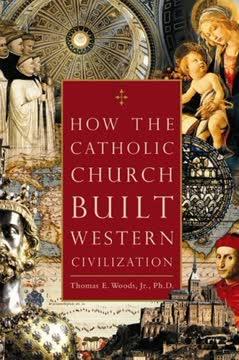
Most educated people hold a clear mental picture of the Middle Ages. It is a thousand-year gap between classical antiquity and the Renaissance, a period when superstition smothered reason, when priests burned scientists, and when the Catholic Church kept Europe in darkness. This picture is not merely oversimplified. It is substantially false. Thomas E. Woods Jr. wrote this book to correct a historical record that has been badly distorted. The distortion did not happen by accident. Enlightenment thinkers deliberately portrayed the medieval Church as an enemy of progress to justify their own project of secularization. Protestant historians added their own hostile narratives. By the nineteenth century, the idea that the Church had retarded civilization became standard academic fare. It remains so today. The problem is that specialists have known for decades that this narrative cannot withstand scrutiny. Historians of science have documented how Catholic theology provided the philosophical assumptions that made modern science possible. Historians of law have traced Western legal concepts to canon law. Historians of economics have discovered sophisticated market analysis among late medieval theologians. But this scholarship rarely reaches the general public. Woods assembles the evidence in one accessible volume. He shows that the Church did not merely preserve fragments of classical civilization. It actively built the institutions, ideas, and practices that became Western civilization. The university, the hospital, international law, the concept of natural rights, the idea that the universe operates according to rational laws discoverable by human reason: all emerged from Catholic intellectual culture. This matters beyond historical accuracy. If the standard narrative is wrong, then many assumptions about the relationship between religion and progress need reexamination. The claim that faith and reason are inherently opposed becomes harder to sustain. The idea that secularization was necessary for scientific and political advancement loses its historical foundation. The book does not argue that the Church was perfect or that every medieval institution was admirable. It argues something more specific: that the Catholic Church was the essential builder of Western civilization, and that recognizing this fact changes how we understand our own intellectual…
Continue reading in the MinuteRead app
Get the complete 30-minute summary of How the Catholic Church Built Western Civilization
Get the complete summary in the appMonasteries preserved classical literature and created the intellectual infrastructure for Europe's recovery.
The Catholic Church invented the university system, including faculties, degrees, and academic freedom.
Catholic theology provided the philosophical assumptions that made modern science possible, especially the doctrine of t
The Church was the primary patron of astronomical research for over six centuries.
Spanish Catholic theologians developed the foundations of international law and universal human rights.
The Church created systematic, institutionalized charity, including the first hospitals.
"How the Catholic Church Built Western Civilization" is a strong fit if you want practical ideas around history, religion, catholic, especially themes like monasteries preserved classical literature and created the intellectual infrastructure for europe's recovery; the catholic church invented the university system, including faculties, degrees, and academic freedom. The MinuteRead summary distills these concepts into a focused read, whether you're deciding whether to buy the book or applying its lessons at work.
Thomas E. Woods, Jr. is a senior fellow at the Mises Institute and host of The Tom Woods Show. He holds degrees from Harvard and Columbia University. Woods has authored twelve books on history, economics, and politics, including "Real Dissent" and "Nullification." He frequently appears on television and radio programs, and co-hosts the "Contra Krugman" podcast. Woods is also the founder of Liberty Classroom and The Happy Earner, educational platforms focused on history, economics, and online ent…
View all summaries by Thomas E. Woods Jr.Continue Reading
Access the complete 30-minute summary and thousands more nonfiction books in the MinuteRead app.

Continue reading the complete summary in the MinuteRead app.