MinuteRead
30 min
Book summary
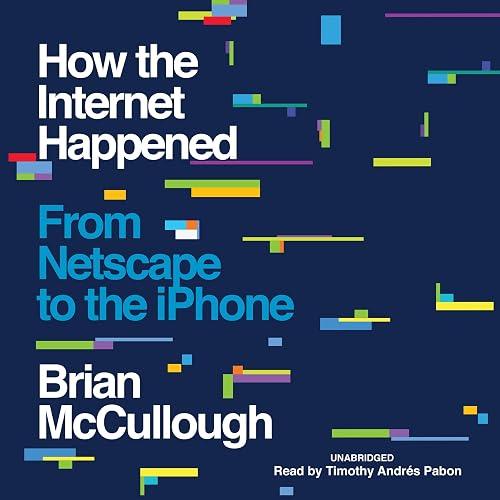
by Brian McCullough
Premium summary · Opens in the app · 30 min read
The internet feels inevitable. It is easy to assume that the connected world we inhabit was always destined to arrive, that the forces of progress made it unavoidable. But that assumption is wrong.
**Author:** Brian McCullough
**Estimated Reading Time:** 45 minutes
**What You'll Learn:**
- How a small team at Netscape ignited the commercial internet - Why Microsoft, AOL, and Google each reshaped the digital landscape - How e-commerce evolved from a risky experiment to a daily habit - What really happened during the dot-com bubble and crash - How social media and the smartphone changed everything - The patterns that explain why certain internet companies won
**Who This Book Is For:**
Anyone who uses the internet daily and wants to understand how it came to be. Entrepreneurs who want to learn from the successes and failures of the first digital pioneers. Students of technology who need context for today's platforms. And curious readers who remember the screeching sound of a dial-up modem and wonder how we got from there to here.
The internet feels inevitable. It is easy to assume that the connected world we inhabit was always destined to arrive, that the forces of progress made it unavoidable. But that assumption is wrong. The internet happened because specific people made specific decisions at specific moments. It happened because a group of young programmers in Illinois built a browser that made the web feel alive. It happened because the most powerful software company in the world almost missed the shift entirely and then spent billions to catch up. It happened because a company most people dismissed as a glorified online service provider mailed millions of CDs to American homes and taught an entire generation how to get online. Brian McCullough spent years interviewing the people who built the commercial internet. He talked to founders, engineers, investors, and executives who were there when the decisions were made. What emerges from those conversations is not a dry technical history but a human story of ambition, fear, miscalculation, and occasional brilliance. The problem with most accounts of the internet's rise is that they compress decades of messy history into a tidy narrative. They make it seem as though the winners were obvious from the start and the losers were foolish. But the reality was far more complicated. At every stage, the future was uncertain. Smart people made terrible bets. Seemingly unstoppable companies collapsed. Tiny startups with no revenue became the most valuable corporations on earth. Why does this matter today? Because the patterns that shaped the internet's first decades are still operating. The dynamics of platform competition, network effects, and technological disruption have not changed. Understanding how Netscape briefly conquered the world and then lost everything to Microsoft helps explain why today's dominant platforms are so paranoid about losing their position. Understanding how Google's search algorithm defeated dozens of competitors helps explain why artificial intelligence…
Continue reading in the MinuteRead app
Get the complete 30-minute summary of How the Internet Happened
Get the complete summary in the appThe internet was built by people figuring it out as they went along, not by visionaries who saw the future clearly.
Netscape proved that the internet could be a mass-market platform and that speed could be a competitive advantage.
Microsoft almost missed the internet, then used its monopoly power to win the browser wars, but could not win every batt
AOL brought millions of Americans online by making the internet simple and accessible.
The dot-com bubble was driven by hype and speculation, and the crash cleared out weak companies while strengthening stro
Amazon and eBay proved that people would buy things online by building trust and embracing the internet's unique capabil
"How the Internet Happened" is a strong fit if you want practical ideas around history, technology, business, especially themes like the internet was built by people figuring it out as they went along, not by visionaries who saw the future clearly; netscape proved that the internet could be a mass-market platform and that speed could be a competitive advantage. The MinuteRead summary distills these concepts into a focused read, whether you're deciding whether to buy the book or applying its lessons at work.
Motivated to help readers with "Netscape had effectively launched an era when you could finish a product one day and have hundreds of, Brian McCullough wrote “How the Internet Happened” to package those ideas for a fast, focused read. In “How the Internet Happened”, Brian McCullough focuses on "Netscape had effectively launched an era when you could finish a product one day and have hundreds of. Through “How the Internet Happened”, Brian McCullough distills the core ideas on history into lesso…
Continue Reading
Access the complete 30-minute summary and thousands more nonfiction books in the MinuteRead app.

Continue reading the complete summary in the MinuteRead app.