MinuteRead
30 min
Book summary
by Clint Smith
Premium summary · Opens in the app · 5 min read
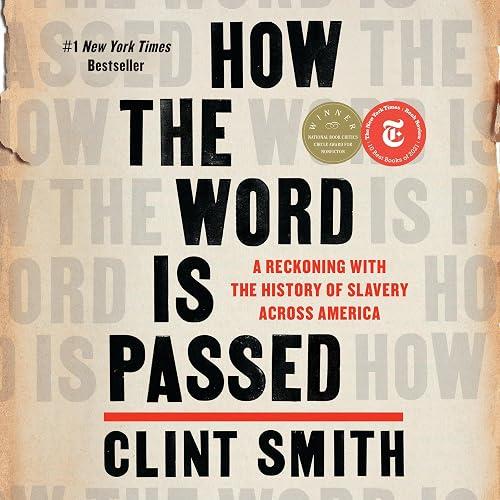
How the Word Is Passed talks about the cult of slavery that overshadows a large part of America’s history and how past experiences often dictate the future, or in our case, even the present, which is why we as a people should look into our history and learn from our ancestor’s mistakes to build a better world.
How the Word Is Passed talks about the cult of slavery that overshadows a large part of America’s history and how past experiences often dictate the future, or in our case, even the present, which is why we as a people should look into our history and learn from our ancestor’s mistakes to build a better world.
The author begins his journey in New Orleans, which is both his hometown and a landmark in black people’s history. From street and park names to public statues of Confederate leaders (Robert E. Lee’s statue) and buildings (the Omni Royal Orleans Hotel), the history of slavery remains engraved in the public domains.
Clint was surprised to find out that his hometown had so much history tied to black communities. People were sold and enslaved just two hundred years ago in these hotels, parks, and streets by the leaders whose statues are still kept under maintenance.
In a world dominated by democracies, this was unacceptable for the author. He decided to take his quest to other sites and explore the roots of slavery. How deep were they? The journey continues to Monticello, the former home of Thomas Jefferson.
Here he discovered the old plantation fields as a guide walks them through the history of slavery. The tour focused mainly on Jefferson’s life and the history of slavery. It included his relationship with a 16-year-old slave and the trade they did with black people
The USA rose to fame as the land of opportunity, freedom, justice, capitalism, and luxury. However, it wasn’t always like this. To build today’s infrastructure, the justice system, community values, and overall the country itself, white communities exposed and put at risk many black lives. And often only for the benefit of the white communities.
The author’s journey takes him to the Whitney Plantation and the Angola prison. There, he discovers that white supremacists were exploiting black slaves for reproduction, railroad work, profits from the slave trade, and many other horrific acts.
Clint then has a breakthrough discovery. Wherever he goes, he finds that the lavish and the developed communities emerge from the sweat of black men and women. While men were used to carrying out physical-demanding tasks such as building railroads, buildings, and plantations, women were used for reproduction.
They then sold their babies for profit. The most gruesome part was that only white men impregnated the women. And were also the only ones allowed to do so. That means that eventually, they’d be selling their offspring. Clint was horrified by the history that was hiding behind everything he touches, yet intrigued to pursue it even more
Continue reading in the MinuteRead app
Get the complete 5-minute summary of How the Word Is Passed
Get the complete summary in the appFrom street names to statues and buildings, black people’s history fills the USA.
We now know that the lavishness we know in the USA emerges from the lifelong work of the black community.
Slavery is a thing of the past, but its consequences remain alive in the present.
"How the Word Is Passed" is a strong fit if you want practical ideas around culture, future, history, especially themes like from street names to statues and buildings, black people’s history fills the usa; we now know that the lavishness we know in the usa emerges from the lifelong work of the black community. The MinuteRead summary distills these concepts into a focused read, whether you're deciding whether to buy the book or applying its lessons at work.
Clint Smith is the author of the narrative nonfiction book, "How the Word Is Passed: A Reckoning With the History of Slavery Across America," which was a #1 New York Times bestseller, winner of the National Book Critics Circle Award for Nonfiction, the Hillman Prize for Book Journalism, the Stowe Prize and selected by the New York Times as one of the 10 best books of 2021. He is also the author of the poetry collection "Counting Descent," which won the 2017 Literary Award for Best Poetry Book fr…
View all summaries by Clint SmithContinue Reading
Access the complete 5-minute summary and thousands more nonfiction books in the MinuteRead app.

Continue reading the complete summary in the MinuteRead app.