MinuteRead
30 min
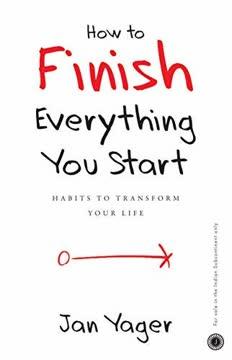
Book summary
by Jan Yager
Premium summary · Opens in the app · 30 min read
There is a quiet epidemic running through modern life. It does not announce itself with dramatic symptoms. It does not appear in medical journals or public health warnings. Yet it touches nearly everyone, sapping energy, eroding confidence, and leaving behind a trail of abandoned ambitions.
**Author:** Jan Yager
**Estimated Reading Time:** 45 minutes
**What You'll Learn:**
* Why unfinished tasks have become an epidemic in modern life * The 22 beliefs, behaviors, and habits that prevent you from finishing * A systematic method for completing what matters most * How to prioritize, delegate, and say no without guilt * When it is actually wise to walk away from a project
**Who This Book Is For:**
Anyone who has ever started a project with genuine enthusiasm only to watch it stall, fade, or collapse under the weight of competing demands. If you have a drawer full of half-finished journals, a hard drive cluttered with abandoned manuscripts, or a list of goals that never quite materialized, this book speaks directly to your experience.
There is a quiet epidemic running through modern life. It does not announce itself with dramatic symptoms. It does not appear in medical journals or public health warnings. Yet it touches nearly everyone, sapping energy, eroding confidence, and leaving behind a trail of abandoned ambitions. The epidemic is the failure to finish. Consider the evidence. Home improvement projects that stall halfway through, leaving rooms unusable for months. Degrees and certifications started with excitement but never completed. Novels, screenplays, and business plans that exist only as fragments. Exercise programs abandoned after three weeks. Language learning apps opened daily for a month, then forgotten entirely. These are not isolated incidents. They form a pattern that repeats across personal and professional life, across age groups and income levels, across every domain where human intention meets sustained effort. The consequences are more serious than most people acknowledge. Each unfinished task carries a hidden cost. There is the obvious waste of time and money invested in the attempt. There is the opportunity cost of what might have been accomplished instead. There is the psychological burden of knowing something remains incomplete, a quiet weight that accumulates with every abandoned project. But the deepest cost is to self-trust. Every time you start something and fail to finish it, you teach yourself a lesson: your intentions do not reliably predict your actions. Over time, this erodes the confidence required to begin anything meaningful. You become hesitant to commit. You lower your ambitions. You settle for smaller goals because experience has taught you that larger ones will likely remain unfulfilled. Jan Yager has spent decades studying this phenomenon. Her research spans sociology, time management, and the psychology of achievement. What she discovered is that the failure to finish is not a character flaw. It is not laziness. It is not a lack of discipline in any fundamental sense. It is a syndrome with identifiable causes, predictable patterns, and practical solutions. The problem is…
Continue reading in the MinuteRead app
Get the complete 30-minute summary of How to Finish Everything You Start
Get the complete summary in the appThe failure to finish is a pattern with identifiable causes, not a character flaw.
Self-awareness is the foundation of finishing. Understand why you are not finishing before trying to change.
Procrastination is information. Identify the root cause rather than blaming yourself.
Perfectionism prevents completion. Give yourself permission to be imperfect.
Prioritize ruthlessly. Focus on what matters most and let go of the rest.
Use deadlines strategically. They create structure, urgency, and momentum.
"How to Finish Everything You Start" is a strong fit if you want practical ideas around productivity, self help, personal development, especially themes like the failure to finish is a pattern with identifiable causes, not a character flaw; self-awareness is the foundation of finishing. understand why you are not finishing before trying to change. The MinuteRead summary distills these concepts into a focused read, whether you're deciding whether to buy the book or applying its lessons at work.
Jan Yager is a prolific author with a diverse academic background, holding degrees in fine arts, criminal justice, and sociology. Dr. Jan Yager has written over 45 books across various genres, including nonfiction, fiction, children's books, and poetry. Her professional experience spans editing, publishing, and consulting roles at prominent publishing houses. Yager's works have been published by major publishers such as Simon & Schuster, Scribner, and Penguin Random House. She also founded her o…
View all summaries by Jan YagerContinue Reading
Access the complete 30-minute summary and thousands more nonfiction books in the MinuteRead app.

Continue reading the complete summary in the MinuteRead app.