MinuteRead
30 min
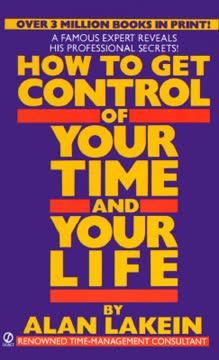
Book summary
by Alan Lakein
Premium summary · Opens in the app · 30 min read
Alan Lakein wrote this book in 1973, but its central message has only grown more urgent. We live in an age of unprecedented distraction. Notifications interrupt our thoughts. Calendars fill with meetings that accomplish little. The boundary between work and life has blurred. Yet the fundamental challenge remains exactly what Lakein identified decades ago: most people do not consciously choose how they spend their time. They react. They drift. They let the loudest demand win.
**Author:** Alan Lakein
**Estimated Reading Time:** 45 minutes
**What You'll Learn:**
* Why controlling your time is the single most important skill for shaping your life * How to define lifetime goals that guide every daily decision * The ABC priority system that separates high-impact work from busywork * Practical methods for overcoming procrastination, managing interruptions, and saying no * How to build a personal time management system that lasts
**Who This Book Is For:**
This book is for anyone who feels overwhelmed by demands, frustrated by constant busyness, or uncertain whether their daily efforts are leading anywhere meaningful. It is for professionals drowning in email, parents juggling competing responsibilities, students facing large projects, and anyone who has ever reached the end of a day wondering where the hours went. If you have ever said "I don't have time" while suspecting the real problem is something deeper, this book will help you see clearly.
Alan Lakein wrote this book in 1973, but its central message has only grown more urgent. We live in an age of unprecedented distraction. Notifications interrupt our thoughts. Calendars fill with meetings that accomplish little. The boundary between work and life has blurred. Yet the fundamental challenge remains exactly what Lakein identified decades ago: most people do not consciously choose how they spend their time. They react. They drift. They let the loudest demand win. The problem is not a lack of hours. Everyone gets the same twenty-four each day. The problem is a lack of clarity about what those hours should accomplish. Without that clarity, time slips away into activities that feel urgent but are ultimately unimportant. Days become weeks, weeks become months, and suddenly years have passed without meaningful progress toward the life you actually wanted. Lakein's approach is different from most time management advice because it starts with a simple but uncomfortable truth: time is life. Every minute you spend is a minute of your life you will never get back. This is not a metaphor. It is a literal fact. When you waste an hour, you have not wasted an abstract resource. You have spent an irreplaceable portion of your existence. When you use an hour well, you have invested it in something that matters to you. This reframing changes everything. Time management stops being about productivity tricks and becomes about living deliberately. The question is not "How can I get more done?" but "What is worth doing at all?" Lakein forces you to confront that question directly, then gives you practical tools to act on the answer. The book is built around several core practices. First, you define your lifetime goals. This sounds grand, but Lakein makes it concrete: write down…
Continue reading in the MinuteRead app
Get the complete 30-minute summary of How to Get Control of Your Time and Your Life
Get the complete summary in the appTime is life. How you spend your time is how you spend your life.
Write down your lifetime goals. Review them regularly. Let them guide your daily decisions.
Use the ABC system to prioritize tasks. Do A tasks before B tasks, and B tasks before C tasks.
Ask "What is the best use of my time right now?" throughout the day.
Plan each day before it begins. Planning brings the future into the present.
Break overwhelming tasks into five-minute pieces using the Swiss Cheese method.
"How to Get Control of Your Time and Your Life" is a strong fit if you want practical ideas around self help, productivity, business, especially themes like time is life. how you spend your time is how you spend your life; write down your lifetime goals. review them regularly. let them guide your daily decisions. The MinuteRead summary distills these concepts into a focused read, whether you're deciding whether to buy the book or applying its lessons at work.
Alan Lakein is a renowned time management expert and author. He gained prominence with his book "How to Get Control of Your Time and Your Life," published in 1973. Lakein's work has influenced many, including high-profile figures like President Bill Clinton. His approach to time management focuses on prioritization, goal-setting, and effective planning. Lakein introduced concepts like the 80/20 rule and the importance of asking, "What is the best use of my time right now?" His ideas have been wi…
View all summaries by Alan LakeinContinue Reading
Access the complete 30-minute summary and thousands more nonfiction books in the MinuteRead app.

Continue reading the complete summary in the MinuteRead app.