MinuteRead
30 min
Most people believe that the ability to make conversation is something you are born with. You either have the gift of gab or you do not. You are either naturally outgoing or permanently shy. This belief is comforting because it lets us off the hook. If conversation skills are innate, then we do not have to work at them. We can simply accept our limitations and avoid situations that make us uncomfortable.
**Author:** Don Gabor
**Estimated Reading Time:** 45 minutes
**What You'll Learn:**
* How to use body language to appear approachable and confident * Simple techniques for starting conversations with anyone * How to listen actively and keep conversations flowing naturally * Ways to adapt your style to different personality types * Strategies for building lasting friendships through consistent contact * How to navigate digital communication and cross-cultural conversations
**Who This Book Is For:**
This book is for anyone who has ever stood at the edge of a room full of strangers and felt frozen. It is for people who want to make friends but do not know what to say. It is for professionals who need to network but dread small talk. It is for anyone who has walked away from a conversation thinking, "Why did I say that?" or "Why did I not say anything at all?"
If you have ever felt that making conversation is a mysterious skill that other people seem to possess naturally, this book will show you that it is not a mystery at all. It is a set of learnable techniques, and you can master them.
Most people believe that the ability to make conversation is something you are born with. You either have the gift of gab or you do not. You are either naturally outgoing or permanently shy. This belief is comforting because it lets us off the hook. If conversation skills are innate, then we do not have to work at them. We can simply accept our limitations and avoid situations that make us uncomfortable. Don Gabor challenges this assumption directly. He argues that conversation is not a talent. It is a skill. And like any skill, it can be learned, practiced, and improved. The problem is not that some people lack the ability to connect with others. The problem is that most people were never taught how. Schools teach us to read, write, and calculate. They do not teach us how to introduce ourselves to a stranger, how to keep a conversation going past the first awkward silence, or how to turn a casual acquaintance into a genuine friend. We are expected to figure these things out on our own, and many of us struggle. The cost of this struggle is enormous. Loneliness has become a public health crisis. People report having fewer close friends than previous generations. Social anxiety keeps talented people from advancing in their careers. Romantic relationships fail because partners never learned how to communicate. The inability to connect with others affects every area of life, from professional success to personal happiness. Gabor wrote this book because he recognized that conversation skills are not optional extras. They…
Continue reading in the MinuteRead app
Get the complete 30-minute summary of How To Start A Conversation And Make Friends
Get the complete summary in the appUse the SOFTEN framework: Smile, Open posture, Forward lean, Touch, Eye contact, Nod.
Start conversations with ritual questions based on compliments, objects, or shared situations.
Ask open-ended questions that invite detailed responses.
Listen actively: focus fully, ask follow-up questions, and summarize to show comprehension.
Listen for iceberg statements and respond with open-ended questions to deepen conversations.
Maintain balance: take turns speaking and listening, and share personal information at a similar rate.
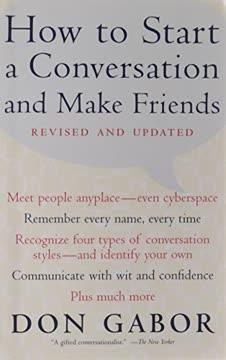
"How To Start A Conversation And Make Friends" is a strong fit if you want practical ideas around self help, communication, psychology, especially themes like use the soften framework: smile, open posture, forward lean, touch, eye contact, nod; start conversations with ritual questions based on compliments, objects, or shared situations. The MinuteRead summary distills these concepts into a focused read, whether you're deciding whether to buy the book or applying its lessons at work.
Don Gabor is an author and communication skills expert known for his work on improving social interactions and building relationships. He has written several books on the topic of conversation skills and making friends, with "How to Start a Conversation and Make Friends" being one of his most well-known works. Gabor's approach focuses on practical techniques and strategies that readers can apply in various social situations. He emphasizes the importance of taking initiative, showing genuine inte…
View all summaries by Don GaborContinue Reading
Access the complete 30-minute summary and thousands more nonfiction books in the MinuteRead app.

Continue reading the complete summary in the MinuteRead app.