MinuteRead
30 min
Book summary
Premium summary · Opens in the app · 30 min read
The stock market is one of the few places where the products go on sale and customers run for the exits. When prices fall, shoppers in every other domain rush to buy. But in the financial markets, a declining price triggers panic rather than enthusiasm. This paradox has confounded investors for generations and has cost ordinary people billions of dollars in lost wealth.
**Author:** Lawrence A. Cunningham
**Estimated Reading Time:** 45 minutes
**What You'll Learn:** - Why markets behave irrationally and how to profit from that irrationality - How to evaluate a business the way Benjamin Graham and Warren Buffett do - What separates a genuine investment from a speculation - How to build a durable circle of competence - Which financial metrics actually matter - How to spot accounting manipulation before it costs you money - What to look for in management teams - How to develop the temperament that makes value investing possible
**Who This Book Is For:** This book is for anyone who wants to move beyond market noise and build lasting wealth through intelligent investing. It is for the individual investor tired of chasing trends and losing to emotional decision-making. It is for the professional who wants to understand the foundational principles that have guided the world's most successful investors for nearly a century. It is for anyone who suspects that the daily drama of stock prices has little to do with the actual value of businesses.
The stock market is one of the few places where the products go on sale and customers run for the exits. When prices fall, shoppers in every other domain rush to buy. But in the financial markets, a declining price triggers panic rather than enthusiasm. This paradox has confounded investors for generations and has cost ordinary people billions of dollars in lost wealth. Lawrence Cunningham's book addresses a fundamental question: Why do intelligent, educated, successful people make such consistently poor investment decisions? The answer, he argues, lies not in a lack of information but in a failure of thinking. Most investors approach the market with the wrong mental models. They treat stocks as ticker symbols rather than ownership stakes in real businesses. They respond to price movements rather than business fundamentals. They seek excitement rather than value. The book draws on two towering figures in the history of investing. Benjamin Graham, the father of security analysis, developed the intellectual framework that transformed investing from speculation into a disciplined practice. His student Warren Buffett took those principles and refined them over decades, becoming the most successful investor in history. Together, they represent a tradition of thinking that has proven remarkably durable across market cycles, technological revolutions, and economic transformations. The problem this book addresses is not new. In Graham's era, investors were seduced by the promise of easy riches during the Roaring Twenties, only to be devastated by the Great Depression. In Buffett's era, the dot-com bubble and the financial crisis of 2008 demonstrated that the same irrational forces remain powerful. The names of the hot stocks change. The underlying psychology does not.…
Continue reading in the MinuteRead app
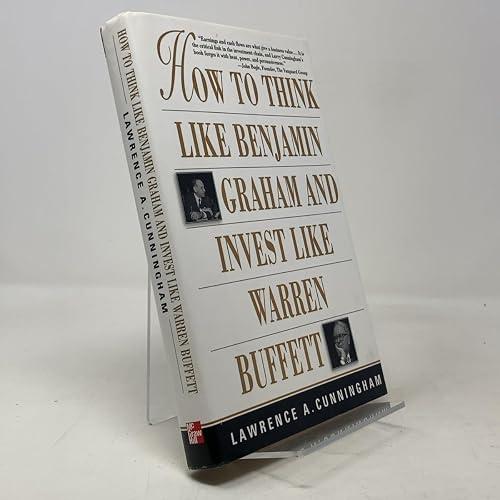
Get the complete 30-minute summary of How to Think Like Benjamin Graham and Invest Like Warren Buffett
Get the complete summary in the appThe market is irrational and driven by emotion. Use its mood swings to your advantage.
Focus on business fundamentals, not market fluctuations. Price is what you pay. Value is what you get.
Invest only within your circle of competence. Saying "I don't know" is a strength.
Demand a margin of safety on every investment. If there is no cushion, there is no investment.
Seek businesses with durable competitive advantages. The moat matters more than the current price.
Assess management integrity and owner orientation. Invest only with people you trust.
"How to Think Like Benjamin Graham and Invest Like Warren Buffett" is a strong fit if you want practical ideas around finance, business, money, especially themes like the market is irrational and driven by emotion. use its mood swings to your advantage; focus on business fundamentals, not market fluctuations. price is what you pay. value is what you get. The MinuteRead summary distills these concepts into a focused read, whether you're deciding whether to buy the book or applying its lessons at work.
Motivated to help readers with 1) Markets are irrational and often driven by emotion, Lawrence A. Cunningham wrote “How to Think Like Benjamin Graham and Invest Like Warren Buffett” to package those ideas for a fast, focused read. In “How to Think Like Benjamin Graham and Invest Like Warren Buffett”, Lawrence A. Cunningham focuses on 1) Markets are irrational and often driven by emotion. Through “How to Think Like Benjamin Graham and Invest Like Warren Buffett”, Lawrence A. Cunningham distills t…
View all summaries by Lawrence A. CunninghamContinue Reading
Access the complete 30-minute summary and thousands more nonfiction books in the MinuteRead app.

Continue reading the complete summary in the MinuteRead app.