MinuteRead
30 min
Book summary
Premium summary · Opens in the app · 30 min read
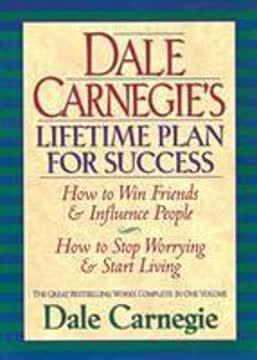
In 1936, Dale Carnegie published a book that would go on to sell over thirty million copies and remain continuously in print for nearly a century. The title promised something audacious: a method for winning friends and influencing people. But the book delivered something far more valuable than manipulation techniques. It delivered a philosophy of human relations grounded in a simple but profound observation about how people actually work.
**Author:** Dale Carnegie
**Estimated Reading Time:** 45 minutes
**What You'll Learn:**
- Why criticism destroys relationships and what to do instead - The fundamental human craving that drives nearly all behavior - How to make people genuinely want to help you - The art of becoming someone others instinctively like and trust - How to change minds without causing resentment - The leadership principles that inspire cooperation rather than resistance
**Who This Book Is For:**
Anyone who works with people, lives with people, or wants to build a meaningful life among people. This book is for the manager who struggles to motivate a team, the salesperson who wants to serve customers better, the parent who wants to raise confident children, and anyone who has ever walked away from a conversation wishing it had gone differently.
In 1936, Dale Carnegie published a book that would go on to sell over thirty million copies and remain continuously in print for nearly a century. The title promised something audacious: a method for winning friends and influencing people. But the book delivered something far more valuable than manipulation techniques. It delivered a philosophy of human relations grounded in a simple but profound observation about how people actually work. Carnegie spent his early career teaching public speaking classes at the YMCA in New York City. He quickly discovered that his students needed something more fundamental than instruction in vocal technique and gesture. They needed to understand why their conversations fell flat, why their colleagues resisted their ideas, why their families seemed perpetually frustrated with them. They needed to understand people. So Carnegie began a systematic investigation. He read everything he could find on human psychology and biography. He interviewed successful leaders, salespeople, and public figures. He tested principles in his classrooms and refined them through years of trial and error. The result was a set of principles so practical and so enduring that they remain as relevant today as they were before the Second World War. The core problem Carnegie identified is this: most people go through life treating other people as obstacles, tools, or afterthoughts. They criticize when things go wrong. They demand rather than persuade. They talk about themselves and wonder why no one listens. They push their own ideas and feel frustrated when others resist. And all the while, they fail to recognize that human beings are not logical machines. We are creatures of emotion, driven by pride, vanity, insecurity, and a deep hunger to feel valued. The alternative Carnegie proposes is not flattery or manipulation. It is a genuine reorientation of attention away from oneself and toward others. It is the recognition that every person you meet carries a sign around…
Continue reading in the MinuteRead app
Get the complete 30-minute summary of How To Win Friends And Influence People (Unabridged)
Get the complete summary in the app**Do not criticize, condemn, or complain.** Criticism is futile and breeds resentment. Seek to understand instead.
**Give honest and sincere appreciation.** The deepest human craving is the desire to feel important. Satisfy it genuinel
**Arouse in others an eager want.** The only way to influence people is to talk about what they want and show them how t
**Become genuinely interested in other people.** You can make more friends in two months by being interested in others t
**Smile and remember names.** A smile is a universal signal of goodwill, and a person's name is the sweetest sound in an
**Be a good listener.** Encourage others to talk about themselves. To be interesting, be interested.
"How To Win Friends And Influence People (Unabridged)" is a strong fit if you want practical ideas around self help, business, psychology, especially themes like **do not criticize, condemn, or complain.** criticism is futile and breeds resentment. seek to understand instead; **give honest and sincere appreciation.** the deepest human craving is the desire to feel important. satisfy it genuinel. The MinuteRead summary distills these concepts into a focused read, whether you're deciding whether to buy the book or applying its lessons at work.
Dale Breckenridge Carnegie was an American writer, lecturer, and developer of self-improvement courses. Born in 1888 in Missouri, he overcame poverty to become a successful salesman and public speaking instructor. Dale Carnegie changed his name's spelling to resemble that of Andrew Carnegie. His most famous work, "How to Win Friends and Influence People," published in 1936, became a bestseller and remains popular today. Carnegie pioneered concepts in self-improvement, salesmanship, and interpers…
View all summaries by Dale CarnegieContinue Reading
Access the complete 30-minute summary and thousands more nonfiction books in the MinuteRead app.

Continue reading the complete summary in the MinuteRead app.