MinuteRead
30 min
Book summary
Premium summary · Opens in the app · 30 min read
Every year, thousands of people sit down to write a novel. Most of them never finish. Of those who do finish, most produce manuscripts that agents reject, publishers ignore, and readers abandon after twenty pages. The gap between wanting to write a novel and actually writing one that works is enormous, and it is not bridged by inspiration alone.
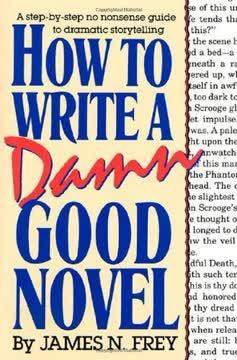
**Author:** James N. Frey
**Estimated Reading Time:** 45 minutes
**What You'll Learn:**
* Why compelling characters are the true foundation of all great fiction * How to construct a premise that gives your novel direction and power * The mechanics of conflict and why struggle reveals character * How to master viewpoint, dialogue, and vivid prose * The rewriting techniques that separate professionals from amateurs
**Who This Book Is For:**
Aspiring novelists who have started stories but never finished them. Writers who sense something is missing from their work but cannot identify what. Anyone who wants to move beyond vague advice like "show, don't tell" and understand the actual craft of storytelling. If you have ever wondered why some novels grip readers from the first page while others fall flat despite interesting plots, this book will show you the difference.
Every year, thousands of people sit down to write a novel. Most of them never finish. Of those who do finish, most produce manuscripts that agents reject, publishers ignore, and readers abandon after twenty pages. The gap between wanting to write a novel and actually writing one that works is enormous, and it is not bridged by inspiration alone. James N. Frey wrote this book because he saw the same problems appearing again and again in the work of his students at the University of California, Berkeley. Talented people with good ideas were producing lifeless manuscripts. They had stories to tell but lacked the tools to tell them. They believed that writing fiction was primarily about having a vivid imagination, when in reality it is about mastering a set of learnable skills. The problem is not a shortage of creativity. The problem is that most aspiring novelists do not understand what actually makes a novel work. They focus on plot twists and clever concepts while neglecting the elements that create genuine reader engagement. They write characters who are collections of traits rather than living beings. They construct scenes that describe events without dramatic tension. They produce dialogue that sounds like real conversation but does nothing to advance the story. Frey's approach is different because he treats novel writing as a craft that can be learned systematically. He does not promise that anyone can become a literary genius. He does promise that anyone willing to study the principles of dramatic storytelling can write a novel that engages readers, creates emotional impact, and feels professionally constructed. His method is practical, specific, and grounded in the analysis of novels that have stood the test of time. The title of this book contains a promise: "damn good." Not experimental, not literary in the academic sense, not merely competent. Damn good. That means a novel…
Continue reading in the MinuteRead app
Get the complete 30-minute summary of How to Write a Damn Good Novel
Get the complete summary in the app**Characters are the foundation.** Create compelling characters with ruling passions, contradictions, and rich inner liv
**Develop a clear premise.** Write a one-sentence statement of the truth your novel demonstrates. Use it to guide every
**Conflict reveals character.** Story is struggle. Put your characters under pressure and let their choices show who the
**Create a crucible.** Give your characters a reason they cannot walk away from the conflict. This keeps the story movin
**Escalate conflict incrementally.** Each scene should raise the stakes and force harder choices. Build pressure until t
**Choose your viewpoint carefully.** Viewpoint controls what readers know and who they identify with. Maintain consisten
"How to Write a Damn Good Novel" is a strong fit if you want practical ideas around writing, reference, how to, especially themes like **characters are the foundation.** create compelling characters with ruling passions, contradictions, and rich inner liv; **develop a clear premise.** write a one-sentence statement of the truth your novel demonstrates. use it to guide every. The MinuteRead summary distills these concepts into a focused read, whether you're deciding whether to buy the book or applying its lessons at work.
James N. Frey is an American author and creative writing instructor born in 1943. He has written both fiction and non-fiction, with his most well-known work being "How to Write a Damn Good Novel." Frey has authored several books on writing techniques and has also written novels and plays. He is a respected lecturer at schools and conferences, and was named Honored Teacher of the Year in 1994 for his novel writing classes at the University of California, Berkeley. Frey's approach to teaching writ…
View all summaries by James N. FreyContinue Reading
Access the complete 30-minute summary and thousands more nonfiction books in the MinuteRead app.

Continue reading the complete summary in the MinuteRead app.