MinuteRead
30 min
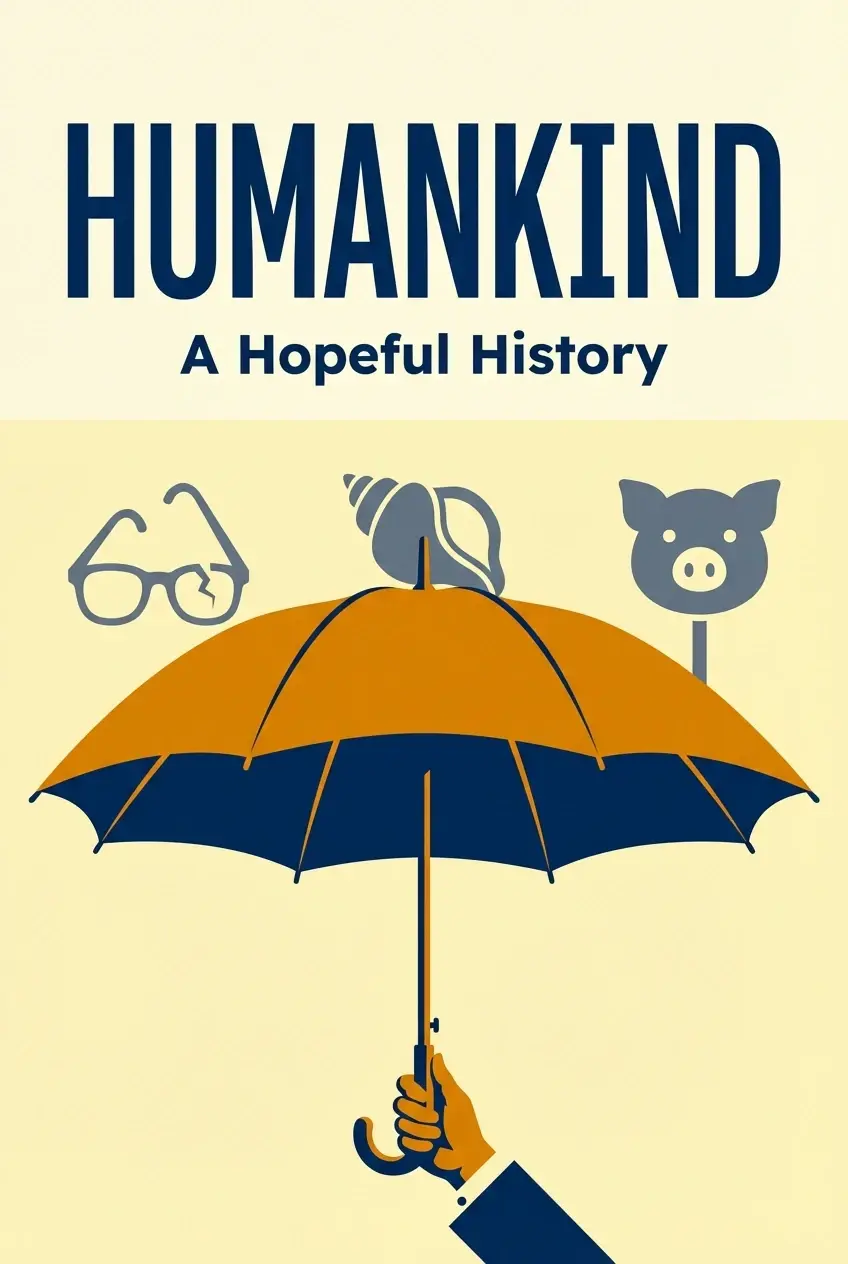
There is a story we tell ourselves about who we are. It goes something like this: beneath the thin veneer of civilization lies a savage. Strip away the laws, the police, the social contracts, and humans reveal their true nature. Selfish. Violent. Driven by base instincts. Civilization, in this story, is a fragile dam holding back a flood of barbarism.
**Author:** Rutger Bregman
**Estimated Reading Time:** 45 minutes
**What You'll Learn:**
- Why the belief that humans are naturally selfish is wrong - How cooperation, not competition, shaped our species - Why disasters bring out the best in people, not the worst - How power corrupts and what to do about it - Why intrinsic motivation beats rewards and punishment - How contact between groups dissolves prejudice - Why non-violence is more effective than violence - How to build systems that bring out the best in people
**Who This Book Is For:**
Anyone who has ever felt cynical about human nature. Anyone who has watched the news and concluded that people are fundamentally selfish. Anyone who manages people, raises children, designs policies, or simply wants to understand why humans behave the way they do. This book is for those who suspect that a better world is possible and want to know what the evidence actually says.
There is a story we tell ourselves about who we are. It goes something like this: beneath the thin veneer of civilization lies a savage. Strip away the laws, the police, the social contracts, and humans reveal their true nature. Selfish. Violent. Driven by base instincts. Civilization, in this story, is a fragile dam holding back a flood of barbarism. This story is old. It has been told by philosophers, politicians, and novelists. It shapes how we design our institutions, raise our children, and treat our neighbors. It justifies harsh laws, strict management, and a general suspicion of strangers. It tells us that people cannot be trusted, that given the chance, they will cheat, steal, and exploit. There is just one problem. The story is wrong. Rutger Bregman, a Dutch historian and journalist, spent years investigating this question: what happens when you look at the actual evidence about human nature? What do disasters reveal about how people really behave? What does evolutionary biology tell us about why we cooperate? What do psychological experiments show when they are conducted properly? What he found surprised him. The evidence points in a radically different direction. Most people, deep down, are pretty decent. This is not a naive claim. Bregman is not suggesting that humans are angels. He acknowledges the capacity for cruelty, the reality of war, the existence of exploitation. But he argues that these are not our default settings. They are aberrations, often produced by specific conditions: propaganda, distance, power imbalances, and systems designed around the assumption that people cannot be trusted. The implications of this shift are enormous. If you believe people are fundamentally selfish, you build systems to control them. You create strict hierarchies, surveillance, and punishment. And those systems, in turn, bring out…
Continue reading in the MinuteRead app
Get the complete 30-minute summary of Humankind
Get the complete summary in the appMost people, deep down, are pretty decent.
Veneer theory, the belief that humans are naturally selfish, is wrong.
Cooperation, not competition, drove human evolution.
Disasters bring out the best in people, not the worst.
Contact between groups reduces prejudice.
Power tends to corrupt, but it does not inevitably do so.
"Humankind" is a strong fit if you want practical ideas around history, psychology, philosophy, especially themes like most people, deep down, are pretty decent; veneer theory, the belief that humans are naturally selfish, is wrong. The MinuteRead summary distills these concepts into a focused read, whether you're deciding whether to buy the book or applying its lessons at work.
Rutger Bregman is a Dutch historian, author, and journalist known for popularizing social and economic innovation topics. He studied at Utrecht University and the University of California, Los Angeles, and has taught at Utrecht University. Bregman writes for various Dutch publications and is a journalist at The Correspondent. Considered one of Europe's most prominent young thinkers, he has published four books on history, philosophy, and economics. His work often focuses on measures like univers…
View all summaries by Rutger BregmanContinue Reading
Access the complete 30-minute summary and thousands more nonfiction books in the MinuteRead app.

Continue reading the complete summary in the MinuteRead app.