MinuteRead
30 min
Book summary
by Vaughn Vernon
Premium summary · Opens in the app · 30 min read
Every software project begins with a promise. The promise is that the software will solve a real business problem, that it will make some process faster, some decision smarter, or some customer happier. Yet somewhere between the initial requirements meeting and the first production deployment, that promise often gets diluted. The software still works. It passes its tests. But it no longer reflects the way the business actually thinks about its own operations.
**Author:** Vaughn Vernon
**Estimated Reading Time:** 45 minutes
**What You'll Learn:**
- How to align software architecture with real business strategy - The complete tactical toolkit: Entities, Value Objects, Aggregates, Domain Events, and more - How to use Bounded Contexts and Context Maps to manage complexity across large systems - Practical guidance for building maintainable, business-focused software - How to avoid the most common pitfalls that derail DDD adoption
**Who This Book Is For:**
Software architects, senior developers, and technical leads who want to move beyond superficial DDD terminology and actually implement it. This condensed edition is also valuable for product managers and business analysts who need to understand why the technical team keeps talking about "ubiquitous language" and "bounded contexts."
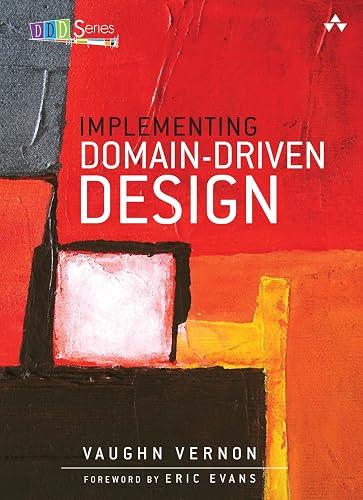
Every software project begins with a promise. The promise is that the software will solve a real business problem, that it will make some process faster, some decision smarter, or some customer happier. Yet somewhere between the initial requirements meeting and the first production deployment, that promise often gets diluted. The software still works. It passes its tests. But it no longer reflects the way the business actually thinks about its own operations. The gap between business intent and technical implementation is one of the oldest problems in software development. Business stakeholders describe their needs in the language of their domain: policies, claims, orders, patients, shipments. Developers translate those needs into the language of technology: tables, columns, services, objects. In that translation, something essential gets lost. The software becomes a collection of technical artifacts rather than a faithful representation of the business itself. Vaughn Vernon wrote Implementing Domain-Driven Design to address this exact problem. The book is not an introduction to Domain-Driven Design concepts. It assumes you have encountered the ideas before, perhaps in Eric Evans's seminal work, and now you need to know how to actually build software using them. Vernon's contribution is to take the theoretical elegance of DDD and make it practical, concrete, and actionable. The core problem Vernon addresses is that most software development approaches treat the business domain as an inconvenience to be managed rather than the central organizing principle of the system. Developers build databases first, then layer application logic on top, then try to map business rules onto that technical foundation. The result is software that works but does not think the way the business thinks. When the business changes, which it always does, the software resists those changes. Every new requirement becomes a struggle against the existing architecture. Domain-Driven Design inverts this relationship. It starts with the business domain itself. It insists that developers and domain experts develop a shared language, a Ubiquitous Language, that describes the business accurately and precisely.…
Continue reading in the MinuteRead app
Get the complete 30-minute summary of Implementing Domain-Driven Design
Get the complete summary in the app**Identify the Core Domain.** It is the source of competitive advantage and should receive the most development investme
**Establish Bounded Contexts.** Each context has its own model and its own Ubiquitous Language.
**Develop a Ubiquitous Language.** It must be used in conversation, documentation, and code.
**Distinguish Entities from Value Objects.** Entities have identity; Value Objects do not. Most concepts should be Value
**Design small Aggregates.** Only include objects that must be transactionally consistent. Reference other Aggregates by
**Use Domain Events for decoupling.** They enable eventual consistency and reduce coupling between different parts of th
"Implementing Domain-Driven Design" is a strong fit if you want practical ideas around programming, technology, computer science, especially themes like **identify the core domain.** it is the source of competitive advantage and should receive the most development investme; **establish bounded contexts.** each context has its own model and its own ubiquitous language. The MinuteRead summary distills these concepts into a focused read, whether you're deciding whether to buy the book or applying its lessons at work.
Motivated to help readers with with Implementing Domain-Driven Design, Vaughn Vernon wrote “Implementing Domain-Driven Design” to package those ideas for a fast, focused read. In “Implementing Domain-Driven Design”, Vaughn Vernon focuses on with Implementing Domain-Driven Design. Through “Implementing Domain-Driven Design”, Vaughn Vernon distills the core ideas on programming into lessons readers can absorb in a single short sitting. Readers turn to this work when they want Vaughn Vernon's persp…
Continue Reading
Access the complete 30-minute summary and thousands more nonfiction books in the MinuteRead app.

Continue reading the complete summary in the MinuteRead app.