MinuteRead
30 min
Book summary
Premium summary · Opens in the app · 30 min read
Every great book has an origin story, but few origin stories are as remarkable as the one behind The Color Purple. Before Alice Walker could write her Pulitzer Prize-winning novel, she first had to find a grave. Not just any grave, but the final resting place of Zora Neale Hurston, a writer whose name had been nearly erased from literary history.
**Author:** Salamishah Tillet **Estimated Reading Time:** 45 minutes
**What You'll Learn:**
* How Alice Walker discovered her literary ancestor Zora Neale Hurston and why that discovery changed American literature * The deeper meanings embedded in The Color Purple that most readers miss * Why Celie's journey from silence to voice resonates across generations * How the novel challenges conventional ideas about God, family, and love * The controversial history of the book and its transformation into a cultural phenomenon
**Who This Book Is For:**
Anyone who has ever felt silenced, anyone who has searched for a voice that sounds like their own, and anyone who wants to understand why The Color Purple remains one of the most important American novels ever written. This book is for readers who want to go deeper than the story itself and understand the soil from which it grew.
Every great book has an origin story, but few origin stories are as remarkable as the one behind The Color Purple. Before Alice Walker could write her Pulitzer Prize-winning novel, she first had to find a grave. Not just any grave, but the final resting place of Zora Neale Hurston, a writer whose name had been nearly erased from literary history. In 1973, Walker traveled to Fort Pierce, Florida, searching for the unmarked grave of the woman she considered her literary foremother. Hurston had died in 1960, penniless and largely forgotten. Her books, including the masterpiece Their Eyes Were Watching God, had fallen out of print. The literary establishment had dismissed her work as quaint folklore, missing entirely its radical depth and artistic brilliance. Walker waded through waist-high weeds in a segregated cemetery, calling out Hurston's name as if summoning a spirit. When she finally located the approximate burial site, she purchased a gray headstone and had it inscribed with words that would become famous: "Zora Neale Hurston: A Genius of the South." That act of reclamation was not merely an act of literary scholarship. It was an act of self-discovery. Walker was looking for Hurston, but she was also looking for herself. She needed to know that a Black woman from the rural South could become a great writer. She needed proof that her own voice mattered. This search for literary ancestors, for voices that validate our own existence, sits at the heart of Salamishah Tillet's exploration of The Color Purple. Tillet, a scholar and survivor of sexual assault, brings a deeply personal perspective to her reading of Walker's novel. She understands what it means to search for stories that make survival legible. The Color Purple tells the story of Celie, a poor Black girl in rural Georgia who endures unspeakable abuse and yet, through…
Continue reading in the MinuteRead app
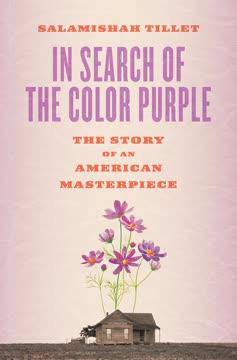
Get the complete 30-minute summary of In Search of The Color Purple
Get the complete summary in the appFinding your voice is the first step toward finding your freedom.
Writing can be a form of therapy that enables understanding and healing.
The relationships between women can be as transformative as romantic love.
God is inside you and inside everybody else.
Colorism is a systemic issue rooted in historical oppression.
Great art shapes society as well as reflecting it.
"In Search of The Color Purple" is a strong fit if you want practical ideas around history, books about books, memoir, especially themes like finding your voice is the first step toward finding your freedom; writing can be a form of therapy that enables understanding and healing. The MinuteRead summary distills these concepts into a focused read, whether you're deciding whether to buy the book or applying its lessons at work.
Salamishah Tillet is an academic, activist, and writer known for her work on race, gender, and culture. She is a professor of African American Studies and Creative Writing at Rutgers University-Newark. Tillet's research focuses on black feminist theory, sexual violence, and popular culture. She has written extensively on Alice Walker and The Color Purple, exploring its impact on literature and society. Tillet's personal experiences as a survivor of sexual assault inform her work and her connecti…
View all summaries by Salamishah TilletContinue Reading
Access the complete 30-minute summary and thousands more nonfiction books in the MinuteRead app.

Continue reading the complete summary in the MinuteRead app.