MinuteRead
30 min
Book summary
Premium summary · Opens in the app · 30 min read
Every day, billions of dollars change hands in financial markets around the world. Stocks are bought and sold, companies are acquired, real estate changes ownership, and bonds are issued. Behind each of these transactions lies a fundamental question: what is this asset actually worth?
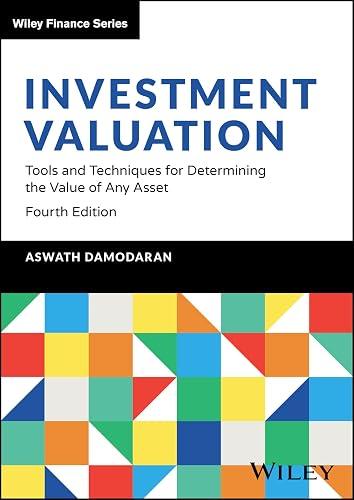
**Author:** Aswath Damodaran
**Estimated Reading Time:** 45 minutes
**What You'll Learn:**
- Why every asset has a value and how to think about finding it - The four fundamental approaches to valuation and when to use each - How to read financial statements through the eyes of a valuation analyst - The critical role of risk, growth, and terminal value in determining worth - How to value difficult assets including distressed firms and financial service companies - A practical framework for applying valuation principles in your own investment decisions
**Who This Book Is For:**
This book is for investors, analysts, students of finance, and business owners who want to move beyond superficial metrics and understand what truly drives value. Whether you are evaluating a stock, considering an acquisition, or simply trying to understand why some companies command premium prices while others languish, the principles in this book will give you a rigorous foundation for making better decisions. No advanced mathematics is required, but a willingness to think carefully about business fundamentals is essential.
Every day, billions of dollars change hands in financial markets around the world. Stocks are bought and sold, companies are acquired, real estate changes ownership, and bonds are issued. Behind each of these transactions lies a fundamental question: what is this asset actually worth? Most people never ask this question directly. Instead, they rely on the price someone else is willing to pay. They assume that the market, with its millions of participants and sophisticated institutions, must have figured out the right answer. But markets are not always right. Markets are collections of human beings, and human beings are subject to fear, greed, herd behavior, and systematic errors in judgment. The dot-com bubble of the late 1990s and the housing crisis of 2008 stand as powerful reminders that market prices can deviate dramatically from underlying value. This is where valuation enters the picture. Valuation is the process of estimating what an asset is truly worth, independent of what the market currently says it is worth. It is both an art and a science. The science lies in the mathematical models and analytical frameworks that have been developed over decades of financial research. The art lies in knowing which model to use, what assumptions to make, and how to interpret the results when reality refuses to cooperate with theory. Aswath Damodaran, a professor of finance at New York University's Stern School of Business, has spent his career developing and teaching the principles of valuation. His approach is distinctive because it bridges the gap between academic theory and real-world practice. He does not pretend that valuation is an exact science. He acknowledges the uncertainty inherent in any estimate of…
Continue reading in the MinuteRead app
Get the complete 30-minute summary of Investment Valuation
Get the complete summary in the appThe value of any asset is the present value of its expected future cash flows, discounted at a rate that reflects their
DCF valuation is the most rigorous approach, but it is only as good as its inputs.
Relative valuation is simpler but relies on the market being generally correct about comparable assets.
Asset-based valuation provides a floor for value, especially for firms with significant tangible assets.
Option pricing captures the value of flexibility that traditional DCF models miss.
Cash flow matters more than earnings. Always check the cash flow statement.
"Investment Valuation" is a strong fit if you want practical ideas around finance, business, economics, especially themes like the value of any asset is the present value of its expected future cash flows, discounted at a rate that reflects their; dcf valuation is the most rigorous approach, but it is only as good as its inputs. The MinuteRead summary distills these concepts into a focused read, whether you're deciding whether to buy the book or applying its lessons at work.
Motivated to help readers with valuation, corporate finance, and investment management by Aswath Damodaran, Aswath Damodaran wrote “Investment Valuation” as a practical guide drawn from years of experience and research. In “Investment Valuation”, Aswath Damodaran focuses on every asset. Through “Investment Valuation”, Aswath Damodaran distills the core ideas on finance into lessons readers can absorb in a single short sitting. Readers turn to this work when they want Aswath Damodaran's perspecti…
View all summaries by Aswath DamodaranContinue Reading
Access the complete 30-minute summary and thousands more nonfiction books in the MinuteRead app.

Continue reading the complete summary in the MinuteRead app.