MinuteRead
30 min
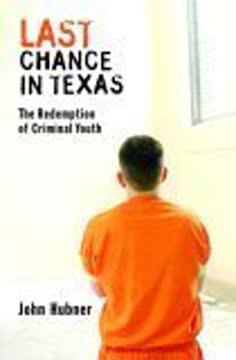
Book summary
by John Hubner
Premium summary · Opens in the app · 30 min read
We have a story we tell ourselves about violent kids. The story says they are monsters, born bad, irredeemable. The story says locking them away is the only answer. The story says some people are simply beyond saving. This book challenges that story at its core.
**Author:** John Hubner **Estimated Reading Time:** 45 minutes
**What You'll Learn**
The true story of the Giddings State School in Texas, a facility that houses some of the state's most violent juvenile offenders. You will discover how an unconventional program called resocialization attempts to reach young people society has written off. You will learn about the power of empathy, the brutal necessity of accountability, and the long, painful process of reclaiming a human being from the wreckage of abuse, neglect, and violence.
**Who This Book Is For**
This book is for anyone who has ever wondered whether people can truly change. It is for educators, counselors, parents, policymakers, and citizens who care about the future of young people who have committed terrible acts. It is for readers who want to understand the roots of violence and the difficult, often heartbreaking work of rehabilitation.
We have a story we tell ourselves about violent kids. The story says they are monsters, born bad, irredeemable. The story says locking them away is the only answer. The story says some people are simply beyond saving. This book challenges that story at its core. John Hubner spent months inside the Giddings State School in Texas, a facility that houses juvenile offenders who have committed capital murder, aggravated assault, armed robbery, and other serious violent crimes. These are not shoplifters or truants. These are kids who have taken lives, who have terrorized neighborhoods, who have caused unimaginable suffering. By any conventional measure, they are the worst of the worst. Yet inside Giddings, something remarkable happens. A program called resocialization attempts to do what seems impossible: reach these young people, break through their defenses, make them feel the weight of what they have done, and rebuild them from the inside out. The program does not excuse their crimes. It does not minimize their responsibility. Instead, it forces them to confront their actions with brutal honesty and to develop the one capacity that makes rehabilitation possible: genuine empathy. The problem this book addresses is not just about juvenile justice. It is about human nature. Can a person who has committed atrocities learn to feel remorse? Can a child raised in violence learn to value life? Can the cycle of trauma be broken, or are we forever doomed to repeat it? Most people never ask these questions seriously. They are content with easy answers. Lock them up. Throw away the key. They made their choices. But Hubner's reporting reveals a more complicated reality. The vast majority of these young offenders were themselves victims long before they became perpetrators. They were beaten, abandoned, sexually abused, and exposed to drugs and violence from their earliest memories. Their crimes did not emerge…
Continue reading in the MinuteRead app
Get the complete 30-minute summary of Last Chance in Texas
Get the complete summary in the appViolent juvenile offenders are almost always victims of severe childhood trauma. This does not excuse their crimes, but
Empathy can be taught. The capacity to feel what others feel can be developed even in people who have committed terrible
Role-playing is one of the most powerful tools for breaking through emotional numbness and developing empathy.
Accountability requires understanding. You cannot truly take responsibility for what you did until you understand why yo
The quality of staff is the single most important factor in rehabilitation. Programs depend on people, not manuals.
Victim impact panels make the cost of violence real in ways that abstract discussion cannot.
"Last Chance in Texas" is a strong fit if you want practical ideas around true crime, psychology, social justice, especially themes like violent juvenile offenders are almost always victims of severe childhood trauma. this does not excuse their crimes, but; empathy can be taught. the capacity to feel what others feel can be developed even in people who have committed terrible. The MinuteRead summary distills these concepts into a focused read, whether you're deciding whether to buy the book or applying its lessons at work.
John Hubner is a journalist and author known for his in-depth reporting on social issues, particularly those related to the criminal justice system and youth rehabilitation. His work on "Last Chance in Texas" involved extensive research and time spent at the Giddings State School, where he observed and documented the innovative rehabilitation program for juvenile offenders. Hubner's approach combines detailed storytelling with analysis of systemic issues, earning him praise for his ability to hu…
View all summaries by John HubnerContinue Reading
Access the complete 30-minute summary and thousands more nonfiction books in the MinuteRead app.

Continue reading the complete summary in the MinuteRead app.