MinuteRead
30 min
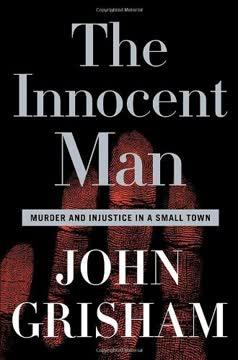
Book summary
by John Grisham
Premium summary · Opens in the app · 30 min read
Ada, Oklahoma, is the kind of small town where people know each other. Where high school football heroes are remembered forever. Where violent crime feels like something that happens somewhere else. In 1982, that sense of safety shattered when Debra Sue Carter, a 21-year-old waitress, was found murdered in her apartment. She had been raped and strangled. The brutality of the crime terrified the community. The pressure to find her killer was immense.
**Author:** John Grisham **Estimated Reading Time:** 85 minutes
The true story of how two men from a small Oklahoma town were arrested, convicted, and sentenced for a murder they did not commit. You will learn how unreliable forensic science, jailhouse informants, prosecutorial tunnel vision, and inadequate defense representation can destroy innocent lives. You will understand the psychological toll of wrongful imprisonment and death row. You will see how DNA technology changed everything. And you will discover what happens after exoneration, when the system that stole years of your life offers no apology, no compensation, and no accountability.
This book is for anyone who believes the criminal justice system always gets it right. It is for readers who want to understand how wrongful convictions happen, not in theory but in the brutal reality of two men's lives. It is for those who care about forensic reform, prosecutorial accountability, and the fight to free the innocent. And it is for anyone who appreciates a meticulously reported true story that reads with the tension and heartbreak of great nonfiction.
Ada, Oklahoma, is the kind of small town where people know each other. Where high school football heroes are remembered forever. Where violent crime feels like something that happens somewhere else. In 1982, that sense of safety shattered when Debra Sue Carter, a 21-year-old waitress, was found murdered in her apartment. She had been raped and strangled. The brutality of the crime terrified the community. The pressure to find her killer was immense. The investigation that followed was a disaster. Police focused on Ron Williamson, a former baseball prodigy whose life had unraveled into alcoholism and mental illness. They also targeted his friend Dennis Fritz, a quiet science teacher with no criminal record. Despite a complete absence of physical evidence linking either man to the crime, both were arrested. Both were tried. Both were convicted. Ron Williamson was sentenced to death. Dennis Fritz received life in prison. They spent twelve years behind bars for a crime they did not commit. John Grisham first encountered this story through a brief newspaper article about a wrongful conviction in Oklahoma. As a former criminal defense attorney and the author of some of the most successful legal thrillers ever written, he knew the system's flaws intimately. But this story demanded more than a fictional treatment. It required documentation, investigation, and a level of detail that only nonfiction could provide. Grisham spent eighteen months researching the case, interviewing everyone who would speak with him, reviewing thousands of pages of trial transcripts, police reports, and court filings. What he produced is not a legal thriller. It is something far more disturbing: a true account of how easily the justice system…
Continue reading in the MinuteRead app
Get the complete 30-minute summary of The Innocent Man
Get the complete summary in the appRon Williamson and Dennis Fritz spent twelve years in prison for a murder they did not commit, convicted on unreliable e
Tunnel vision caused investigators to focus on the wrong suspects while ignoring the actual perpetrator, Glen Gore, who
Hair analysis, presented as scientific certainty at trial, is a discredited technique with a high error rate that cannot
Jailhouse informants who testified against Williamson and Fritz had powerful incentives to lie and received benefits for
Williamson's severe mental illness was ignored by the system, and his symptoms were misinterpreted as evidence of guilt.
The defense representation provided to Williamson was so inadequate that it violated the constitutional right to effecti
"The Innocent Man" is a strong fit if you want practical ideas around true crime, crime, mystery, especially themes like ron williamson and dennis fritz spent twelve years in prison for a murder they did not commit, convicted on unreliable e; tunnel vision caused investigators to focus on the wrong suspects while ignoring the actual perpetrator, glen gore, who. The MinuteRead summary distills these concepts into a focused read, whether you're deciding whether to buy the book or applying its lessons at work.
John Grisham is a bestselling author known for his legal thrillers. He has written 49 consecutive #1 bestsellers translated into nearly 50 languages. Grisham's work often explores issues in the criminal justice system, drawing from his legal background. He serves on the boards of the Innocence Project and Centurion Ministries, organizations dedicated to exonerating wrongfully convicted individuals. Grisham has won multiple awards for his writing, including the Harper Lee Prize for Legal Fiction …
View all summaries by John GrishamContinue Reading
Access the complete 30-minute summary and thousands more nonfiction books in the MinuteRead app.

Continue reading the complete summary in the MinuteRead app.