MinuteRead
30 min
Book summary
by Susan Neiman
Premium summary · Opens in the app · 30 min read
In the center of Berlin, a field of 2,711 concrete slabs rises from the ground in uneven rows. Some are waist-high, others tower overhead. Walking through them feels disorienting, the ground undulates beneath your feet, the gray pillars block your view, and the sounds of the city fade into a muffled hum. This is the Memorial to the Murdered Jews of Europe, and it sits on some of the most valuable real estate in Germany, a stone's throw from the Brandenburg Gate and the Reichstag.
**Author:** Susan Neiman
**Estimated Reading Time:** 2 hours 15 minutes
**What You'll Learn:**
How Germany transformed itself from the perpetrator of the Holocaust into a nation that actively confronts its darkest history, and what that transformation reveals about the American struggle with race, slavery, and the legacy of the Confederacy. You will understand why some societies choose to remember while others choose to forget, and what that choice costs.
**Who This Book Is For:**
Anyone who has wondered why monuments to Confederate generals still stand in American town squares, why Germany has no statues of Nazi leaders, and whether a nation can ever truly reckon with its past. This book is for readers who believe that history matters, that memory shapes politics, and that honest confrontation with the past is possible.
In the center of Berlin, a field of 2,711 concrete slabs rises from the ground in uneven rows. Some are waist-high, others tower overhead. Walking through them feels disorienting, the ground undulates beneath your feet, the gray pillars block your view, and the sounds of the city fade into a muffled hum. This is the Memorial to the Murdered Jews of Europe, and it sits on some of the most valuable real estate in Germany, a stone's throw from the Brandenburg Gate and the Reichstag. No German city lacks its own memorial. Small brass plaques called Stolpersteine, or stumbling stones, are embedded in sidewalks across the country, each one marking the last known address of a person murdered by the Nazis. Schools take students to concentration camps. The Holocaust is taught in every German classroom, not as a footnote but as a central event in the nation's history. The German government pays reparations to Holocaust survivors and their descendants. It is illegal to display a swastika or deny the Holocaust. This did not happen naturally. In the years immediately after World War II, most Germans wanted nothing more than to forget. They saw themselves as victims, of Allied bombing, of Soviet occupation, of a war they did not choose. The first chancellor of West Germany, Konrad Adenauer, filled his government with former Nazis. The courts were lenient with war criminals. The past was a wound no one wanted to touch. What changed? How did a nation of perpetrators and bystanders become a nation that confronts its crimes in public, in schools, in art, and in law? And why has the United States, a nation founded on ideals of liberty and equality, been so resistant to confronting its own history of slavery, segregation, and racial terror? Susan Neiman is uniquely positioned to ask these questions. She grew up in Atlanta, Georgia, during the civil rights movement. She is Jewish, with…
Continue reading in the MinuteRead app
Get the complete 30-minute summary of Learning from the Germans
Get the complete summary in the appReckoning with the past is possible. Germany proved it.
Collective responsibility is not collective guilt. Guilt is personal. Responsibility is shared.
Forgetting is not neutral. It leads to repetition.
The American resistance to reckoning is a choice, not an accident.
Confederate monuments were built to assert white supremacy, not to honor the dead.
Reparations are about justice, not just money.
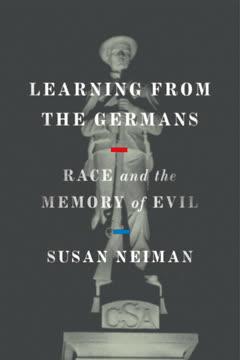
"Learning from the Germans" is a strong fit if you want practical ideas around history, politics, philosophy, especially themes like reckoning with the past is possible. germany proved it; collective responsibility is not collective guilt. guilt is personal. responsibility is shared. The MinuteRead summary distills these concepts into a focused read, whether you're deciding whether to buy the book or applying its lessons at work.
Susan Neiman is an American moral philosopher and essayist specializing in the history of philosophy, morality, and the philosophy of politics and religion. Born and raised in Atlanta, Georgia, Neiman has lived and worked in Germany for many years, serving as the director of the Einstein Forum in Potsdam. Her unique background as a Jewish American with experience in both the American South and Germany informs her work on comparative historical memory and moral philosophy. Neiman's writing often …
View all summaries by Susan NeimanContinue Reading
Access the complete 30-minute summary and thousands more nonfiction books in the MinuteRead app.

Continue reading the complete summary in the MinuteRead app.