MinuteRead
30 min
Book summary
by Scott Alan Miller
Premium summary · Opens in the app · 30 min read
Most Linux system administrators spend their careers learning commands, memorizing configuration files, and mastering the syntax of tools. They become fluent in the language of the operating system. They know how to create users, format disks, configure firewalls, and restart services. Yet many of them still struggle when faced with the most important question in system administration: what should I actually do right now?
**Author:** Scott Alan Miller
**Estimated Reading Time:** 42 minutes
**What You'll Learn:**
- Why system administration is a strategic discipline, not just a technical trade - How to select the right Linux distribution and release model for any environment - How to design storage, deployment, and backup architectures that reduce risk - How to think about databases, monitoring, automation, and security as interconnected systems - How to develop a troubleshooting mindset that works under pressure
**Who This Book Is For:**
This book is for system administrators who already know how to use Linux but want to understand how to make better decisions. It is for IT professionals who feel overwhelmed by the constant pressure to patch, secure, monitor, and maintain systems. It is for anyone who has ever wondered why some infrastructure decisions seem obvious in hindsight but impossible to see in the moment. If you want to move beyond running commands and start building systems that survive real-world failure, this book is for you.
Most Linux system administrators spend their careers learning commands, memorizing configuration files, and mastering the syntax of tools. They become fluent in the language of the operating system. They know how to create users, format disks, configure firewalls, and restart services. Yet many of them still struggle when faced with the most important question in system administration: what should I actually do right now? The gap between knowing how to do something and knowing what should be done is enormous. It is the difference between a technician and an administrator. It is the difference between someone who can follow instructions and someone who can make decisions under uncertainty. And it is the gap that Scott Alan Miller addresses directly in this book. Miller argues that system administration is not fundamentally a technical discipline. It is a decision-making discipline that happens to use technical tools. The best system administrators are not the ones who know the most commands. They are the ones who understand risk, who can evaluate trade-offs, and who can design systems that survive contact with reality. The problem is that most training materials focus on the wrong things. They teach you how to install a package but not when to install it. They teach you how to configure a firewall but not how to think about what should be allowed through it. They teach you the mechanics of backups but not the philosophy of why backups matter more than almost anything else you will ever do. This book takes a different approach. It assumes you already know the basics. It assumes you can find the syntax for any command with a quick search. What it provides instead is something far more valuable: a…
Continue reading in the MinuteRead app
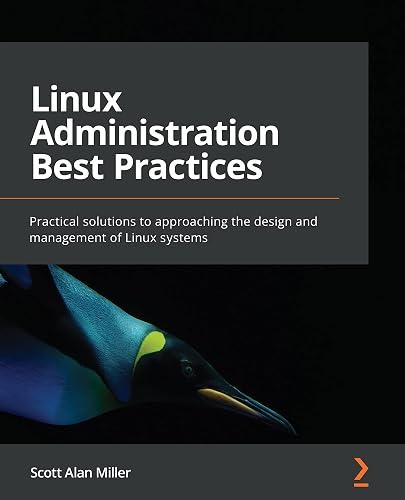
Get the complete 30-minute summary of Linux Administration Best Practices
Get the complete summary in the appSystem administration is about making good decisions under uncertainty, not just knowing commands.
Storage is the highest-risk component of your infrastructure. Design it carefully.
RAID is not a backup. You need both.
Patch regularly. Delayed patching creates a self-fulfilling prophecy of failure.
Databases are the most important thing you manage. Protect them accordingly.
Simplicity is a virtue. Complexity is a cost.
"Linux Administration Best Practices" is a strong fit if you want practical ideas around technology, computer science, reference, especially themes like system administration is about making good decisions under uncertainty, not just knowing commands; storage is the highest-risk component of your infrastructure. design it carefully. The MinuteRead summary distills these concepts into a focused read, whether you're deciding whether to buy the book or applying its lessons at work.
Motivated to help readers with system administration remains the cornerstone of communications and infrastructure, Scott Alan Miller wrote “Linux Administration Best Practices” to package those ideas for a fast, focused read. In “Linux Administration Best Practices”, Scott Alan Miller focuses on system administration remains the cornerstone of communications and infrastructure. Through “Linux Administration Best Practices”, Scott Alan Miller distills the core ideas on technology into lessons rea…
Continue Reading
Access the complete 30-minute summary and thousands more nonfiction books in the MinuteRead app.

Continue reading the complete summary in the MinuteRead app.