MinuteRead
30 min
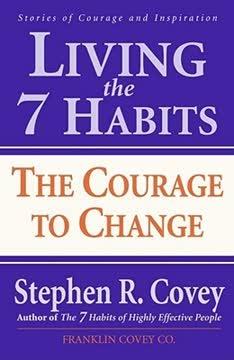
Book summary
Premium summary · Opens in the app · 30 min read
Stephen Covey spent decades studying success literature. He read hundreds of books spanning two centuries. What he discovered changed how millions of people think about effectiveness.
**Author:** Stephen R. Covey **Estimated Reading Time:** 45 minutes
**What You'll Learn:**
How to move from dependence to independence to interdependence. How to build trust in every relationship. How to focus on what truly matters instead of what merely feels urgent. How to create a life aligned with your deepest values. How to sustain personal growth for decades, not days.
**Who This Book Is For:**
Anyone who feels pulled in too many directions. Anyone who wants better relationships but keeps hitting the same walls. Anyone who suspects that quick fixes and surface-level techniques will never produce lasting change. Anyone ready to do the deep work of character development.
Stephen Covey spent decades studying success literature. He read hundreds of books spanning two centuries. What he discovered changed how millions of people think about effectiveness. In the first 150 years of American success literature, writers focused on character. They wrote about integrity, humility, courage, justice, patience, and hard work. These were the foundations of lasting success. But after World War I, something shifted. The focus moved from character to personality. Success became about image, techniques, and quick fixes. People learned how to manipulate others, how to appear confident, how to close deals. Covey saw a problem with this shift. Personality techniques might produce short-term results, but they never create lasting change. They are like putting fresh paint on a crumbling wall. Eventually, the cracks show through. The deeper issue is that we cannot solve significant problems with the same level of thinking that created them. If we want different results, we need different paradigms. We need to change how we see the world and how we see ourselves. Covey's research led him to identify seven habits that highly effective people consistently practice. These are not tricks or techniques. They are principles. They are rooted in timeless truths about how human beings thrive. They work in any culture, any era, any context. The seven habits are organized around a maturity continuum. We begin life dependent on others. As we grow, we seek independence. We want to make our own decisions and control our own lives. But independence is not the highest form of human achievement. The truly effective person moves beyond independence to interdependence. They learn to work with others, to build trust, to create results that no individual could achieve alone. The first three habits build independence. They are the private victories. They require no one else. They are about mastering yourself. The next three habits build interdependence. They are the public victories. They require working effectively with others. The seventh habit sustains all the others through continuous renewal. What makes this approach different is that it starts from the inside…
Continue reading in the MinuteRead app
Get the complete 30-minute summary of Living the 7 Habits
Get the complete summary in the appBetween stimulus and response lies your freedom to choose. Use it.
Begin with the end in mind. Know where you are going before you start.
Put first things first. Schedule your priorities, not your schedule.
Think Win-Win. Seek mutual benefit in all interactions.
Seek first to understand, then to be understood. Listen before you speak.
Synergize. Value differences and create third alternatives.
"Living the 7 Habits" is a strong fit if you want practical ideas around self help, business, leadership, especially themes like between stimulus and response lies your freedom to choose. use it; begin with the end in mind. know where you are going before you start. The MinuteRead summary distills these concepts into a focused read, whether you're deciding whether to buy the book or applying its lessons at work.
Stephen Richards Covey was a renowned American author, educator, and businessman. His most famous work, "The 7 Habits of Highly Effective People," gained widespread popularity and influenced millions. Covey authored several other books on leadership, effectiveness, and personal development. Time magazine recognized him as one of the 25 most influential people in 1996. He served as a professor at Utah State University's Jon M. Huntsman School of Business. Covey's work focused on principle-centere…
View all summaries by Stephen R. CoveyContinue Reading
Access the complete 30-minute summary and thousands more nonfiction books in the MinuteRead app.

Continue reading the complete summary in the MinuteRead app.