MinuteRead
30 min
Every few decades, a new communication technology appears and reshapes society. The telephone collapsed distance. Radio gave a single voice the power to reach millions. Film created a new visual language. Television brought moving images into every living room. The internet connected the entire planet into a single network.
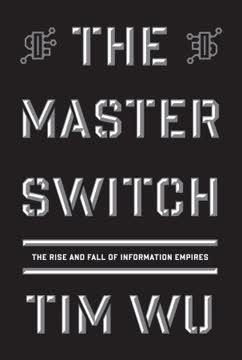
### By Tim Wu
**Estimated Reading Time:** 55 minutes
**What You'll Learn:** The hidden cycle that governs every information technology, from the telephone to the internet. Why industries that begin as chaotic, open frontiers inevitably consolidate into closed monopolies. How a handful of visionaries, inventors, and corporate titans shaped the communication systems you use every day. And most importantly, what the history of information empires reveals about the future of the internet and whether it will remain open or fall under centralized control.
**Who This Book Is For:** Anyone who wants to understand why the technologies that define modern life evolved the way they did. Readers curious about the tension between innovation and consolidation. Entrepreneurs, policymakers, and citizens concerned about the growing power of a few technology giants. And anyone who senses that the internet is at a crossroads and wants to understand the deeper historical forces at play.
Every few decades, a new communication technology appears and reshapes society. The telephone collapsed distance. Radio gave a single voice the power to reach millions. Film created a new visual language. Television brought moving images into every living room. The internet connected the entire planet into a single network. Each of these technologies followed a remarkably similar trajectory. They began as chaotic, open frontiers where amateurs, hobbyists, and small-scale entrepreneurs experimented freely. No one quite knew what the technology was for or who would control it. The barriers to entry were low. Creativity flourished. Then, as the commercial potential became clear, large corporations moved in. They consolidated power, eliminated competitors, and transformed open systems into closed ones controlled by a single company or a small cartel. This pattern is not accidental. It is not a quirk of history. Tim Wu calls it the Cycle, and understanding it is essential for anyone who cares about the future of information and communication. The Cycle explains how AT&T turned the telephone from a chaotic free-for-all into one of the most powerful monopolies in American history. It explains how radio went from a medium dominated by amateur broadcasters to one controlled by a handful of national networks. It explains how the Hollywood studio system came to dominate every aspect of filmmaking, from production to distribution to exhibition. And it raises an urgent question about the internet: is it truly different, or is it simply the latest information technology destined to follow the same path toward consolidation and control? The stakes could not be higher. Information technologies shape what we know, how we communicate, and what we believe is possible. When a single company controls the flow of information, it gains enormous power over culture, politics, and daily life. The Cycle is not just a story…
Continue reading in the MinuteRead app
Get the complete 30-minute summary of Master Switch
Get the complete summary in the appEvery major information technology has followed the Cycle: from open frontier to closed monopoly. The internet is not im
Patents can protect innovators or build monopolies. The difference lies in how they are used and who controls them.
Government has often been the ally of monopolists. Regulatory decisions that seem technical often have profound conseque
Vertical integration creates conflicts of interest between content creation and distribution. These conflicts are struct
Network effects drive consolidation in the digital economy. The rich get richer, and the dominant platforms become more
The advertising model shapes content. Media funded by advertising will always face pressure to prioritize broad appeal o
"Master Switch" is a strong fit if you want practical ideas around history, technology, business, especially themes like every major information technology has followed the cycle: from open frontier to closed monopoly. the internet is not im; patents can protect innovators or build monopolies. the difference lies in how they are used and who controls them. The MinuteRead summary distills these concepts into a focused read, whether you're deciding whether to buy the book or applying its lessons at work.
Tim Wu is a prominent figure in technology and law, serving as a professor at Columbia Law School and contributing to the New York Times. He is known for coining the term "net neutrality" and has written extensively on technology-related topics. Wu's work focuses on the intersection of technology, policy, and society, examining how information empires rise and fall. His expertise in telecommunications and internet regulation has made him an influential voice in debates surrounding digital rights…
View all summaries by Tim WuContinue Reading
Access the complete 30-minute summary and thousands more nonfiction books in the MinuteRead app.

Continue reading the complete summary in the MinuteRead app.