MinuteRead
30 min
Book summary
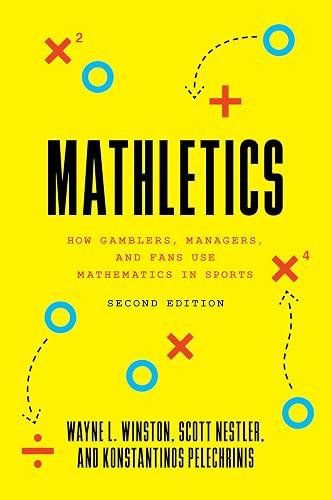
by Wayne L. Winston
Premium summary · Opens in the app · 30 min read
For most of sports history, decisions were made the same way: by feel, by tradition, by the accumulated wisdom of coaches and players who had spent their lives around the game. A baseball manager decided when to bunt because that was what managers had always done. A football coach punted on fourth down because playing it safe felt right. A basketball general manager signed a player because his points per game looked impressive in the box score.
**Author:** Wayne L. Winston
**Estimated Reading Time:** 45 minutes
**What You'll Learn:**
- How mathematical analysis has fundamentally changed the way sports are played, managed, and understood - Why traditional statistics often mislead us and what better metrics look like - How probability theory explains the seemingly impossible moments in sports history - What game theory reveals about optimal decision-making in critical game situations - How data-driven thinking can debunk long-held sports myths - Practical ways to apply analytical thinking to any competitive environment
**Who This Book Is For:**
This book is for anyone who loves sports and wants to understand them at a deeper level. It is for the fan who suspects that conventional wisdom about their favorite game is often wrong. It is for coaches, players, and managers who want to make better decisions. And it is for anyone curious about how mathematics, far from being an abstract academic exercise, can reveal hidden truths about the games we love and the world we live in.
For most of sports history, decisions were made the same way: by feel, by tradition, by the accumulated wisdom of coaches and players who had spent their lives around the game. A baseball manager decided when to bunt because that was what managers had always done. A football coach punted on fourth down because playing it safe felt right. A basketball general manager signed a player because his points per game looked impressive in the box score. This approach worked well enough for decades. But it had a fundamental flaw: human intuition is often wrong. We remember the times a bunt led to a big inning and forget the times it killed a rally. We notice when a player scores twenty points and overlook that he needed twenty-five shots to do it. We believe in the hot hand because we remember the streaks and forget the misses. Our brains are pattern-seeking machines, but the patterns we see are often illusions. Then something changed. A quiet revolution began in the late twentieth century, led not by coaches or players but by statisticians, economists, and mathematicians who started asking a simple question: what does the data actually say? They discovered that many of the things everyone knew about sports were wrong. Not just slightly wrong, but dramatically, demonstrably wrong. The strategies that had been passed down for generations were often suboptimal. The statistics that fans and executives relied on were frequently misleading. The conventional wisdom that shaped billion-dollar decisions was built on a foundation of cognitive biases and mathematical errors. This revolution has a name: mathletics. The term captures the fusion of mathematics and athletics, the application of rigorous quantitative analysis to the world of…
Continue reading in the MinuteRead app
Get the complete 30-minute summary of Mathletics
Get the complete summary in the appPassing efficiency, not rushing, is the key to success in the NFL.
On-base percentage is roughly twice as important as slugging percentage in baseball.
The hot hand in basketball is a myth. Recent outcomes do not predict future performance.
NFL teams should go for it on fourth down far more often than they do.
Fielding percentage is a poor measure of defensive ability because it ignores range.
Playoff outcomes are heavily influenced by luck. The best team does not always win.
"Mathletics" is a strong fit if you want practical ideas around sports, mathematics, science, especially themes like passing efficiency, not rushing, is the key to success in the nfl; on-base percentage is roughly twice as important as slugging percentage in baseball. The MinuteRead summary distills these concepts into a focused read, whether you're deciding whether to buy the book or applying its lessons at work.
Motivated to help readers with "I hope this book will inspire and equip readers to join the mathletics revolution." Mathletics transforms, Wayne L. Winston wrote “Mathletics” to package those ideas for a fast, focused read. In “Mathletics”, Wayne L. Winston focuses on "I hope this book will inspire and equip readers to join the mathletics revolution." Mathletics transforms. Through “Mathletics”, Wayne L. Winston distills the core ideas on sports into lessons readers can absorb in a single short …
Continue Reading
Access the complete 30-minute summary and thousands more nonfiction books in the MinuteRead app.

Continue reading the complete summary in the MinuteRead app.