MinuteRead
30 min
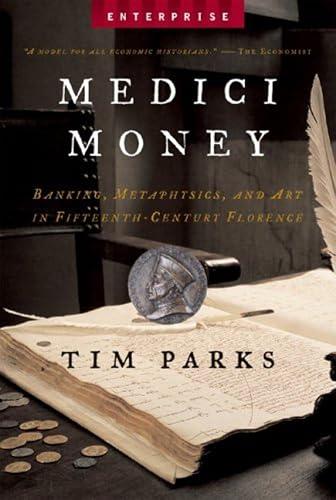
Book summary
by Tim Parks
Premium summary · Opens in the app · 30 min read
The modern world runs on credit. We swipe cards, sign mortgages, and invest in retirement funds without pausing to consider that lending money at interest was once considered a sin worthy of eternal damnation. The idea that money could generate more money seemed unnatural, even monstrous, to medieval thinkers. Yet somehow, within this moral framework, a family emerged that would become the wealthiest in Europe and reshape Western civilization in the process.
**Author:** Tim Parks **Estimated Reading Time:** 42 minutes
**What You'll Learn:**
How a Florentine banking family navigated the moral prohibitions against usury, manipulated political alliances across a fractured Italy, transformed wealth into cultural power through art patronage, and ultimately lost their financial empire to the very ambitions that built it.
**Who This Book Is For:**
Readers fascinated by the intersection of money, religion, art, and power. Anyone who wants to understand how the Renaissance was financed, how banking evolved within medieval moral constraints, and how the Medici family turned gold into lasting cultural influence.
The modern world runs on credit. We swipe cards, sign mortgages, and invest in retirement funds without pausing to consider that lending money at interest was once considered a sin worthy of eternal damnation. The idea that money could generate more money seemed unnatural, even monstrous, to medieval thinkers. Yet somehow, within this moral framework, a family emerged that would become the wealthiest in Europe and reshape Western civilization in the process. The Medici did not invent banking. They perfected it. They built an institution that spanned Europe, managed the papacy's finances, and funded the artistic revolution we now call the Renaissance. But they did so while walking a tightrope between religious orthodoxy and financial necessity, between political ambition and commercial prudence, between the desire for eternal salvation and the hunger for worldly power. Tim Parks approaches this story not as a dry financial history but as a deeply human drama. He understands that the Medici were not simply bankers or politicians or patrons of the arts. They were all of these things simultaneously, and their genius lay in their ability to navigate the contradictions between these roles. The same family that commissioned Donatello's David also manipulated currency exchange rates to extract profit from the Church. The same men who wrote poetry and debated philosophy with humanist scholars also funded mercenary armies and orchestrated political coups. This book matters because the Medici story illuminates something fundamental about how wealth operates in human society. Money is never just money. It is always entangled with morality, politics, culture, and identity. The Medici understood this better than anyone of their era. They recognized that financial power could be converted into political influence, that political influence could be converted into cultural prestige, and that cultural prestige could legitimize financial power in a continuous cycle of mutual reinforcement. The challenge they faced was managing this cycle without being destroyed by its contradictions. How do you lend money to a pope while the Church condemns usury? How do you fund a republic while positioning your family as its de facto rulers? How do you accumulate wealth while maintaining the appearance of civic…
Continue reading in the MinuteRead app
Get the complete 30-minute summary of Medici Money
Get the complete summary in the appMoney is a means, not an end. The Medici's power came from converting financial wealth into political influence, cultura
The usury prohibition shaped medieval banking, forcing bankers to develop creative instruments like the bill of exchange
The Medici internalized the moral burden of their wealth, which drove their extensive patronage of religious art and arc
The partnership structure of the Medici bank aligned incentives and distributed risk, but it required active oversight t
The papal connection was the foundation of Medici success, providing enormous profits but also creating unique political
Cosimo's exile and return demonstrated that power based on wealth and influence can survive temporary setbacks.
"Medici Money" is a strong fit if you want practical ideas around history, italy, economics, especially themes like money is a means, not an end. the medici's power came from converting financial wealth into political influence, cultura; the usury prohibition shaped medieval banking, forcing bankers to develop creative instruments like the bill of exchange. The MinuteRead summary distills these concepts into a focused read, whether you're deciding whether to buy the book or applying its lessons at work.
Motivated to help readers with "In the Medici family, Tim Parks wrote “Medici Money” to package those ideas for a fast, focused read. In “Medici Money”, Tim Parks focuses on "In the Medici family. Through “Medici Money”, Tim Parks distills the core ideas on history into lessons readers can absorb in a single short sitting. Readers turn to this work when they want Tim Parks's perspective on the subject without working through the entire original volume. Timothy Harold Parks (born 19 December 1954…
Continue Reading
Access the complete 30-minute summary and thousands more nonfiction books in the MinuteRead app.

Continue reading the complete summary in the MinuteRead app.