MinuteRead
30 min
You have been told a story about food your entire life. The story goes something like this: a calorie is a calorie. Weight gain happens when you eat too much and move too little. Chronic diseases like diabetes and heart disease are the result of poor choices and lack of willpower. If you just exercised more and ate less, everything would be fine.
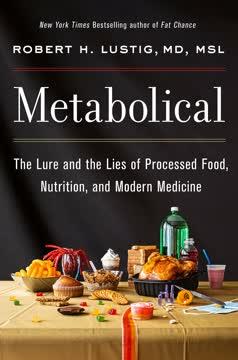
**Author:** Robert H. Lustig, M.D.
**Estimated Reading Time:** 45 minutes
**What You'll Learn:**
- Why processed food is the root cause of most chronic disease - How sugar acts as a toxin in the body, not just empty calories - Why modern medicine treats symptoms instead of causes - How the food industry manipulates science, policy, and public perception - What real food is and why it protects your liver and feeds your gut - Practical steps to change your diet and the food system
**Who This Book Is For:**
Anyone who eats. Anyone who has wondered why chronic disease keeps rising despite advances in medicine. Anyone who wants to understand the true cost of processed food to their body, their wallet, and the planet. Anyone ready to take control of their health through real food.
You have been told a story about food your entire life. The story goes something like this: a calorie is a calorie. Weight gain happens when you eat too much and move too little. Chronic diseases like diabetes and heart disease are the result of poor choices and lack of willpower. If you just exercised more and ate less, everything would be fine. This story is wrong. Robert Lustig, a pediatric endocrinologist with decades of experience treating childhood obesity, has watched the consequences of this false narrative unfold in his clinic. He has seen children as young as five with type 2 diabetes, a disease that used to be called adult-onset diabetes because it never appeared in children. He has watched liver failure become a pediatric condition. He has prescribed medications that manage symptoms while the underlying causes continue to destroy young bodies. The problem is not that people lack willpower. The problem is that the food supply has been fundamentally altered in ways that make it toxic to human metabolism. The problem is that the medical establishment treats the symptoms of chronic disease rather than the causes. The problem is that the food industry profits from sickness and has manipulated science and policy to protect those profits. Consider the numbers. In the United States, chronic diseases now account for 75 percent of healthcare costs. That is over three trillion dollars annually. And here is the devastating part: 75 percent of those chronic diseases are preventable. They are not genetic destiny. They are not inevitable consequences of aging. They are the result of what we eat. The rise of processed food over the past fifty years coincides almost perfectly with the explosion of chronic disease. In 1960, about 13 percent of Americans were obese. Today, over 40 percent are. In 1960, type 2 diabetes affected about 1 percent of the population. Today, it affects…
Continue reading in the MinuteRead app
Get the complete 30-minute summary of Metabolical
Get the complete summary in the appProcessed food is the root cause of the chronic disease epidemic that is bankrupting healthcare systems and killing mill
Sugar is not food. It is a toxin that overwhelms the liver and drives metabolic dysfunction.
Protect the liver and feed the gut. This is the core principle of healthy eating.
Obesity is a symptom of metabolic dysfunction, not the cause. Focus on metabolism, not weight.
Modern medicine treats symptoms of chronic disease rather than causes. Medication cannot substitute for dietary change.
The food industry has manipulated science and policy to protect profits at the expense of public health.
"Metabolical" is a strong fit if you want practical ideas around health & fitness, health, nutrition, especially themes like processed food is the root cause of the chronic disease epidemic that is bankrupting healthcare systems and killing mill; sugar is not food. it is a toxin that overwhelms the liver and drives metabolic dysfunction. The MinuteRead summary distills these concepts into a focused read, whether you're deciding whether to buy the book or applying its lessons at work.
Robert H. Lustig, M.D. is a renowned pediatric endocrinologist specializing in childhood obesity and sugar's effects on health. With 16 years of experience treating obesity and studying sugar's impact on the body, he holds prominent positions at UCSF Benioff Children's Hospital. Lustig directs the Weight Assessment for Teen and Child Health Program and is a member of the UCSF Center for Obesity Assessment, Study, and Treatment. His expertise extends to the Endocrine Society's Obesity Task Force.…
View all summaries by Robert H. LustigContinue Reading
Access the complete 30-minute summary and thousands more nonfiction books in the MinuteRead app.

Continue reading the complete summary in the MinuteRead app.