MinuteRead
30 min
Book summary
Premium summary · Opens in the app · 30 min read
Every nation carries within itself a vision of what it might become. For some, that vision is clear and widely shared. For others, it remains fragmented, obscured by doubt, inertia, and the sheer difficulty of the task. India has long been a nation of extraordinary promise that has struggled to convert that promise into consistent, widespread prosperity. The question that has haunted generations of Indian thinkers is deceptively simple: what would it actually take for India to become a developed
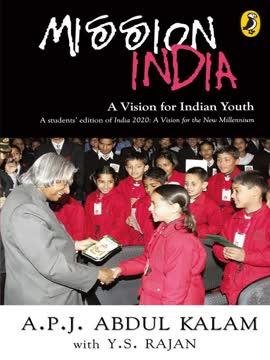
**Author:** A.P.J. Abdul Kalam
**Estimated Reading Time:** 42 minutes
**What You'll Learn:**
- A comprehensive vision for transforming India into a developed nation by 2020 - The specific technological, agricultural, industrial, and educational revolutions required - How strategic industries, healthcare, and infrastructure form the backbone of national progress - Practical frameworks for thinking about national development and individual contribution - The role of confidence, unity, and human potential in achieving ambitious national goals
**Who This Book Is For:**
This book is for anyone who wants to understand how nations develop and how India specifically can harness its immense potential. It is for students who wonder what role they might play in their country's future. It is for professionals seeking to align their work with larger national purposes. It is for citizens who want to move beyond cynicism toward constructive engagement. Most of all, it is for anyone who believes that human determination, properly channeled, can overcome seemingly insurmountable obstacles.
Every nation carries within itself a vision of what it might become. For some, that vision is clear and widely shared. For others, it remains fragmented, obscured by doubt, inertia, and the sheer difficulty of the task. India has long been a nation of extraordinary promise that has struggled to convert that promise into consistent, widespread prosperity. The question that has haunted generations of Indian thinkers is deceptively simple: what would it actually take for India to become a developed nation? A.P.J. Abdul Kalam wrote *Mission India* to answer that question with unusual specificity. He was not content to offer vague aspirations or rhetorical flourishes about India's glorious past and bright future. Instead, he brought the disciplined mind of a scientist and the practical experience of someone who had spent decades building complex systems to bear on the problem of national transformation. The result is a book that reads less like a political manifesto and more like an engineering blueprint for national development. Kalam's central conviction was that India's greatest obstacle is not a lack of resources, talent, or opportunity. It is a lack of confidence. He observed that Indians often underestimated their own capabilities, deferred to foreign expertise unnecessarily, and failed to recognize the immense assets already within their grasp. This observation came from direct experience. In his work at the Indian Space Research Organisation and the Defence Research and Development Organisation, he repeatedly saw Indian scientists and engineers achieve world-class results when given the chance to try. The problem was that such chances were too rare, and the belief that Indians could excel was too fragile. The book emerged from a specific historical moment. India had begun economic liberalization in the early 1990s, opening its economy to global competition…
Continue reading in the MinuteRead app
Get the complete 30-minute summary of Mission India
Get the complete summary in the appIndia's greatest obstacle to development is lack of confidence, not lack of resources or talent.
A developed nation is defined by the well-being of all citizens, not just economic growth.
The Second Green Revolution must be sustainable, diversified, and integrated with agro-processing industries.
Value addition is the key to manufacturing prosperity. Capture more of the value chain.
Biodiversity combined with biotechnology can create a world-leading chemical and pharmaceutical industry.
Strategic industries in space, nuclear, and defense are essential for security and drive civilian innovation.
"Mission India" is a strong fit if you want practical ideas around inspirational, especially themes like india's greatest obstacle to development is lack of confidence, not lack of resources or talent; a developed nation is defined by the well-being of all citizens, not just economic growth. The MinuteRead summary distills these concepts into a focused read, whether you're deciding whether to buy the book or applying its lessons at work.
Avul Pakir Jainulabdeen Abdul Kalam was a renowned Indian scientist, aerospace engineer, and statesman. He served as India's 11th President from 2002 to 2007, earning the moniker "People's President." Kalam's scientific career included key roles at DRDO and ISRO, where he contributed significantly to India's satellite and missile programs, earning him the title "Missile Man of India." He played a crucial role in India's nuclear tests and received numerous honors, including the Bharat Ratna. Kala…
View all summaries by A.P.J. Abdul KalamContinue Reading
Access the complete 30-minute summary and thousands more nonfiction books in the MinuteRead app.

Continue reading the complete summary in the MinuteRead app.