MinuteRead
30 min
Book summary
Premium summary · Opens in the app · 30 min read
For centuries, Western science has operated on a fundamental assumption: the mind and the body are separate. The mind, with its thoughts, emotions, and consciousness, was considered the domain of philosophy and psychology. The body, with its organs, cells, and chemical processes, belonged to medicine and biology. This division, inherited from the philosopher René Descartes, shaped how we study human beings, how we treat disease, and how we understand ourselves.
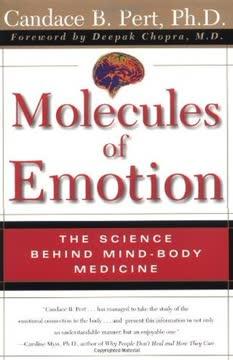
**Author:** Candace B. Pert, Ph.D.
**Estimated Reading Time:** 45 minutes
**What You'll Learn:**
- Why emotions are not just feelings but physical molecules moving through your body - How the discovery of the opiate receptor revolutionized our understanding of mind and body - What the "psychosomatic network" is and why it changes everything about health - How repressed emotions can literally make you sick - Why consciousness and intention can influence your physiology - Practical ways to work with your bodymind for greater health and vitality
**Who This Book Is For:**
This book is for anyone who has ever sensed that their emotions affect their health, or that their physical state shapes their feelings. It is for readers curious about the scientific basis of the mind-body connection, for those frustrated by medicine that treats symptoms without addressing the whole person, and for anyone seeking a deeper understanding of what it means to be human. If you have ever wondered why a gut feeling feels like it lives in your gut, or why memories carry physical sensations, this book will change how you understand yourself.
For centuries, Western science has operated on a fundamental assumption: the mind and the body are separate. The mind, with its thoughts, emotions, and consciousness, was considered the domain of philosophy and psychology. The body, with its organs, cells, and chemical processes, belonged to medicine and biology. This division, inherited from the philosopher René Descartes, shaped how we study human beings, how we treat disease, and how we understand ourselves. Candace Pert never set out to challenge this worldview. She was a young neuroscientist working at the National Institutes of Health in the 1970s, doing the meticulous laboratory work of pharmacology. Her goal was straightforward: find the receptor in the brain that opiate drugs like morphine bind to. This receptor, scientists believed, would explain how these powerful painkillers work and might lead to better treatments for addiction and pain. What she discovered would eventually overturn the Cartesian divide. Pert found the opiate receptor. That discovery was significant enough on its own. But what followed was even more profound. If the brain has receptors for opiates, substances derived from the poppy plant, then the body must produce its own natural versions of these substances. Why would the body have receptors for plant compounds unless it was already making something similar? This insight led to the discovery of endorphins, the body's natural painkillers, and opened an entirely new field of research. But Pert's work went further. She began to realize that these natural chemicals, called neuropeptides, were not confined to the brain. They were everywhere. The immune system had them. The gut had them. The heart had them.…
Continue reading in the MinuteRead app
Get the complete 30-minute summary of Molecules of Emotion
Get the complete summary in the appEmotions are physical molecules, not just mental states.
The body is a psychosomatic network, a communication system linking all organs and systems.
Information is the key concept that dissolves the mind-body split.
The brain is a gland, producing chemicals that affect the entire body.
Repressed emotions create blockages that can cause physical illness.
All emotions have value. The goal is expression, not suppression.
"Molecules of Emotion" is a strong fit if you want practical ideas around health & fitness, science, health, especially themes like emotions are physical molecules, not just mental states; the body is a psychosomatic network, a communication system linking all organs and systems. The MinuteRead summary distills these concepts into a focused read, whether you're deciding whether to buy the book or applying its lessons at work.
Candace B. Pert was a neuroscientist and pharmacologist known for discovering the opiate receptor. She served as a researcher at the National Institute of Mental Health and published extensively on peptides and their role in the immune system. Pert's work contributed to understanding the mind-body connection and influenced the field of psychoneuroimmunology. She later became associated with alternative medicine and appeared in the film "What the Bleep Do We Know!?" Pert authored "Molecules of Em…
View all summaries by Candace B. PertContinue Reading
Access the complete 30-minute summary and thousands more nonfiction books in the MinuteRead app.

Continue reading the complete summary in the MinuteRead app.