MinuteRead
30 min
Book summary
Premium summary · Opens in the app · 30 min read
Every day, millions of people try to help other people change. A doctor tells a patient to lose weight. A probation officer warns an offender to stay clean. A spouse begs a partner to stop drinking. A manager coaches an employee to be more organized. A parent pleads with a teenager to take school seriously.
By William R. Miller
**Estimated Reading Time:** 45 minutes
**What You'll Learn:**
- Why telling people to change usually makes them less likely to change - The four-part spirit that transforms ordinary conversations into catalysts for growth - How to recognize and strengthen the language of change - What to do when someone pushes back against your help - How to help people discover their own reasons for transformation
**Who This Book Is For:**
This book is for anyone who has ever tried to help another person change. Therapists and counselors will find a rigorous clinical framework. Physicians and nurses will discover tools for brief but powerful patient encounters. Teachers, coaches, managers, and parents will learn why their well-intentioned advice so often backfires, and what to do instead. If you have ever felt frustrated watching someone you care about remain stuck in self-destructive patterns, this book offers a different path forward.
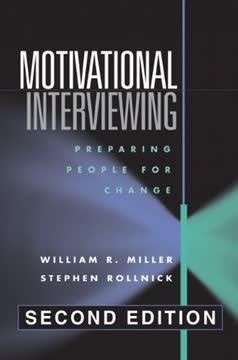
Every day, millions of people try to help other people change. A doctor tells a patient to lose weight. A probation officer warns an offender to stay clean. A spouse begs a partner to stop drinking. A manager coaches an employee to be more organized. A parent pleads with a teenager to take school seriously. Most of these efforts fail. Not because the advice is bad. Not because the person receiving it lacks information. Not because the consequences of not changing are unclear. They fail because of something deeper, something about how human beings respond to being told what to do. William R. Miller spent decades studying this problem. As a young psychologist working with people struggling with alcohol addiction, he noticed something puzzling. The more he tried to convince his clients that they needed to change, the more they defended their drinking. The harder he pushed, the more resistance he encountered. His training had taught him to confront denial, to break through defenses, to win the argument for sobriety. But winning the argument rarely produced change. Often, it produced the opposite. Then Miller began paying attention to a different kind of conversation. When he stopped trying to persuade and instead started listening, something shifted. Clients began talking about their own concerns. They voiced their own reasons for wanting something different. They started making arguments for change themselves, arguments that were far more convincing than anything Miller could have said. This observation became the foundation of motivational interviewing, a method Miller developed with Stephen Rollnick that has since transformed how professionals approach behavior change across dozens of fields. The core insight is deceptively simple: people are more likely to change when they hear themselves articulate their own reasons for changing than when someone else tells them why they should.…
Continue reading in the MinuteRead app
Get the complete 30-minute summary of Motivational Interviewing
Get the complete summary in the appPeople change when they hear themselves articulate their own reasons for changing, not when someone else tells them why
The righting reflex, the urge to fix other people's problems, produces resistance. Replace it with curiosity.
The spirit of motivational interviewing is partnership, acceptance, compassion, and evocation. Technique without spirit
The four core skills are open questions, affirmations, reflections, and summaries. Reflections are the heart of the meth
Change talk predicts change. Evoke it, reflect it, and reinforce it at every opportunity.
Resistance is interpersonal. Rolling with resistance reduces it. Confronting resistance increases it.
"Motivational Interviewing" is a strong fit if you want practical ideas around psychology, social work, counselling, especially themes like people change when they hear themselves articulate their own reasons for changing, not when someone else tells them why; the righting reflex, the urge to fix other people's problems, produces resistance. replace it with curiosity. The MinuteRead summary distills these concepts into a focused read, whether you're deciding whether to buy the book or applying its lessons at work.
William Richard Miller is a renowned American clinical psychologist and emeritus distinguished professor at the University of New Mexico. He co-founded motivational interviewing with Stephen Rollnick, revolutionizing the field of behavioral change. Miller's work focuses on developing effective treatments for addictions and improving the process of behavior change. His approach emphasizes empathy, client-centered care, and eliciting intrinsic motivation for change. Miller's contributions have sig…
View all summaries by William R. MillerContinue Reading
Access the complete 30-minute summary and thousands more nonfiction books in the MinuteRead app.

Continue reading the complete summary in the MinuteRead app.