MinuteRead
30 min
Book summary
Premium summary · Opens in the app · 30 min read
Stories not only help us connect with others but, as research indicates, they are far more likely to be remembered than numbers, perhaps because they trigger chemical reactions and electrical impulses that numbers do not.
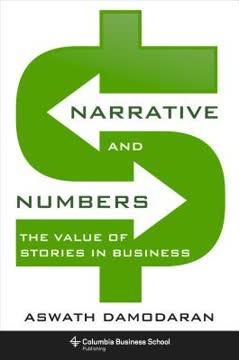
**Author:** Aswath Damodaran **Estimated Reading Time:** 45 minutes
**What You'll Learn:**
* Why stories matter as much as spreadsheets in valuation * How to test whether a business narrative is credible * How to convert a compelling story into defensible numbers * How to adapt narratives as companies grow and markets shift * How to build a feedback loop that makes your valuations better over time
**Who This Book Is For:**
Investors who want to look beyond multiples and understand what truly drives value. Entrepreneurs who need to communicate their vision in terms that withstand scrutiny. Analysts who feel trapped between the art of storytelling and the discipline of numbers. Anyone who has ever wondered why two people looking at the same company can arrive at wildly different valuations.
Every valuation begins with a story. Before an investor builds a spreadsheet, before an analyst projects revenue growth, before a venture capitalist decides whether to write a check, there is a narrative. It might be a story about a company that will transform how people move through cities. It might be a story about a retailer that will redefine convenience. It might be a story about a technology that will make energy nearly free. The story comes first. The numbers follow. Yet most finance education ignores this reality. Students learn discounted cash flow models as if the inputs arrive from nowhere. They master the mechanics of valuation without ever asking where the growth rates, margins, and risk measures come from. The result is a profession that often treats storytelling as a soft skill, something for marketing departments and TED talks, while treating numbers as the only legitimate language of business. Aswath Damodaran has spent decades teaching valuation at NYU's Stern School of Business, and he has reached a different conclusion. The best valuations, he argues, are not built on numbers alone or stories alone. They are built on the deliberate, disciplined connection between the two. A great valuation is a bridge that allows ideas to travel in both directions: stories become numbers, and numbers refine stories. The problem is that most people are better at one side of this bridge than the other. Storytellers can paint vivid pictures of the future but struggle to translate their vision into defensible assumptions. Number-crunchers can build elaborate models but cannot explain what their models actually assume about how the world will change. Each side suspects the other of missing the point. This book exists because the gap between narrative and numbers is costly. It leads to valuations that are either compelling but ungrounded, or precise but meaningless. It leads to investment decisions driven by charisma rather than analysis, or by formulas rather than understanding.…
Continue reading in the MinuteRead app
Get the complete 30-minute summary of Narrative and Numbers
Get the complete summary in the appValuation is a bridge between stories and numbers. The best valuations connect the two deliberately and iteratively.
A good business narrative is simple, credible, and actionable. If you cannot explain the story in a few sentences, you d
Test narratives against the three Ps: possibility, plausibility, and probability. Do not confuse what could happen with
Every number in a valuation is a story in disguise. Trace every input back to a claim in the narrative.
The model is not the valuation. The model calculates implications; the valuation is the judgment about which assumptions
Keep the feedback loop open. Seek disconfirming evidence, monitor key metrics, and update your narrative when the eviden
"Narrative and Numbers" is a strong fit if you want practical ideas around finance, business, economics, especially themes like valuation is a bridge between stories and numbers. the best valuations connect the two deliberately and iteratively; a good business narrative is simple, credible, and actionable. if you cannot explain the story in a few sentences, you d. The MinuteRead summary distills these concepts into a focused read, whether you're deciding whether to buy the book or applying its lessons at work.
Aswath Damodaran is a renowned finance professor at New York University's Stern School of Business, holding the Kerschner Family Chair in Finance Education. He is widely recognized for his expertise in corporate finance, valuation, and investment management. Damodaran has authored numerous influential academic and practitioner texts in these fields, making significant contributions to financial education and practice. His work bridges the gap between theoretical concepts and real-world applicati…
View all summaries by Aswath DamodaranContinue Reading
Access the complete 30-minute summary and thousands more nonfiction books in the MinuteRead app.

Continue reading the complete summary in the MinuteRead app.