MinuteRead
30 min
For decades, the fitness and nutrition advice given to women has been built on a quiet assumption: that female bodies function essentially the same as male bodies, just smaller. The research studies, the training protocols, the dietary guidelines, the recovery recommendations. All of it was designed around male physiology and then scaled down. For most of your life, you may have been able to make that advice work well enough. Your hormones followed a predictable monthly rhythm. Your body respond
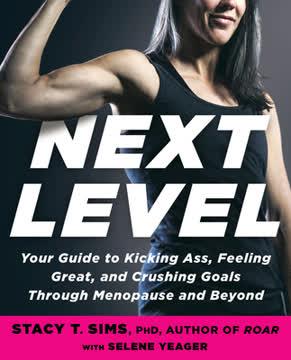
**Author:** Stacy T. Sims, PhD
**Estimated Reading Time:** 45 minutes
**What You'll Learn:** - Why menopause demands a fundamentally different approach to training and nutrition - How to use strength training, sprint intervals, and plyometrics to protect your body - What to eat, when to eat it, and why protein becomes non-negotiable - How to manage sleep, stress, and recovery during hormonal transition - How to build a personalized system that works for your unique physiology
**Who This Book Is For:** Active women approaching perimenopause, navigating menopause, or living post-menopause who refuse to accept the narrative that declining performance and vitality are inevitable. This is for women who want evidence-based strategies, not platitudes.
For decades, the fitness and nutrition advice given to women has been built on a quiet assumption: that female bodies function essentially the same as male bodies, just smaller. The research studies, the training protocols, the dietary guidelines, the recovery recommendations. All of it was designed around male physiology and then scaled down. For most of your life, you may have been able to make that advice work well enough. Your hormones followed a predictable monthly rhythm. Your body responded to training stimuli in familiar ways. You could push hard, recover, and come back stronger. Then something shifted. Maybe you noticed it first as a change in your sleep. Waking at 3 a.m., drenched in sweat, staring at the ceiling. Or perhaps it was the fatigue that no amount of coffee could touch. The workouts that used to energize you now left you depleted for days. The weight that used to come off with a few weeks of disciplined eating now seemed permanently attached to your midsection. Your mood swung without warning. Your patience thinned. Your motivation wavered. You might have wondered if you were just getting old. If this was simply what happened when a woman reached a certain age. If the best you could hope for was to manage the decline gracefully. This book exists to tell you something different. What you are experiencing is not the beginning of an inevitable downward slide. It is a physiological transition. And like any transition, it requires adaptation. The problem is not your body. The problem is that the playbook you have been using was written for a different game. Stacy Sims is an exercise physiologist and nutrition scientist who has spent her career studying female physiology. Her work has challenged the assumption that women should train and eat like men. In her previous book, ROAR, she addressed how women can optimize performance around their menstrual cycles. In Next Level, she turns her attention to the transition that every woman will eventually face: perimenopause and menopause. The central…
Continue reading in the MinuteRead app
Get the complete 30-minute summary of Next Level
Get the complete summary in the appMenopause is a transition that requires adaptation, not resignation.
Lift heavy weights two to three times per week to preserve muscle and support metabolism.
Do sprint intervals once or twice a week to improve cardiovascular fitness and insulin sensitivity.
Include plyometrics two to three times per week to protect bone density.
Eat 1.8 to 2.4 grams of protein per kilogram of body weight daily, spread evenly across meals.
Choose quality carbohydrates and time them around your workouts.
"Next Level" is a strong fit if you want practical ideas around health & fitness, health, self help, especially themes like menopause is a transition that requires adaptation, not resignation; lift heavy weights two to three times per week to preserve muscle and support metabolism. The MinuteRead summary distills these concepts into a focused read, whether you're deciding whether to buy the book or applying its lessons at work.
Stacy T. Sims, PhD is an exercise physiologist and nutrition scientist specializing in female physiology and performance. She has conducted extensive research on women's health and athletic performance, particularly focusing on the impacts of menstruation and menopause. Sims is known for challenging traditional approaches to women's fitness and nutrition, advocating for methods tailored specifically to female biology. She has worked with elite athletes and teams, and is a frequent speaker on wom…
View all summaries by Stacy T. SimsContinue Reading
Access the complete 30-minute summary and thousands more nonfiction books in the MinuteRead app.

Continue reading the complete summary in the MinuteRead app.