MinuteRead
30 min
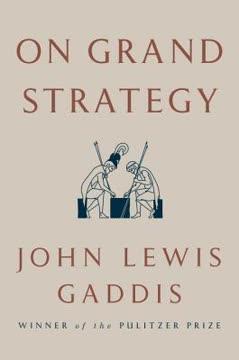
Every meaningful decision you will ever make involves a gap between what you want and what you can have. You want more time, more money, more influence, more security. Reality imposes limits on all of these. The question is not whether you will face this tension. The question is how you will navigate it.
**Author:** John Lewis Gaddis
**Estimated Reading Time:** 45 minutes
**What You'll Learn:** How great leaders across history have balanced ambitious goals with limited resources, why some strategies succeed while others fail, and how the principles of grand strategy apply to decisions in your own life.
**Who This Book Is For:** Anyone who must make consequential decisions under uncertainty. Whether you lead a nation, a company, a team, or simply your own life, the lessons here will help you think more clearly about the relationship between what you want and what you can actually achieve.
Every meaningful decision you will ever make involves a gap between what you want and what you can have. You want more time, more money, more influence, more security. Reality imposes limits on all of these. The question is not whether you will face this tension. The question is how you will navigate it. Most people respond to this tension in one of two ways. Some abandon their ambitions entirely, settling for whatever circumstances allow. They become passive, reactive, prisoners of the possible. Others ignore reality altogether, pursuing grand visions without regard for constraints. They become reckless, overextended, and eventually broken by forces they refused to acknowledge. Neither path leads anywhere good. John Lewis Gaddis spent decades teaching a course at Yale University on grand strategy, a subject traditionally reserved for military academies and foreign policy institutes. His students included future diplomats, intelligence officers, military leaders, and policymakers. But the questions he posed to them apply far beyond the corridors of power. How do you align what you aspire to with what you can actually accomplish? How do you hold onto big dreams while keeping your feet on the ground? How do you know when to push forward and when to pull back? These are not merely academic questions. They are the questions of every marriage, every career, every business venture, every personal transformation. They are the questions that determine whether a life amounts to something or dissolves into frustration and regret. Gaddis approaches these questions through history. He draws on two and a half millennia of recorded experience, from the ancient world to the Cold War, examining how leaders have grappled with the eternal tension between aspiration and limitation. He studies emperors and presidents, generals and philosophers, revolutionaries and reactionaries. He looks at those who succeeded and those who failed, and he asks what separated them. The answer, he discovered, is rarely intelligence. Many brilliant people have made catastrophic strategic errors. It is rarely courage. Many brave people have led their followers into disaster. It is rarely even luck, though luck always plays a role. The critical quality, Gaddis argues, is something more subtle: the…
Continue reading in the MinuteRead app
Get the complete 30-minute summary of On Grand Strategy
Get the complete summary in the appGrand strategy is aligning what you want with what you can actually achieve.
Be firm on your goals, flexible on your methods.
Respect reality. Do not try to whip the Hellespont.
Focus on what you can control. Build capabilities that reduce your dependence on luck.
Cultivate legitimacy. How others perceive your power matters as much as the power itself.
Learn from history. The patterns of success and failure are timeless.
"On Grand Strategy" is a strong fit if you want practical ideas around history, politics, philosophy, especially themes like grand strategy is aligning what you want with what you can actually achieve; be firm on your goals, flexible on your methods. The MinuteRead summary distills these concepts into a focused read, whether you're deciding whether to buy the book or applying its lessons at work.
John Lewis Gaddis is a renowned American historian and professor at Yale University, specializing in Cold War history and grand strategy. He has authored numerous books on American foreign policy and international relations, winning the 2012 Pulitzer Prize for his biography of George F. Kennan. Gaddis is known for his insightful analysis of historical events and their implications for contemporary politics. His work often combines deep historical knowledge with strategic thinking, exploring how …
View all summaries by John Lewis GaddisContinue Reading
Access the complete 30-minute summary and thousands more nonfiction books in the MinuteRead app.

Continue reading the complete summary in the MinuteRead app.