MinuteRead
30 min
Book summary
Premium summary · Opens in the app · 30 min read
You want to change. Maybe you want to lose weight, start exercising, write a book, build a business, or simply become more organized. You have read the books, attended the seminars, and made the resolutions. You have felt the surge of motivation that comes with a fresh start. And yet, weeks or months later, you find yourself exactly where you began.
**Author:** Robert Maurer, Ph.D.
**Estimated Reading Time:** 45 minutes
**What You'll Learn:**
* Why radical change so often fails despite our best intentions * How the Japanese philosophy of kaizen can transform your life through small steps * Practical techniques for bypassing fear and resistance in your brain * How to build lasting habits without relying on willpower * Ways to solve problems before they become crises * How to tap into intrinsic motivation for sustainable success
**Who This Book Is For:**
This book is for anyone who has ever set a big goal and failed to achieve it. It is for people who feel stuck, overwhelmed, or frustrated by their inability to change. It is for perfectionists who wait for the perfect moment to begin. It is for professionals seeking better results with less stress. It is for anyone who has tried to improve their health, relationships, career, or personal life and found themselves back where they started. If you have ever wondered why change is so hard, this book offers a surprisingly simple answer and an even more surprising solution.
You want to change. Maybe you want to lose weight, start exercising, write a book, build a business, or simply become more organized. You have read the books, attended the seminars, and made the resolutions. You have felt the surge of motivation that comes with a fresh start. And yet, weeks or months later, you find yourself exactly where you began. Why does this happen? Why do so many sincere attempts at change end in frustration? The answer lies not in your character or your willpower. It lies in your brain. Human beings are wired for survival. Deep within your brain sits a small almond-shaped structure called the amygdala. Its job is to keep you alive by detecting threats and triggering the fight-or-flight response. This system worked beautifully when our ancestors faced predators on the savanna. But today, it responds to a different kind of threat: change. When you attempt a radical transformation, your brain perceives it as danger. The amygdala sounds the alarm. Your rational mind shuts down. Fear takes over. And you retreat to familiar patterns, even when those patterns are harmful. This is why diets fail. This is why gym memberships go unused. This is why New Year's resolutions rarely survive February. Robert Maurer discovered a solution to this problem in an unexpected place: Japanese manufacturing. After World War II, American business experts traveled to Japan to help rebuild the country's industrial base. They introduced concepts of quality control and continuous improvement. The Japanese embraced these ideas and refined them into a philosophy called kaizen, which means "continuous improvement through small steps." Kaizen transformed Japanese…
Continue reading in the MinuteRead app
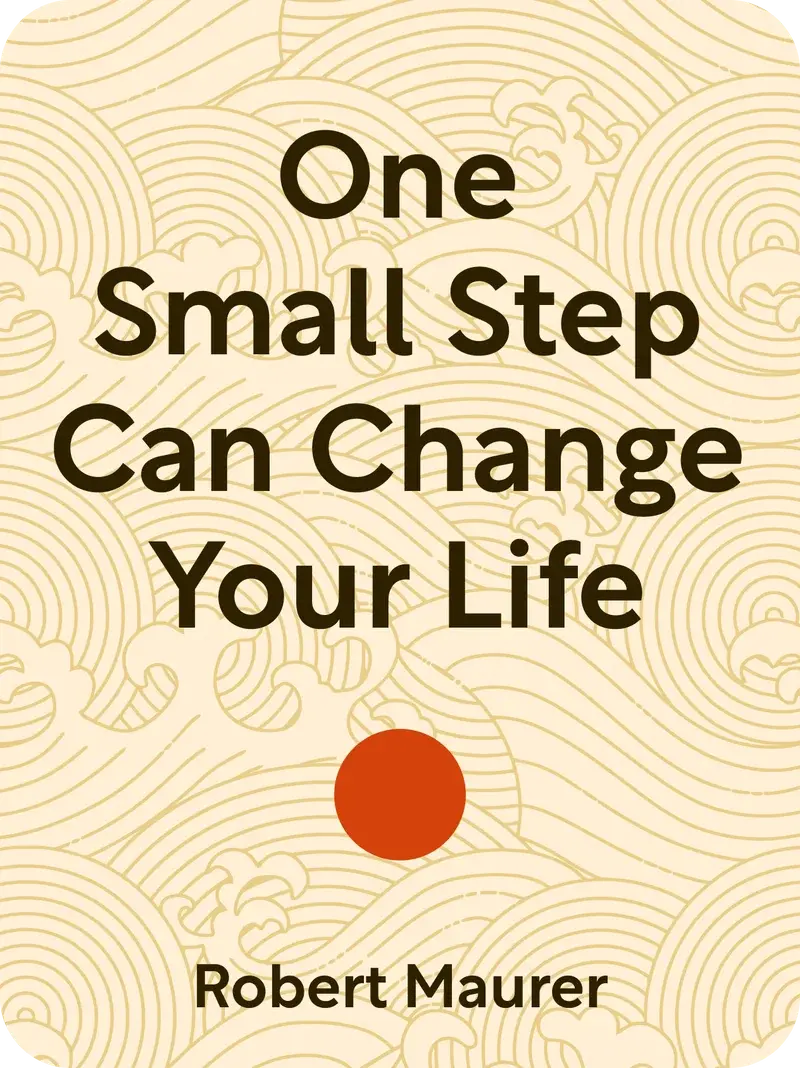
Get the complete 30-minute summary of One Small Step Can Change Your Life
Get the complete summary in the appRadical change triggers the brain's fear response, making it difficult to sustain.
Small steps bypass the fear response by avoiding the perception of threat.
Make steps so small that they seem ridiculous. If a step triggers resistance, make it smaller.
Ask small questions to engage the brain without triggering fear.
Use mind sculpture to mentally rehearse challenging situations in vivid detail.
Take small actions daily. Consistency matters more than intensity.
"One Small Step Can Change Your Life" is a strong fit if you want practical ideas around self help, business, psychology, especially themes like radical change triggers the brain's fear response, making it difficult to sustain; small steps bypass the fear response by avoiding the perception of threat. The MinuteRead summary distills these concepts into a focused read, whether you're deciding whether to buy the book or applying its lessons at work.
Robert Maurer, Ph.D. is a clinical psychologist with faculty positions at UCLA and the University of Washington Schools of Medicine. He founded the Science of Excellence consulting firm and is known for his expertise in kaizen, a Japanese concept for continuous improvement. Maurer travels extensively, presenting seminars and consulting on kaizen to diverse organizations, including corporations, hospitals, universities, and even the U.S. Navy. His work focuses on applying kaizen principles to per…
View all summaries by Robert MaurerContinue Reading
Access the complete 30-minute summary and thousands more nonfiction books in the MinuteRead app.

Continue reading the complete summary in the MinuteRead app.