MinuteRead
30 min
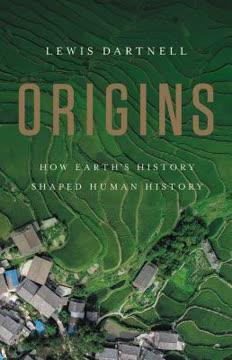
Human history is usually told as a story of kings and queens, wars and treaties, inventions and ideas. We focus on the actions of remarkable individuals and the rise and fall of nations. But beneath all of this human drama lies a deeper story, one that has been unfolding for billions of years and continues to shape everything we do.
**Author:** Lewis Dartnell
**Estimated Reading Time:** 45 minutes
**What You'll Learn:**
How the physical Earth shaped human evolution, guided our migrations, enabled agriculture, powered industrialization, and continues to influence the trajectory of civilization. You will understand why humanity's story cannot be separated from geology, climate, and the deep history of the planet.
**Who This Book Is For:**
Anyone curious about the hidden forces behind human history. If you have ever wondered why civilizations emerged where they did, why some regions developed advanced technology while others did not, or how the ground beneath our feet made the modern world possible, this book will change how you see the planet.
Human history is usually told as a story of kings and queens, wars and treaties, inventions and ideas. We focus on the actions of remarkable individuals and the rise and fall of nations. But beneath all of this human drama lies a deeper story, one that has been unfolding for billions of years and continues to shape everything we do. The Earth itself has been an active participant in the human story. The ground we walk on, the mountains we admire, the oceans we cross, and the fuels we burn are not passive backdrops to history. They are active forces that have directed the course of human evolution, determined where we could settle, what we could eat, what tools we could build, and how far we could travel. Consider a simple fact. The continents are not fixed. They drift slowly across the surface of the planet, colliding and separating over hundreds of millions of years. When they collide, they push up mountain ranges. When they separate, they create oceans. These movements have determined where resources are found, where fertile soils exist, and where natural barriers divide one people from another. The collision of the Indian plate with the Eurasian plate created the Himalayas, which in turn shaped the climate of all of Asia. The formation of the East African Rift Valley created a unique environment of lakes, forests, and grasslands that challenged our earliest ancestors and drove the evolution of intelligence. The closing of the Isthmus of Panama changed ocean currents and may have helped trigger the ice ages that later allowed humans to spread across the globe. These are not minor details. They are the very foundations of our existence. Lewis Dartnell's central insight is that human history is a continuation of Earth's history. The same geological processes that created mountains and oceans also created the conditions for our species to emerge and thrive. The same biological processes that filled the atmosphere with oxygen also created the limestone we used to build our monuments. The same ancient forests that once covered…
Continue reading in the MinuteRead app
Get the complete 30-minute summary of Origins
Get the complete summary in the appThe Earth is an active participant in human history, not a passive backdrop. Geological processes have shaped human evol
The East African Rift Valley created the environmental conditions that drove the evolution of human intelligence and ada
Ice ages created land bridges and migration routes that enabled humans to spread across the globe.
Plate tectonics created the fertile soils, water resources, and mineral deposits that made civilization possible.
Many rocks and fuels are the remains of ancient life, including limestone, chalk, coal, and oil.
The domestication of plants, particularly wheat, rice, and maize, enabled the development of settled societies and compl
"Origins" is a strong fit if you want practical ideas around history, science, geography, especially themes like the earth is an active participant in human history, not a passive backdrop. geological processes have shaped human evol; the east african rift valley created the environmental conditions that drove the evolution of human intelligence and ada. The MinuteRead summary distills these concepts into a focused read, whether you're deciding whether to buy the book or applying its lessons at work.
Lewis Dartnell is an astrobiology researcher and professor at the University of Westminster. He has gained recognition for his science writing, winning several awards and contributing to major publications like The Guardian and New Scientist. Dartnell has also made television appearances on various science programs and channels. As a passionate science communicator, he works to make complex topics accessible to the general public. His previous book, "The Knowledge: How to Rebuild Our World from …
View all summaries by Lewis DartnellContinue Reading
Access the complete 30-minute summary and thousands more nonfiction books in the MinuteRead app.

Continue reading the complete summary in the MinuteRead app.