MinuteRead
30 min
Book summary
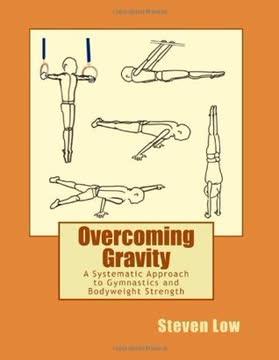
by Steven Low
Premium summary · Opens in the app · 30 min read
Most people think bodyweight training is simple. Drop down and do pushups until it burns. Find a pull-up bar and struggle through a few reps. Maybe hold a plank for as long as you can. The problem is that this approach works for a few weeks and then stops working entirely. You plateau. You get bored. Your joints start to ache. You conclude that bodyweight training is fine for maintenance but useless for building real strength.
**Author:** Steven Low **Estimated Reading Time:** 38 minutes
**What You'll Learn:**
- How to build genuine strength using only your bodyweight - Why progressive overload works differently in gymnastics-style training - How to construct balanced routines that prevent injury and maximize gains - The role of skill work, mobility, and recovery in long-term progress - How to adapt your training as you move from beginner to advanced levels
**Who This Book Is For:**
This book is for anyone who wants to build serious strength without relying on barbells, machines, or expensive equipment. It is for the beginner who cannot yet do a single pull-up and for the intermediate athlete who has plateaued. It is for the former gymnast looking to rebuild foundational strength and for the complete newcomer who wants a systematic approach to bodyweight training. If you have ever wondered how to progress from wall pushups to full planche, or from hanging on a bar to front levers, this book provides the roadmap.
Most people think bodyweight training is simple. Drop down and do pushups until it burns. Find a pull-up bar and struggle through a few reps. Maybe hold a plank for as long as you can. The problem is that this approach works for a few weeks and then stops working entirely. You plateau. You get bored. Your joints start to ache. You conclude that bodyweight training is fine for maintenance but useless for building real strength. That conclusion is wrong. The problem is not bodyweight training itself. The problem is that most people approach it without understanding the principles that make any strength training program effective. They treat bodyweight exercises as a random collection of movements rather than as a system that can be progressively loaded, carefully programmed, and systematically advanced over years of training. Steven Low wrote Overcoming Gravity to solve this problem. The book emerged from years of answering questions in online fitness communities, where the same issues appeared again and again. People wanted to know how to progress from beginner pushups to advanced skills like the planche and front lever. They wanted to know how to structure their workouts. They wanted to know why their progress had stalled. They wanted to know how to train without destroying their wrists, elbows, and shoulders. Low's background makes him uniquely qualified to answer these questions. He is a former gymnast who understands what high-level bodyweight strength actually looks like. He is also a doctor of physical therapy who understands how the human body adapts to stress, how injuries develop, and how proper programming can prevent them. This combination of practical experience and scientific knowledge shapes every chapter of the book. The central insight of Overcoming Gravity…
Continue reading in the MinuteRead app
Get the complete 30-minute summary of Overcoming Gravity
Get the complete summary in the appMaster fundamental bodyweight exercises before progressing to advanced skills.
Apply progressive overload through harder variations, not just more repetitions.
Maintain proper form on every repetition. Perfect practice makes perfect.
Build balanced routines with pushing, pulling, leg, and core exercises.
Include skill work, mobility, and flexibility in your training.
Match your training approach to your current fitness level.
"Overcoming Gravity" is a strong fit if you want practical ideas around health & fitness, fitness, health, especially themes like master fundamental bodyweight exercises before progressing to advanced skills; apply progressive overload through harder variations, not just more repetitions. The MinuteRead summary distills these concepts into a focused read, whether you're deciding whether to buy the book or applying its lessons at work.
Steven Low is a highly regarded expert in bodyweight fitness and gymnastics-style strength training. He holds a doctorate in physical therapy, which informs his scientific approach to exercise and injury prevention. Low's background as a former gymnast adds practical experience to his academic knowledge. He is known for his active participation in online fitness communities, particularly on Reddit, where he offers advice and clarifications on topics related to calisthenics and bodyweight trainin…
View all summaries by Steven LowContinue Reading
Access the complete 30-minute summary and thousands more nonfiction books in the MinuteRead app.

Continue reading the complete summary in the MinuteRead app.