MinuteRead
30 min
Book summary
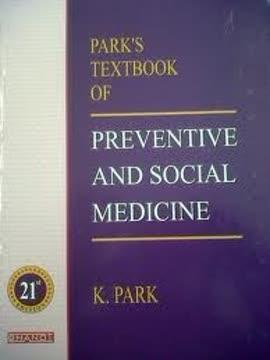
by K. Park
Premium summary · Opens in the app · 30 min read
Every physician learns to treat the patient in front of them. But the patient in front of you is never just an individual. They carry within them the story of their community: the water they drink, the air they breathe, the food they can afford, the education they received, the stress they endure, and the institutions that either protect or fail them. To understand health without understanding these forces is to see only half the picture.
**Author:** K. Park
**Estimated Reading Time:** 45 minutes
**What You'll Learn:**
- How medicine evolved from ancient superstition to modern scientific practice - Why health is far more than the absence of disease - The tools used to measure and understand community health - The complex web of factors that determine whether people stay well or become sick - How diseases spread and how public health interventions stop them - The structure of national health programs and why they matter
**Who This Book Is For:**
This condensed edition is for medical students preparing for examinations, healthcare professionals seeking a deeper understanding of community medicine, public health practitioners, policymakers, and anyone curious about the forces that shape human health at the population level. If you have ever wondered why some communities thrive while others struggle with preventable illness, this book will give you the framework to understand why.
Every physician learns to treat the patient in front of them. But the patient in front of you is never just an individual. They carry within them the story of their community: the water they drink, the air they breathe, the food they can afford, the education they received, the stress they endure, and the institutions that either protect or fail them. To understand health without understanding these forces is to see only half the picture. This is the territory of preventive and social medicine, a field that asks a different kind of question. Instead of asking what disease a person has, it asks why this person, in this place, at this time, became sick in the first place. Instead of asking how to treat an illness, it asks how to prevent that illness from ever occurring. Instead of focusing on the individual body, it focuses on the community as a living system. K. Park's textbook has become the standard reference for this field in India and beyond. It is a comprehensive work, spanning thousands of pages across multiple editions, covering everything from the history of medicine to the epidemiology of infectious diseases to the structure of national health programs. Its reputation among medical students is legendary, and for good reason. It provides a framework for thinking about health that is both rigorous and humane. The central insight of this book is deceptively simple: health is not merely a biological state. It is a social product. The conditions in which people are born, grow, live, work, and age shape their health outcomes more profoundly than any single medical intervention. This insight, first articulated by the pioneers of public health in the nineteenth century, has only grown more urgent in the twenty-first century, as chronic diseases, environmental degradation, and health inequities have become defining…
Continue reading in the MinuteRead app
Get the complete 30-minute summary of Park's Textbook of Preventive and Social Medicine
Get the complete summary in the appHealth is more than the absence of disease; it is a positive state of physical, mental, and social well-being.
Health is determined by multiple interacting factors, including genetics, behavior, environment, socioeconomic condition
The social gradient in health means that at every step up the socioeconomic ladder, health improves.
Most diseases have multiple causes that interact in complex ways, and understanding this web of causation allows for mul
Epidemiology is the basic science of public health, providing the tools for measuring health, identifying risk factors,
Infectious diseases are transmitted through a chain of transmission, and control measures target different links in the
"Park's Textbook of Preventive and Social Medicine" is a strong fit if you want practical ideas around health & fitness, medicine, medical, especially themes like health is more than the absence of disease; it is a positive state of physical, mental, and social well-being; health is determined by multiple interacting factors, including genetics, behavior, environment, socioeconomic condition. The MinuteRead summary distills these concepts into a focused read, whether you're deciding whether to buy the book or applying its lessons at work.
K. Park is a renowned author in the field of preventive and social medicine. While specific biographical information is not provided in the given content, Park's reputation is evident from the widespread use and recognition of their textbook. The book's popularity among medical students and professionals suggests that Park possesses extensive knowledge and expertise in community medicine. As the author of a text considered a gold standard in its field, Park has made significant contributions to …
View all summaries by K. ParkContinue Reading
Access the complete 30-minute summary and thousands more nonfiction books in the MinuteRead app.

Continue reading the complete summary in the MinuteRead app.