MinuteRead
30 min
Book summary
Premium summary · Opens in the app · 30 min read
Most investors spend their time asking the wrong questions. They want to know which stock will double this year, which sector is hot, or what the market will do next month. Philip Fisher spent his career asking a different set of questions entirely. He wanted to understand the fundamental forces that shape corporate profitability over decades, not quarters. He wanted to know why some companies compound wealth for their shareholders while others destroy it. And he wanted to understand the economi
**Author:** Philip A. Fisher
**Estimated Reading Time:** 45 minutes
**What You'll Learn:**
- Why inflation is a permanent feature of the American economic landscape and how to invest accordingly - How institutional investors have fundamentally changed stock market dynamics - Which industries offered the most promising long-term investment opportunities - How to evaluate mergers, acquisitions, and corporate growth strategies - The practical application of Fisher's investment philosophy in building lasting wealth
**Who This Book Is For:**
This book is for the individual investor who wants to understand the broader economic forces shaping stock market returns. It is for those who recognize that successful investing requires more than picking stocks. It requires understanding the environment in which those stocks operate. Whether you are a seasoned investor or just beginning to think seriously about building wealth through common stocks, Fisher's insights into inflation, institutional behavior, and industry dynamics provide a framework for making better long-term decisions.
Most investors spend their time asking the wrong questions. They want to know which stock will double this year, which sector is hot, or what the market will do next month. Philip Fisher spent his career asking a different set of questions entirely. He wanted to understand the fundamental forces that shape corporate profitability over decades, not quarters. He wanted to know why some companies compound wealth for their shareholders while others destroy it. And he wanted to understand the economic environment in which all investment decisions must be made. Fisher wrote this book at a pivotal moment in American economic history. The post-war boom was in full swing. The baby boom generation was transforming consumption patterns. Institutional investors were beginning to dominate the stock market. Foreign competition was emerging as a serious threat to American industrial dominance. And inflation, once considered a temporary wartime phenomenon, was becoming a permanent feature of the economic landscape. The investing public was largely unprepared for these changes. Many investors still operated under assumptions that had been valid in the 1930s and 1940s but were increasingly obsolete. They worried about another Great Depression. They feared that high estate taxes would force wealthy families to liquidate their stock holdings. They believed that the government would eventually balance its budget and restore fiscal discipline. Fisher saw things differently. He recognized that the rules of the game had changed. The combination of government spending commitments, institutional buying power, and technological innovation had created a new investment environment. Those who understood this environment could prosper. Those who clung to outdated assumptions would struggle. The problem Fisher addresses is not simply how to pick stocks. It is how to think about investing in a world where inflation erodes purchasing power, where institutional investors dominate trading,…
Continue reading in the MinuteRead app
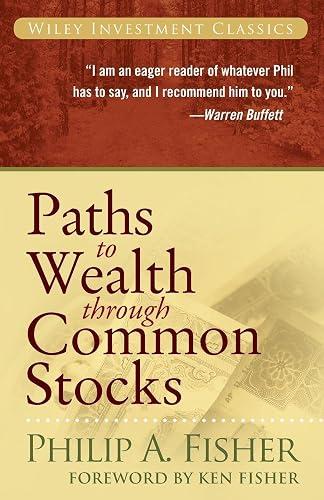
Get the complete 30-minute summary of Paths to Wealth Through Common Stocks
Get the complete summary in the appInflation is inevitable because government spending commitments exceed revenue during economic downturns.
Common stocks are essential for preserving and growing wealth in an inflationary environment.
The real danger of inflation is not inflation itself but making hasty investment decisions out of fear.
Institutional buying has created an upward bias in stock prices by concentrating demand on a small number of high-qualit
Look for companies on the edge of institutional acceptance, not companies that institutions already favor.
Companies must maintain technological leadership or differentiate their products to compete against foreign competition.
"Paths to Wealth Through Common Stocks" is a strong fit if you want practical ideas around finance, money, business, especially themes like inflation is inevitable because government spending commitments exceed revenue during economic downturns; common stocks are essential for preserving and growing wealth in an inflationary environment. The MinuteRead summary distills these concepts into a focused read, whether you're deciding whether to buy the book or applying its lessons at work.
Motivated to help readers with "As long as the overwhelming majority of Americans maintain firmly held existing opinions concerning the, Philip A. Fisher wrote “Paths to Wealth Through Common Stocks” to package those ideas for a fast, focused read. In “Paths to Wealth Through Common Stocks”, Philip A. Fisher focuses on "As long as the overwhelming majority of Americans maintain firmly held existing opinions concerning the. Through “Paths to Wealth Through Common Stocks”, Philip A. Fisher distill…
View all summaries by Philip A. FisherContinue Reading
Access the complete 30-minute summary and thousands more nonfiction books in the MinuteRead app.

Continue reading the complete summary in the MinuteRead app.