MinuteRead
30 min
Book summary
Premium summary · Opens in the app · 30 min read
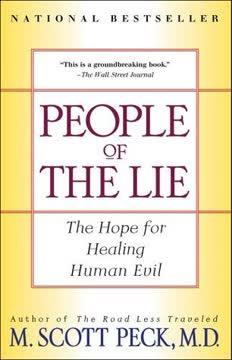
Most books about human evil focus on the obvious cases. Serial killers. Dictators. War criminals. People whose cruelty is so visible that no one can deny it. M. Scott Peck takes a different approach. As a psychiatrist with decades of clinical experience, he became convinced that the most dangerous forms of evil are not the ones that make headlines. They are the ones that sit across from you at the dinner table, attend your church, run your company, and sometimes raise you.
**Author:** M. Scott Peck **Estimated Reading Time:** 45 minutes
**What You'll Learn:**
- How to recognize the subtle patterns of human evil that hide in ordinary life - Why some people consistently destroy others while maintaining a flawless public image - The psychological mechanisms that allow evil to flourish in individuals and groups - How self-deception, narcissism, and the refusal to face pain create destructive behavior - What you can do to guard against evil in yourself and in the organizations you belong to
**Who This Book Is For:**
This book is for anyone who has ever encountered a person who seemed charming on the surface yet left a trail of broken relationships and confused victims behind them. It is for those who have wondered how ordinary people participate in atrocities. It is for readers who want to understand the darker dimensions of human nature not as abstract philosophy but as a practical reality that affects families, workplaces, and communities. Most importantly, it is for anyone willing to look honestly at their own capacity for self-deception.
Most books about human evil focus on the obvious cases. Serial killers. Dictators. War criminals. People whose cruelty is so visible that no one can deny it. M. Scott Peck takes a different approach. As a psychiatrist with decades of clinical experience, he became convinced that the most dangerous forms of evil are not the ones that make headlines. They are the ones that sit across from you at the dinner table, attend your church, run your company, and sometimes raise you. Peck wrote People of the Lie because he noticed something disturbing in his practice. Certain patients came to him not because they were suffering from their own problems, but because they were suffering from someone else's. They were the children, spouses, and employees of people who seemed, from the outside, to be entirely respectable. Yet these patients arrived depressed, anxious, confused, and unable to trust their own perceptions of reality. They had been systematically broken down by people who appeared to love them. The problem was that these destructive individuals almost never sought help themselves. They believed they were fine. More than fine. They believed they were exceptional. They were the victims, the misunderstood ones, the people who had been unfairly treated by those who failed to appreciate their goodness. When confronted with the pain they caused, they denied it. When shown evidence of their cruelty, they reinterpreted it. When pushed too hard, they attacked. Peck realized that traditional psychiatric categories did not adequately capture what he was seeing. These people were not psychotic. They functioned well in society. They held jobs, maintained friendships, and often occupied positions of authority. They were…
Continue reading in the MinuteRead app
Get the complete 30-minute summary of People of the Lie
Get the complete summary in the appEvil is real, active, and seeks to destroy life and liveliness in all its forms.
Evil people often appear ordinary, respectable, and even virtuous. Their destructiveness is hidden behind a mask of good
The evil person's need to maintain a false self-image is the engine of their destructive behavior.
Self-deception is the mechanism that makes evil possible. Evil people must first lie to themselves before they can lie t
Evil is rooted in malignant narcissism and the refusal to submit to any authority outside the self.
Laziness, especially the refusal to face necessary pain, is a major contributor to evil.
"People of the Lie" is a strong fit if you want practical ideas around psychology, self help, religion, especially themes like evil is real, active, and seeks to destroy life and liveliness in all its forms; evil people often appear ordinary, respectable, and even virtuous. their destructiveness is hidden behind a mask of good. The MinuteRead summary distills these concepts into a focused read, whether you're deciding whether to buy the book or applying its lessons at work.
M. Scott Peck was an American psychiatrist and author born in 1936. He received his medical degree from Case Western Reserve University and served in the U.S. Army. Peck wrote several bestselling books, including The Road Less Traveled, which sold over six million copies. He explored themes of spiritual growth, community, and human behavior in his works. Peck converted to Christianity in 1980 and incorporated religious themes into his writing and psychiatric practice. He authored both non-fictio…
View all summaries by M. Scott PeckContinue Reading
Access the complete 30-minute summary and thousands more nonfiction books in the MinuteRead app.

Continue reading the complete summary in the MinuteRead app.