MinuteRead
30 min
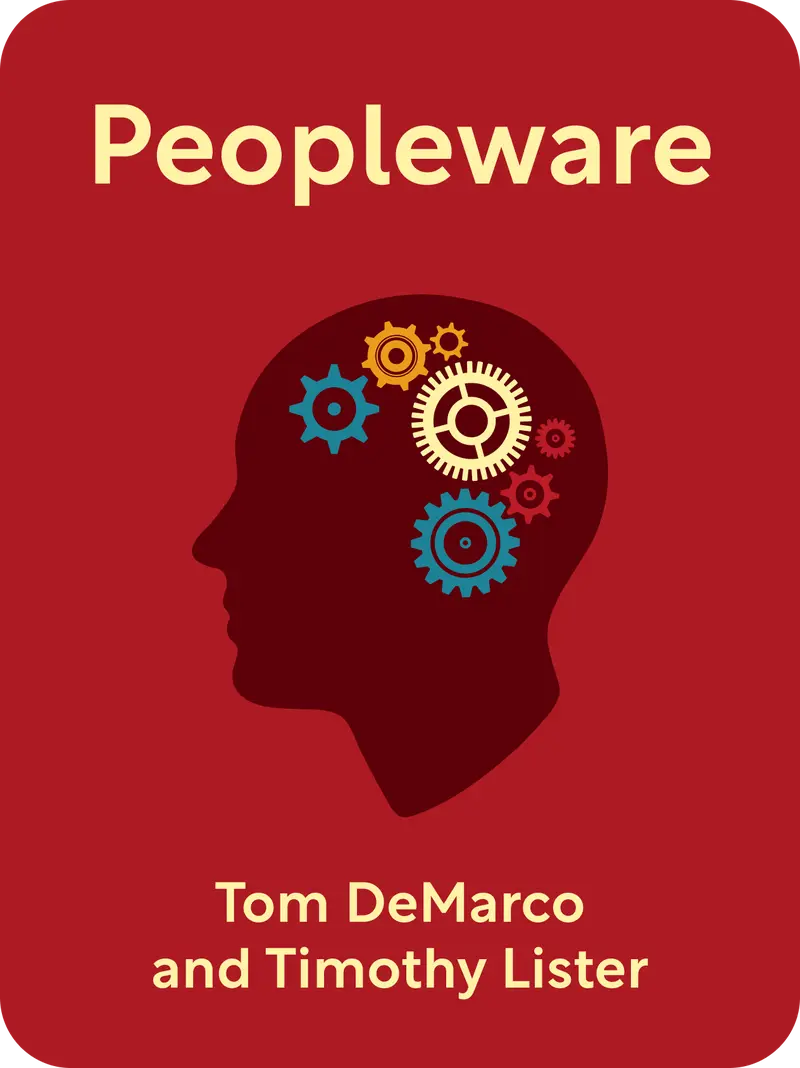
Book summary
by Tom DeMarco
Premium summary · Opens in the app · 30 min read
In the late 1970s and early 1980s, the software industry was obsessed with technology. New programming languages appeared every few months. Hardware capabilities doubled at a dizzying pace. Methodologies promised to solve the software crisis through better processes, better tools, better techniques.
**Author:** Tom DeMarco
**Estimated Reading Time:** 45 minutes
**What You'll Learn:**
Why the biggest challenges in software development are human, not technical. How to create environments where talented people can do their best work. What makes teams jell and why that matters more than any methodology. How to stop wasting people's time and start unlocking their potential.
**Who This Book Is For:**
Anyone who manages, leads, or works alongside knowledge workers. Software developers who want to understand why some projects succeed while others fail. Executives who suspect their organization's problems are not primarily technical. Team leads who want to build groups that genuinely enjoy working together.
In the late 1970s and early 1980s, the software industry was obsessed with technology. New programming languages appeared every few months. Hardware capabilities doubled at a dizzying pace. Methodologies promised to solve the software crisis through better processes, better tools, better techniques. Tom DeMarco and Timothy Lister looked at this landscape and noticed something strange. The projects that succeeded were not necessarily the ones with the best technology. The teams that delivered consistently were not the ones with the most sophisticated tools. The organizations that thrived were not the ones with the most rigorous processes. Something else was going on. Peopleware began as a research project. DeMarco and Lister ran coding war games, competitions where teams of developers worked on identical problems under controlled conditions. The results were startling. The best performers outperformed the worst by factors of ten to one. Even more interesting, the differences had almost nothing to do with programming languages, tools, or technical skill. The best performers came from organizations that gave them quiet places to work, respected their time, and fostered genuine team cohesion. The book that emerged from this research became one of the most influential works in software management history. Its central message is simple but profound: the major problems of our work are not so much technological as sociological in nature. This message was radical when the book first appeared in 1987. It remains radical today. The technology industry still worships at the altar of the new. We still believe that the next framework, the next language, the next tool will solve our problems. We still invest enormous resources in technology while neglecting the human factors that determine whether any technology will be used effectively. DeMarco and Lister called this the High-Tech Illusion. It is the belief that because our work involves technology, our problems must be technological. This belief is wrong. The problems that plague software projects are the same problems that have plagued human endeavors for centuries: poor communication, lack of trust, wasted time, unclear goals, and environments that crush rather than nurture human…
Continue reading in the MinuteRead app
Get the complete 30-minute summary of Peopleware
Get the complete summary in the appThe major problems of software development are sociological, not technological.
The physical environment directly affects cognitive performance. Quiet, private workspaces are essential for knowledge w
Interruptions are the primary destroyer of productivity. The cost includes recovery time, not just the interruption itse
Hire for demonstrated skills, not claimed abilities. Use work sample tests.
Retention is as important as hiring. People leave when they cannot do their best work.
Jelled teams achieve extraordinary results. They cannot be forced, but they can be nurtured.
"Peopleware" is a strong fit if you want practical ideas around management, business, programming, especially themes like the major problems of software development are sociological, not technological; the physical environment directly affects cognitive performance. quiet, private workspaces are essential for knowledge w. The MinuteRead summary distills these concepts into a focused read, whether you're deciding whether to buy the book or applying its lessons at work.
Tom DeMarco is an accomplished author with fifteen published books spanning various genres. His works include five novels, a short story collection, and several business-oriented books. DeMarco's most recent publication is "The One-Way Time Traveler," a love story described as "seemingly jinxed." Prior to this, he wrote "Dark Harbor House." DeMarco is perhaps best known for his business books, including the widely acclaimed "Slack," "Peopleware," and "The Deadline." These works have established …
View all summaries by Tom DeMarcoContinue Reading
Access the complete 30-minute summary and thousands more nonfiction books in the MinuteRead app.

Continue reading the complete summary in the MinuteRead app.