MinuteRead
30 min
Book summary
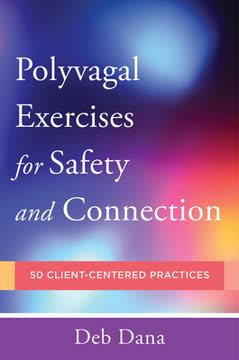
by Deb Dana
Premium summary · Opens in the app · 30 min read
There is a conversation happening inside you right now, beneath your awareness, that determines how you feel, what you notice, how you respond to the people around you, and what possibilities seem available in any given moment. This conversation is not made of words. It is made of physiological states. Your heart rate, your breath, the tension in your muscles, the expression on your face, the quality of your attention. All of these are being shaped by a system that evolved over hundreds of milli
**Author:** Deb Dana
**Estimated Reading Time:** 45 minutes
**What You'll Learn:** How your autonomic nervous system silently shapes every experience you have, why you sometimes react in ways that mystify you, and practical exercises to build a felt sense of safety, regulation, and deeper connection with others.
**Who This Book Is For:** Anyone who has ever felt hijacked by their own reactions, struggled to feel safe in relationships, or wanted a practical, body-based approach to emotional well-being. This is for therapists, trauma survivors, and curious readers who sense that lasting change requires more than thinking differently.
There is a conversation happening inside you right now, beneath your awareness, that determines how you feel, what you notice, how you respond to the people around you, and what possibilities seem available in any given moment. This conversation is not made of words. It is made of physiological states. Your heart rate, your breath, the tension in your muscles, the expression on your face, the quality of your attention. All of these are being shaped by a system that evolved over hundreds of millions of years to answer one fundamental question: Am I safe? Deb Dana has spent her career helping people understand this system. She is a clinician, a consultant, and one of the foremost translators of polyvagal theory into practical therapeutic work. Her book, *Polyvagal Exercises for Safety and Connection*, is not a theoretical treatise. It is a field guide. It offers concrete, repeatable practices for befriending the nervous system, recognizing its states, and gradually shaping it toward greater flexibility and connection. The problem Dana addresses is both ancient and urgently modern. Human beings are wired for connection. Our nervous systems expect to be regulated in the presence of other nervous systems. Yet so many of us live in a state of chronic low-grade threat. We rush, we worry, we brace. We feel disconnected from our bodies and from each other. We develop elaborate coping strategies that keep us functioning but leave us depleted. And when something truly difficult happens, we may find ourselves either exploding in ways we regret or shutting down entirely, unable to access the very resources we need. What makes Dana's approach different is that she does not ask you to override your nervous system with willpower. She does not suggest that you simply think more positively or reframe your way out of distress. Instead, she invites you to become curious about the system itself. To listen to it. To map its territories. To recognize that every state, even the most painful, is the nervous system's attempt to protect you. From that place of understanding, real change becomes possible. The central insight of polyvagal theory, developed by…
Continue reading in the MinuteRead app
Get the complete 30-minute summary of Polyvagal Exercises for Safety and Connection
Get the complete summary in the appYour autonomic nervous system has three states: ventral vagal (safety), sympathetic (fight/flight), and dorsal vagal (sh
Neuroception is your subconscious threat detection system. It shapes your experience before you are consciously aware.
Co-regulation is a biological need. You need other nervous systems to help regulate your own.
Befriend your nervous system with curiosity and compassion, not force and control.
Attend to your states moment by moment. Awareness is the prerequisite for choice.
Shape your nervous system through sound, movement, breath, environment, and connection.
"Polyvagal Exercises for Safety and Connection" is a strong fit if you want practical ideas around health & fitness, psychology, mental health, especially themes like your autonomic nervous system has three states: ventral vagal (safety), sympathetic (fight/flight), and dorsal vagal (sh; neuroception is your subconscious threat detection system. it shapes your experience before you are consciously aware. The MinuteRead summary distills these concepts into a focused read, whether you're deciding whether to buy the book or applying its lessons at work.
Deb Dana is a renowned expert in trauma therapy and polyvagal theory. As a clinician and consultant, she specializes in complex trauma treatment. Dana holds a significant role as the Coordinator of the Traumatic Stress Research Consortium at Indiana University's Kinsey Institute. Her contributions to the field include developing the Rhythm of Regulation clinical training series, which has gained international recognition. Dana frequently lectures worldwide, focusing on the application of polyvag…
View all summaries by Deb DanaContinue Reading
Access the complete 30-minute summary and thousands more nonfiction books in the MinuteRead app.

Continue reading the complete summary in the MinuteRead app.