MinuteRead
30 min
Book summary
by Paul Midler
Premium summary · Opens in the app · 30 min read
Paul Midler arrived in China with an MBA from Wharton, fluent Mandarin, and a simple business idea. He would act as a bridge between Western importers and Chinese manufacturers. His language skills and cultural knowledge would help both sides communicate clearly. His understanding of both worlds would prevent the misunderstandings that plagued so many cross-border business relationships.
### An Insider's Account of the Tactics Behind China's Production Game
**Author:** Paul Midler **Estimated Reading Time:** 42 minutes
**What You'll Learn:**
* Why Chinese manufacturers deliberately reduce product quality over time * How cultural differences create costly misunderstandings in negotiations * What hidden risks lurk beneath China's attractive manufacturing costs * Why Western companies repeatedly fall into the same traps * How to navigate China's opaque business environment with clearer eyes
**Who This Book Is For:**
Entrepreneurs sourcing products from China, supply chain managers, business professionals working with Chinese partners, and anyone curious about what really happens behind the factory gates of the world's manufacturing powerhouse.
Paul Midler arrived in China with an MBA from Wharton, fluent Mandarin, and a simple business idea. He would act as a bridge between Western importers and Chinese manufacturers. His language skills and cultural knowledge would help both sides communicate clearly. His understanding of both worlds would prevent the misunderstandings that plagued so many cross-border business relationships. The reality he encountered was nothing like his expectations. Midler discovered that the problems Western companies faced in China were not primarily about language barriers or cultural confusion. They were about something far more deliberate and calculated. Chinese manufacturers had developed sophisticated systems for extracting maximum profit from foreign customers while delivering minimum value. These systems operated in plain sight, yet Western importers consistently failed to recognize them. The central problem Midler identified was what he called "quality fade." This was not an accident or a result of poor manufacturing capabilities. Quality fade was an economic decision. Manufacturers would begin a relationship by producing high-quality goods that met every specification. They would build trust. They would collect praise and positive feedback. Then, slowly and deliberately, they would begin cutting corners. A slightly thinner material here. A cheaper component there. A skipped quality control step. Each change was small enough to escape notice, but together they transformed the product into something fundamentally different from what the customer had approved. What made this practice so devastating was its predictability. Midler watched it happen again and again across different industries, different factories, and different product categories. The pattern was always the same. The initial shipment would be excellent. The second shipment would be good. The third would be acceptable. By the fourth or fifth shipment, the product would bear little resemblance to the original sample. When confronted, manufacturers would blame rising material costs, pressure from suppliers, or simple miscommunication. They would promise to fix the problem. Then they would continue the fade. The book exists because Midler believed Western companies needed to understand what was actually happening. The standard advice about doing business in China focused on etiquette, relationship…
Continue reading in the MinuteRead app
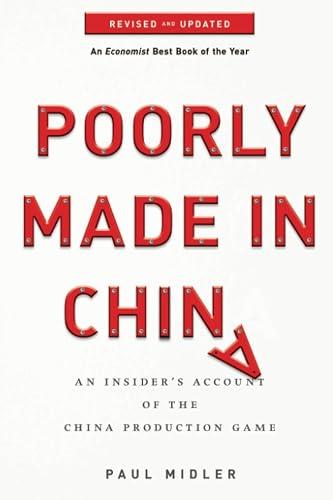
Get the complete 30-minute summary of Poorly Made in China
Get the complete summary in the appQuality fade is deliberate, not accidental. Chinese manufacturers reduce quality gradually to increase profits.
Initial quality is a trust-building strategy, not a promise of future performance.
Information asymmetry gives manufacturers enormous power. Verify everything independently.
Friendly behavior is not evidence of trustworthiness. Charm is often tactical.
Aggressive price negotiation encourages quality fade. Understand true costs before negotiating.
Manufacturer explanations are claims to be verified, not facts to be accepted.
"Poorly Made in China" is a strong fit if you want practical ideas around china, business, economics, especially themes like quality fade is deliberate, not accidental. chinese manufacturers reduce quality gradually to increase profits; initial quality is a trust-building strategy, not a promise of future performance. The MinuteRead summary distills these concepts into a focused read, whether you're deciding whether to buy the book or applying its lessons at work.
Motivated to help readers with "Quality fade was an economic decision that manufacturers in China made, Paul Midler wrote “Poorly Made in China” to package those ideas for a fast, focused read. In “Poorly Made in China”, Paul Midler focuses on "Quality fade was an economic decision that manufacturers in China made. Through “Poorly Made in China”, Paul Midler distills the core ideas on china into lessons readers can absorb in a single short sitting. Readers turn to this work when they want Paul M…
Continue Reading
Access the complete 30-minute summary and thousands more nonfiction books in the MinuteRead app.

Continue reading the complete summary in the MinuteRead app.