MinuteRead
30 min
Book summary
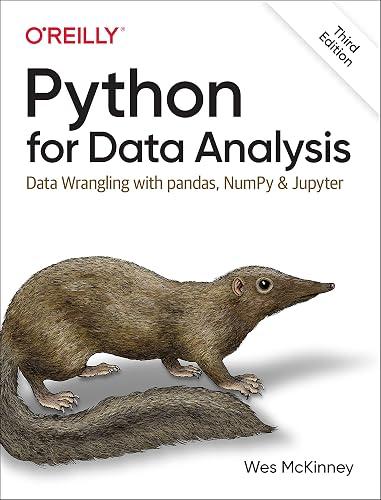
by Wes McKinney
Premium summary · Opens in the app · 30 min read
Data analysis is not a single skill. It is a craft that combines programming, statistics, and domain knowledge. For many years, people who worked with data faced a difficult choice. They could use tools that were powerful but difficult to learn, or tools that were easy to learn but limited in what they could handle. Spreadsheets work well for small datasets but break down when you have millions of rows. Statistical packages like R or SAS offer sophisticated modeling but require learning a specia
**Author:** Wes McKinney
**Estimated Reading Time:** 45 minutes
**What You'll Learn:** How to use Python and its core data analysis libraries to load, clean, transform, visualize, and model data effectively. You will learn the fundamental building blocks of Python data structures, the power of NumPy arrays, the elegance of pandas DataFrames, and how to connect your analysis to statistical modeling and machine learning libraries.
**Who This Book Is For:** Analysts, scientists, students, and developers who work with data and want to move beyond spreadsheets or basic scripting. If you have some familiarity with Python but want to learn how to use it seriously for data analysis, this book is your guide.
Data analysis is not a single skill. It is a craft that combines programming, statistics, and domain knowledge. For many years, people who worked with data faced a difficult choice. They could use tools that were powerful but difficult to learn, or tools that were easy to learn but limited in what they could handle. Spreadsheets work well for small datasets but break down when you have millions of rows. Statistical packages like R or SAS offer sophisticated modeling but require learning a specialized language that does not always play well with other systems. Python changed this landscape. Python began as a general-purpose programming language, not a tool designed specifically for data analysis. Yet over time, it became one of the most important languages for working with data. The reason is simple: Python is readable, flexible, and supported by a community that built powerful libraries specifically for data work. A programmer can write a script to scrape a website, clean the resulting text, analyze the numbers, and produce a visualization, all in one language and often in one file. Wes McKinney wrote this book because he saw a gap. He was working in finance, dealing with large datasets and complex time series problems. The existing tools were either too slow, too awkward, or too disconnected from the rest of the Python ecosystem. So he built pandas, a library designed to make data manipulation in Python feel natural and powerful. This book is both a guide to using pandas and a broader introduction to the entire Python data analysis stack. The challenge for anyone learning data analysis is not just memorizing functions. It is understanding how the pieces fit together. You need to know how to load data from a file, inspect it, clean it, reshape it, aggregate it, visualize it, and prepare it for modeling. Each step requires different tools, and those tools must work together smoothly. Python's ecosystem excels at this integration. NumPy provides fast numerical arrays. pandas provides labeled data structures and data manipulation tools. matplotlib and…
Continue reading in the MinuteRead app
Get the complete 30-minute summary of Python for Data Analysis
Get the complete summary in the appPython's data analysis ecosystem revolves around NumPy arrays and pandas DataFrames.
Vectorized operations replace slow Python loops with fast array operations.
The DataFrame is a labeled table that handles missing data, indexing, and alignment.
Data cleaning is essential and often takes more time than analysis.
The split-apply-combine pattern, implemented by `groupby()`, is fundamental to group operations.
Merging and reshaping allow you to combine and transform data from multiple sources.
"Python for Data Analysis" is a strong fit if you want practical ideas around programming, computer science, technology, especially themes like python's data analysis ecosystem revolves around numpy arrays and pandas dataframes; vectorized operations replace slow python loops with fast array operations. The MinuteRead summary distills these concepts into a focused read, whether you're deciding whether to buy the book or applying its lessons at work.
Motivated to help readers with python has long been a popular raw data manipulation language in part due to its ease of use for string and, Wes McKinney wrote “Python for Data Analysis” to package those ideas for a fast, focused read. In “Python for Data Analysis”, Wes McKinney focuses on python has long been a popular raw data manipulation language in part due to its ease of use for string and. Through “Python for Data Analysis”, Wes McKinney distills the core ideas on programming into lessons …
Continue Reading
Access the complete 30-minute summary and thousands more nonfiction books in the MinuteRead app.

Continue reading the complete summary in the MinuteRead app.