MinuteRead
30 min
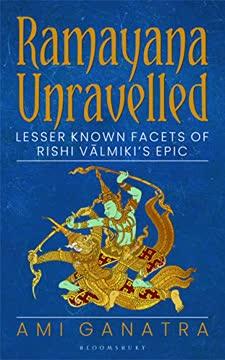
Book summary
by Ami Ganatra
Premium summary · Opens in the app · 30 min read
The Ramayana is one of humanity's oldest and most beloved stories. For thousands of years, it has shaped the moral imagination of millions across South and Southeast Asia. It has inspired art, music, dance, theater, and literature. It has provided a shared vocabulary for discussing right and wrong, duty and desire, loyalty and betrayal. Yet for all its familiarity, the Ramayana remains deeply misunderstood.
**Author:** Ami Ganatra **Estimated Reading Time:** 48 minutes
The Ramayana is often reduced to a simple story of good versus evil, a prince who rescues his kidnapped wife from a demon king. But beneath this familiar narrative lies a sophisticated exploration of leadership, duty, human psychology, and the eternal tension between individual desire and collective good. This condensed edition reveals the deeper architecture of the epic: why Rama's choices matter for anyone navigating complex decisions, how the characters embody different approaches to power and responsibility, and what the ideal of Rama Rajya can teach us about building healthy institutions and communities.
This book is for readers who want to move beyond the surface-level retellings of the Ramayana and engage with its philosophical depth. It is for leaders wrestling with difficult trade-offs, for students of Indian thought seeking clarity about dharma, and for anyone curious about why this ancient epic continues to resonate across millennia. No prior knowledge of Sanskrit or Hindu philosophy is required. What is required is a willingness to sit with uncomfortable questions and resist the temptation of easy answers.
The Ramayana is one of humanity's oldest and most beloved stories. For thousands of years, it has shaped the moral imagination of millions across South and Southeast Asia. It has inspired art, music, dance, theater, and literature. It has provided a shared vocabulary for discussing right and wrong, duty and desire, loyalty and betrayal. Yet for all its familiarity, the Ramayana remains deeply misunderstood. Most people know the basic plot. Prince Rama, heir to the throne of Ayodhya, is exiled to the forest for fourteen years due to palace intrigue. His wife Seeta is abducted by Ravana, the powerful king of Lanka. With the help of an army of vanaras led by Hanumana, Rama wages war against Ravana, rescues Seeta, and returns to Ayodhya to establish an ideal kingdom. It sounds straightforward enough. But this simple summary obscures more than it reveals. The Ramayana is not a children's story, though it is often taught to children. It is not a simplistic morality tale, though moral lessons can certainly be drawn from it. It is a profound meditation on the nature of dharma, a concept that resists easy translation. Dharma encompasses duty, righteousness, cosmic order, and the specific obligations that arise from one's position in life. It is contextual, situational, and often deeply challenging to discern. The central tension of the Ramayana emerges from the fact that dharma is not always obvious. Characters face genuine dilemmas where competing duties pull in different directions. Dasharatha must choose between honoring his word to Kaikeyi and protecting his beloved son. Bharata must decide whether to accept a throne he believes rightfully belongs…
Continue reading in the MinuteRead app
Get the complete 30-minute summary of Ramayana Unravelled
Get the complete summary in the appRama embodies dharma, demonstrating that righteousness is not abstract but can be lived in daily life.
Devotion, as shown by Hanumana, is an active force that unlocks latent abilities and overcomes fear.
Family relationships are precious but complex, requiring sacrifice and forgiveness to maintain.
The battle between dharma and adharma is ongoing, and every individual choice matters.
Fate and free will are not opposites but complements. Our freedom lies in choosing our response to circumstances.
Marriage is a partnership in dharma, where both partners contribute their unique strengths to a shared purpose.
"Ramayana Unravelled" is a strong fit if you want practical ideas around history, mythology, religion, especially themes like rama embodies dharma, demonstrating that righteousness is not abstract but can be lived in daily life; devotion, as shown by hanumana, is an active force that unlocks latent abilities and overcomes fear. The MinuteRead summary distills these concepts into a focused read, whether you're deciding whether to buy the book or applying its lessons at work.
Ami Ganatra is a management professional with over 15 years of experience in consulting and business management across various sectors and geographies. She has worked on four continents in different capacities, including Asia, Europe, South America, and North America. Currently, Ganatra is involved with organizations in the social impact space. Beyond her professional life, she maintains a blog where she writes about travel, Yoga, Shashtra, and other topics. Her diverse background and interests …
View all summaries by Ami GanatraContinue Reading
Access the complete 30-minute summary and thousands more nonfiction books in the MinuteRead app.

Continue reading the complete summary in the MinuteRead app.