MinuteRead
30 min
Book summary
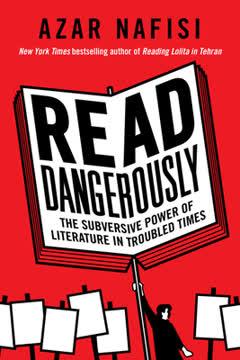
by Azar Nafisi
Premium summary · Opens in the app · 30 min read
There is a particular kind of loneliness that comes from living in a society that wants to control what you think. Azar Nafisi knows this loneliness intimately. She taught English literature at the University of Tehran during the years following the Islamic Revolution, watching as her country transformed from a relatively open society into one where certain books became contraband and certain ideas became crimes. She watched her female students be told what to wear, how to behave, what to believ
**Author:** Azar Nafisi **Estimated Reading Time:** 45 minutes
**What You'll Learn:**
- Why reading can be an act of political and personal resistance - How literature preserves humanity under oppressive regimes - What great writers teach us about confronting injustice - Why storytelling matters for collective memory and survival - How to read in a way that challenges your assumptions and expands your freedom
**Who This Book Is For:**
This book is for anyone who has ever felt that books saved their life, for readers who sense that literature matters beyond entertainment, and for those living in times of political or social uncertainty who need reminding that the imagination remains a territory no tyrant can fully conquer. It is also for those who have never experienced censorship and wonder why anyone would risk imprisonment for a novel.
There is a particular kind of loneliness that comes from living in a society that wants to control what you think. Azar Nafisi knows this loneliness intimately. She taught English literature at the University of Tehran during the years following the Islamic Revolution, watching as her country transformed from a relatively open society into one where certain books became contraband and certain ideas became crimes. She watched her female students be told what to wear, how to behave, what to believe. And she watched them discover, through the pages of forbidden novels, that their inner lives still belonged to them. This book emerges from that experience, but it is not only about Iran. It is about a question that has haunted human civilization since Plato first proposed banishing poets from his ideal republic: Why are those in power so often afraid of stories? The answer, Nafisi argues, is that literature is inherently dangerous to authoritarianism. A novel does not simply tell you what to think. It invites you into the consciousness of another person. It complicates your certainties. It gives you access to perspectives that those in power would prefer you never consider. A reader who has inhabited the mind of a character from a different culture, a different class, a different gender, or a different political reality is harder to manipulate. That reader has experienced, however briefly, the radical idea that other people are fully human. This is why totalitarian regimes ban books. This is why they imprison writers. This is why they fear the free exchange of stories more than they fear armies. But Nafisi's argument extends beyond the obvious cases of censorship and political repression. She suggests that even in democratic societies, there are forms of intellectual conformity that reading can disrupt. The danger of reading dangerously is not limited to those who risk arrest for possessing forbidden texts. It…
Continue reading in the MinuteRead app
Get the complete 30-minute summary of Read Dangerously
Get the complete summary in the appReading is an active, creative act that can transform consciousness and resist oppression.
Totalitarian regimes fear literature because it nurtures individual judgment and challenges official truth.
The danger of reading lies in empathy, not in explicit political content.
Storytelling preserves humanity by maintaining memory and resisting erasure.
Understanding the enemy is not the same as approving of the enemy.
Great literature transcends cultural boundaries and belongs to everyone.
"Read Dangerously" is a strong fit if you want practical ideas around books about books, essays, politics, especially themes like reading is an active, creative act that can transform consciousness and resist oppression; totalitarian regimes fear literature because it nurtures individual judgment and challenges official truth. The MinuteRead summary distills these concepts into a focused read, whether you're deciding whether to buy the book or applying its lessons at work.
Azar Nafisi is an Iranian-American author and professor known for her bestselling memoir "Reading Lolita in Tehran." Born in 1955, she taught English literature at the University of Tehran before emigrating to the United States due to restrictions imposed by the Islamic regime. Nafisi's work often explores the intersection of literature, politics, and personal freedom. Her writing draws on her experiences living under authoritarian rule in Iran and her passion for Western literature. Nafisi's bo…
View all summaries by Azar NafisiContinue Reading
Access the complete 30-minute summary and thousands more nonfiction books in the MinuteRead app.

Continue reading the complete summary in the MinuteRead app.