MinuteRead
30 min
Book summary
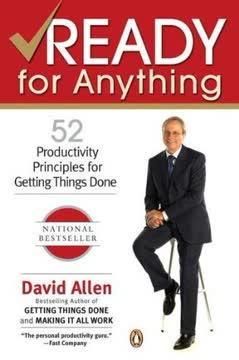
by David Allen
Premium summary · Opens in the app · 30 min read
There is a quiet epidemic running through modern life. It does not announce itself with dramatic symptoms. It shows up as a persistent low-grade anxiety, a sense that something important is slipping through the cracks, a feeling of being perpetually behind. You sit down to focus on one task, and your mind wanders to three others. You finish a long day of work and feel like you accomplished nothing. You make lists, but the lists grow faster than you can check items off.
**Author:** David Allen **Estimated Reading Time:** 42 minutes
**What You'll Learn:**
- Why your mind is a terrible office and what to do about it - How to capture and organize every commitment in your life - The power of defining next actions instead of vague projects - How regular reviews create lasting clarity and control - Why trusting your system frees your mind for creative thinking - How to embrace flexibility without losing focus - The art of relaxed focus and working with your natural rhythms - How to align daily actions with deeper purpose
**Who This Book Is For:**
This book is for anyone who feels overwhelmed by the sheer volume of commitments, ideas, and responsibilities competing for their attention. It is for professionals drowning in email, entrepreneurs juggling multiple projects, parents balancing work and home life, and anyone who has ever lain awake at night thinking about everything they need to do. If you have tried productivity systems that failed, if you feel busy but not productive, if you sense there must be a better way to work and live, this book offers a path forward.
There is a quiet epidemic running through modern life. It does not announce itself with dramatic symptoms. It shows up as a persistent low-grade anxiety, a sense that something important is slipping through the cracks, a feeling of being perpetually behind. You sit down to focus on one task, and your mind wanders to three others. You finish a long day of work and feel like you accomplished nothing. You make lists, but the lists grow faster than you can check items off. David Allen has spent decades studying this phenomenon. His conclusion is both simple and profound: the problem is not that you have too much to do. The problem is that you are trying to manage it all in your head. The human mind is an extraordinary instrument. It can solve complex problems, generate creative breakthroughs, and make nuanced judgments. But it is a terrible office. It has no filing system. It has no calendar. It has no reliable way to store information and retrieve it at the appropriate time. When you try to use your mind as a storage device, you overload it. The result is stress, distraction, and a persistent sense of overwhelm. This book is not about doing more. It is about being ready for anything. It is about creating a system outside your head that you trust completely, so your mind can do what it does best: think, create, and respond to the present moment. The ideas in this book emerged from Allen's work with thousands of individuals and organizations. He noticed that the most…
Continue reading in the MinuteRead app
Get the complete 30-minute summary of Ready for Anything
Get the complete summary in the app**Your mind is a terrible office.** Get everything out of your head and into a trusted external system.
**You can only feel good about what you are not doing when you know what you are not doing.** Capture everything.
**You cannot do a project; you can only do action steps.** Define the next physical action for every project.
**The weekly review is non-negotiable.** It is the glue that holds your system together.
**Your system must be better than your mind for your mind to let go.** Build trust through consistency.
**If a task takes less than two minutes, do it immediately.** Do not defer small tasks.
"Ready for Anything" is a strong fit if you want practical ideas around productivity, business, self help, especially themes like **your mind is a terrible office.** get everything out of your head and into a trusted external system; **you can only feel good about what you are not doing when you know what you are not doing.** capture everything. The MinuteRead summary distills these concepts into a focused read, whether you're deciding whether to buy the book or applying its lessons at work.
David Allen is an American author and productivity consultant best known for creating the time management method Getting Things Done (GTD). His work focuses on helping individuals and organizations increase productivity and reduce stress through effective organization and workflow management. Allen's GTD methodology has gained widespread popularity since its introduction, becoming a cornerstone of modern productivity techniques. He has written several books expanding on his ideas, including "Rea…
View all summaries by David AllenContinue Reading
Access the complete 30-minute summary and thousands more nonfiction books in the MinuteRead app.

Continue reading the complete summary in the MinuteRead app.