MinuteRead
30 min
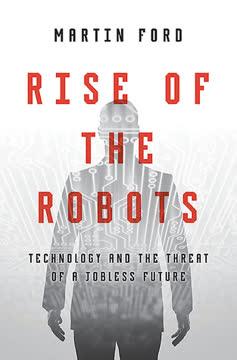
Book summary
by Martin Ford
Premium summary · Opens in the app · 30 min read
In the early nineteenth century, a group of English textile workers known as the Luddites destroyed the mechanical looms that threatened their livelihoods. Their name has since become shorthand for a backward-looking resistance to progress. The conventional wisdom holds that the Luddites were wrong to fear technology. The machines they smashed did eliminate their jobs, but new industries eventually emerged, creating work that no one could have imagined at the time. Living standards rose. The eco
**Author:** Martin Ford
**Estimated Reading Time:** 45 minutes
**What You'll Learn:** How automation and artificial intelligence are fundamentally reshaping the economy, why this wave of technological change is different from previous ones, which jobs are most vulnerable, and what individuals and societies can do to prepare for a future where work itself may become scarce.
**Who This Book Is For:** Anyone who works for a living, leads a business, makes policy, or simply wants to understand the economic forces that will shape the coming decades. This book is essential reading for those who sense that something fundamental has shifted in the relationship between technology, work, and prosperity.
In the early nineteenth century, a group of English textile workers known as the Luddites destroyed the mechanical looms that threatened their livelihoods. Their name has since become shorthand for a backward-looking resistance to progress. The conventional wisdom holds that the Luddites were wrong to fear technology. The machines they smashed did eliminate their jobs, but new industries eventually emerged, creating work that no one could have imagined at the time. Living standards rose. The economy adapted. This pattern repeated itself through successive waves of technological change. The steam engine displaced agricultural labor, but factories absorbed those workers. Electricity transformed manufacturing, yet productivity gains translated into higher wages and shorter workweeks. Computers eliminated typing pools and file clerks, but the information economy created entirely new categories of employment. Each time, the story goes, technology destroyed some jobs while creating others, and on balance, society benefited. Martin Ford argues that this time is different. The central claim of Rise of the Robots is that we are entering an era in which the relationship between technology and employment has fundamentally changed. The machines and algorithms now being developed are not simply augmenting human labor or shifting workers from one sector to another. They are increasingly capable of performing tasks that once required human beings, and they are doing so across nearly every industry simultaneously. Manufacturing, retail, transportation, agriculture, law, medicine, finance, journalism, and even management are all being transformed by technologies that can do more work with fewer people. The problem is not that technology is advancing too quickly. The problem is that our economic system is built on assumptions that no longer hold. For most of the twentieth century, productivity growth and wage growth moved together. When workers produced more, they earned more. This created a virtuous cycle: rising wages fueled consumer spending, which created demand for goods and services, which required more workers, which strengthened the bargaining power of labor. The economy expanded, and the gains were broadly shared. That cycle has broken. Since the early 1970s, productivity has continued to rise while…
Continue reading in the MinuteRead app
Get the complete 30-minute summary of Rise of the Robots
Get the complete summary in the appAutomation is spreading through every sector of the economy, not just manufacturing. There is no safe sector where displ
The relationship between productivity and wages has broken. Productivity has continued to rise while median wages have s
White-collar jobs are increasingly vulnerable to automation. Machine learning and big data are enabling machines to perf
Education is reaching its limits as a solution to technological disruption. There are not enough high-skill jobs to abso
A guaranteed basic income may be necessary to address the job displacement caused by automation.
Healthcare costs are rising much faster than overall economic growth, threatening to offset the economic gains from auto
"Rise of the Robots" is a strong fit if you want practical ideas around technology, economics, science, especially themes like automation is spreading through every sector of the economy, not just manufacturing. there is no safe sector where displ; the relationship between productivity and wages has broken. productivity has continued to rise while median wages have s. The MinuteRead summary distills these concepts into a focused read, whether you're deciding whether to buy the book or applying its lessons at work.
Martin Ford is a Silicon Valley entrepreneur and author specializing in the economic impacts of automation and artificial intelligence. He holds degrees in computer engineering and business management. Ford's books, "The Lights in the Tunnel" (2009) and "Rise of the Robots" (2015), argue that technological advancements will lead to widespread job displacement across various sectors. He was among the first to publish on this topic in the 21st century, and his work has been supported by subsequent…
View all summaries by Martin FordContinue Reading
Access the complete 30-minute summary and thousands more nonfiction books in the MinuteRead app.

Continue reading the complete summary in the MinuteRead app.