MinuteRead
30 min
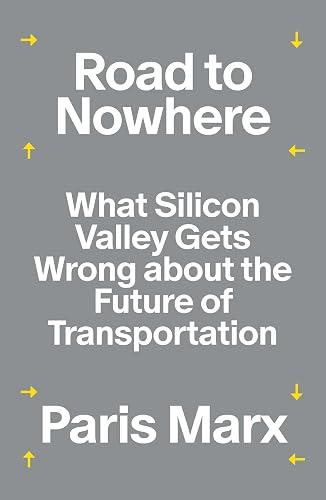
Book summary
by Paris Marx
Premium summary · Opens in the app · 30 min read
Every generation believes it is living through a transportation revolution. In the early twentieth century, the automobile promised freedom from the constraints of rail schedules and horse-drawn carriages. In the twenty-first century, Silicon Valley promises freedom from the automobile itself. Electric vehicles will save the planet. Self-driving cars will eliminate traffic deaths. Ride-hailing apps will make car ownership obsolete. Flying cars and underground tunnels will liberate us from conges
**Author:** Paris Marx
**Estimated Reading Time:** 45 minutes
**What You'll Learn:**
Why the automobile came to dominate our cities, how Silicon Valley's proposed transport solutions repeat the same mistakes, and what genuinely equitable and sustainable mobility could look like.
**Who This Book Is For:**
Anyone who has wondered why our cities prioritize cars over people, questioned whether electric vehicles and self-driving cars will truly solve our problems, or felt frustrated by the tech industry's promises of a future that never seems to arrive.
Every generation believes it is living through a transportation revolution. In the early twentieth century, the automobile promised freedom from the constraints of rail schedules and horse-drawn carriages. In the twenty-first century, Silicon Valley promises freedom from the automobile itself. Electric vehicles will save the planet. Self-driving cars will eliminate traffic deaths. Ride-hailing apps will make car ownership obsolete. Flying cars and underground tunnels will liberate us from congestion entirely. These promises sound appealing. They arrive wrapped in sleek design and confident rhetoric. They come from companies with enormous valuations and founders who appear on magazine covers. They suggest that the problems of our cities are merely technical challenges awaiting the right engineering solution. But Paris Marx argues something different. The problems of our cities are not primarily technical. They are political, economic, and social. They stem from decisions about who controls urban space, who benefits from transportation systems, and whose needs are prioritized when we plan our communities. Technology can serve many masters. The question is which master it will serve. The automobile did not become dominant because it was inherently superior to alternatives. It became dominant because powerful interests worked for decades to reshape cities, laws, and public expectations around it. Streetcar companies were bought and dismantled. Highways were rammed through neighborhoods. Public transit was starved of funding. Pedestrians were redefined as obstacles to traffic flow. The result was not an accident of market forces. It was a deliberate project. Now Silicon Valley proposes to solve the problems created by that project using the same underlying logic. The tech industry assumes that private companies, operating in pursuit of profit, will naturally produce the best outcomes for society. It assumes that innovation means disruption, and disruption means progress. It assumes that the preferences of wealthy engineers in San Francisco reflect the needs of people everywhere. These assumptions are wrong. They have produced ride-hailing services that increase congestion and exploit workers. They have produced electric vehicles that perpetuate car-dependent sprawl while creating new environmental harms. They have produced self-driving car hype that distracts from proven solutions. They have produced fantastical proposals for tunnels and flying taxis that serve elite escape fantasies rather than public needs. This book…
Continue reading in the MinuteRead app
Get the complete 30-minute summary of Road to Nowhere
Get the complete summary in the appThe automobile's dominance was manufactured by powerful interests, not chosen by consumers.
Silicon Valley's solutions to transportation problems repeat the same mistakes that created those problems.
Electric vehicles are a marginal improvement, not a solution to car dependence.
Ride-hailing services increase congestion and exploit workers.
Self-driving cars are overhyped and may never achieve full autonomy.
Tunnels and flying taxis are elite escape fantasies, not real solutions.
"Road to Nowhere" is a strong fit if you want practical ideas around technology, politics, city, especially themes like the automobile's dominance was manufactured by powerful interests, not chosen by consumers; silicon valley's solutions to transportation problems repeat the same mistakes that created those problems. The MinuteRead summary distills these concepts into a focused read, whether you're deciding whether to buy the book or applying its lessons at work.
Motivated to help readers with "There is no question that the automobile was the dominant technology that 'disrupted' our society.", Paris Marx wrote “Road to Nowhere” to package those ideas for a fast, focused read. In “Road to Nowhere”, Paris Marx focuses on "There is no question that the automobile was the dominant technology that 'disrupted' our society.". Through “Road to Nowhere”, Paris Marx distills the core ideas on technology into lessons readers can absorb in a single short sitting. Re…
Continue Reading
Access the complete 30-minute summary and thousands more nonfiction books in the MinuteRead app.

Continue reading the complete summary in the MinuteRead app.