MinuteRead
30 min
Book summary
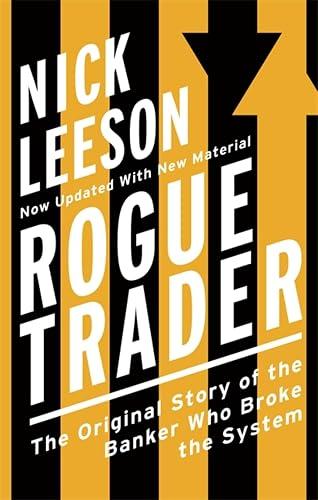
by Nick Leeson
Premium summary · Opens in the app · 30 min read
In February 1995, Barings Bank, the oldest merchant bank in Britain, ceased to exist. It had financed the Napoleonic Wars, helped the British government purchase Louisiana from France, and counted Queen Elizabeth II among its clients. It survived the Great Depression, two world wars, and centuries of financial upheaval. It did not survive Nick Leeson.
**Author:** Nick Leeson **Estimated Reading Time:** 45 minutes
**What You'll Learn:** How a single trader brought down a 233-year-old bank, the psychological traps that enable financial fraud, why institutional oversight fails, and what the Barings collapse reveals about ambition, denial, and the human capacity for self-deception.
**Who This Book Is For:** Anyone working in finance, anyone responsible for risk management, anyone who has ever hidden a small mistake until it became a catastrophe, and anyone fascinated by the psychology of fraud and the anatomy of institutional failure.
In February 1995, Barings Bank, the oldest merchant bank in Britain, ceased to exist. It had financed the Napoleonic Wars, helped the British government purchase Louisiana from France, and counted Queen Elizabeth II among its clients. It survived the Great Depression, two world wars, and centuries of financial upheaval. It did not survive Nick Leeson. Leeson was twenty-eight years old when he destroyed the bank. He was not a criminal mastermind. He was not a sophisticated fraudster. He was a working-class kid from Watford who had failed his A-levels, started as a clerk, and worked his way up through sheer determination and a talent for navigating the chaotic back offices of international finance. He wanted to succeed. He wanted to be respected. He wanted to make money for his employers and for himself. The losses that brought down Barings totaled approximately £827 million, more than twice the bank's available trading capital. The mechanism was simple: Leeson hid losses in a secret account and doubled down on risky trades, hoping to recover. The psychology was more complex. For two years, Leeson lived a double life. To his colleagues in Singapore, he was the star trader, the golden boy generating spectacular profits. To himself, he was a man drowning in a sea of hidden losses, unable to confess, unable to stop, and unable to see a way out. This book is Leeson's account of how it happened. It is not a technical manual on derivatives trading. It is a psychological memoir, a confession, and a warning. Leeson writes with remarkable candor about his own failings: his ambition, his arrogance, his capacity for self-deception, and his gradual moral erosion. He does not excuse himself. He does not blame the system entirely, though he is clear-eyed about the institutional failures that enabled him. The story matters because it is not unique. The same patterns that destroyed Barings have appeared in countless financial scandals since: the hidden losses, the doubling down, the forged documents, the willful blindness of supervisors, the culture that rewards profits without asking questions. The details change, but the psychology remains remarkably consistent. Leeson's story is also deeply human. It is about a young man…
Continue reading in the MinuteRead app
Get the complete 30-minute summary of Rogue Trader
Get the complete summary in the appSmall deceptions compound over time and become unmanageable. Admit mistakes early.
The separation of duties is a fundamental control that should never be compromised.
Overconfidence is dangerous. Success often results from favorable circumstances, not just ability.
Isolation distorts judgment. Stay connected to people who can provide honest feedback.
Doubling down on losses usually makes the situation worse. Cut losses early.
Warning signs should be investigated, not rationalized.
"Rogue Trader" is a strong fit if you want practical ideas around finance, memoir, biography, especially themes like small deceptions compound over time and become unmanageable. admit mistakes early; the separation of duties is a fundamental control that should never be compromised. The MinuteRead summary distills these concepts into a focused read, whether you're deciding whether to buy the book or applying its lessons at work.
Motivated to help readers with success had always been my primary motivating force but my biggest failure far outweighs any successes that I, Nick Leeson wrote “Rogue Trader” to package those ideas for a fast, focused read. In “Rogue Trader”, Nick Leeson focuses on success had always been my primary motivating force but my biggest failure far outweighs any successes that I. Through “Rogue Trader”, Nick Leeson distills the core ideas on finance into lessons readers can absorb in a single short si…
Continue Reading
Access the complete 30-minute summary and thousands more nonfiction books in the MinuteRead app.

Continue reading the complete summary in the MinuteRead app.