MinuteRead
30 min
Book summary
by Anil Lamba
Premium summary · Opens in the app · 30 min read
Every day, in organizations around the world, well-meaning people make decisions that quietly destroy value. A sales manager offers a discount to close a deal. A production supervisor orders extra inventory to be safe. A purchasing manager extends payment terms to build goodwill with a supplier. A marketing director launches a campaign without calculating what it must achieve to justify its cost. Each of these people believes they are doing their job well. Each of them is wrong.
**Author:** Anil Lamba
**Estimated Reading Time:** 45 minutes
**What You'll Learn:**
* Why financial management is everyone's job, not just the finance department's * The critical difference between profit and cash, and why confusing them can destroy a business * The two golden rules that prevent most financial disasters * How leverage amplifies both success and failure * How to read a balance sheet and understand what it reveals about a company's health * How to make pricing, production, and investment decisions that strengthen the bottom line
**Who This Book Is For:**
This book is for every person who works in an organization, regardless of their title or department. It is for the sales manager who sets prices, the production supervisor who manages inventory, the HR professional who designs compensation packages, and the entrepreneur who wants to understand the financial consequences of every decision. It is for anyone who has ever felt that finance is too complicated, too intimidating, or simply not their responsibility. Anil Lamba wrote this book to prove that financial literacy is not a specialized skill but a fundamental requirement for professional success.
Every day, in organizations around the world, well-meaning people make decisions that quietly destroy value. A sales manager offers a discount to close a deal. A production supervisor orders extra inventory to be safe. A purchasing manager extends payment terms to build goodwill with a supplier. A marketing director launches a campaign without calculating what it must achieve to justify its cost. Each of these people believes they are doing their job well. Each of them is wrong. The problem is not incompetence or bad intentions. The problem is a widespread and dangerous misconception: the belief that financial management belongs to the finance department. Most people in organizations operate under the assumption that as long as they focus on their functional responsibilities, someone else will worry about the money. They believe they are non-finance people, and therefore exempt from financial thinking. Anil Lamba calls this the myth of the non-finance person, and he considers it one of the most costly illusions in modern business. The truth is that every action taken by every person in an organization has a financial consequence. The salesperson who offers a discount is making a pricing decision that directly affects profitability. The production manager who overstocks inventory is tying up cash that could be used elsewhere. The HR professional who designs a bonus structure is influencing the company's cost base. The receptionist who orders office supplies is spending shareholder money. There is no such thing as a non-finance decision, only people who fail to recognize the financial dimension of what they do. This book exists because financial literacy is…
Continue reading in the MinuteRead app
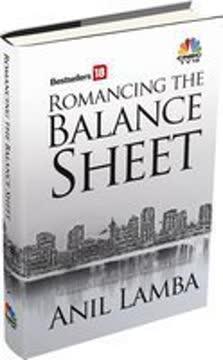
Get the complete 30-minute summary of Romancing The Balance Sheet
Get the complete summary in the appProfit and cash are different. Manage both.
Never invest in opportunities that return less than your cost of capital.
Match the duration of your assets and liabilities.
Leverage amplifies both gains and losses. Understand your risk.
Fixed costs are irrelevant to short-term decisions. Focus on contribution.
The break-even point is where contribution equals fixed costs.
"Romancing The Balance Sheet" is a strong fit if you want practical ideas around finance, business, economics, especially themes like profit and cash are different. manage both; never invest in opportunities that return less than your cost of capital. The MinuteRead summary distills these concepts into a focused read, whether you're deciding whether to buy the book or applying its lessons at work.
Anil Lamba is a Chartered Accountant and financial literacy activist known for his ability to simplify complex financial concepts. He has authored several books on finance and accounting, including "Romancing The Balance Sheet" and "Flirting with Stocks." Lamba is recognized for his expertise in making financial topics accessible to non-finance professionals and entrepreneurs. He conducts workshops and seminars on financial management, aiming to improve financial literacy among business leaders …
View all summaries by Anil LambaContinue Reading
Access the complete 30-minute summary and thousands more nonfiction books in the MinuteRead app.

Continue reading the complete summary in the MinuteRead app.