MinuteRead
30 min
Book summary
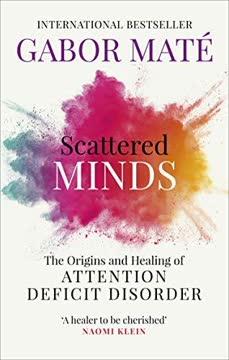
by Gabor Maté
Premium summary · Opens in the app · 30 min read
The standard story about attention deficit disorder goes something like this. A child cannot sit still in class. He blurts out answers before the teacher finishes asking questions. He loses his homework, forgets his lunch, and drifts off during conversations. Eventually, a doctor or psychologist evaluates him and delivers a diagnosis: attention deficit disorder. The explanation follows quickly. It is a genetic condition, a chemical imbalance, a brain disorder that the child was born with. The tr
**Author:** Gabor Maté **Estimated Reading Time:** 45 minutes
**What You'll Learn:** Why attention deficit disorder is not simply a genetic brain disease, how early childhood experiences shape attention and self-regulation, and what genuine healing looks like for both children and adults living with ADD.
**Who This Book Is For:** Anyone who has been diagnosed with ADD, parents raising children with attention difficulties, educators seeking a deeper understanding of their students, and readers interested in the profound connection between emotional development and brain function.
The standard story about attention deficit disorder goes something like this. A child cannot sit still in class. He blurts out answers before the teacher finishes asking questions. He loses his homework, forgets his lunch, and drifts off during conversations. Eventually, a doctor or psychologist evaluates him and delivers a diagnosis: attention deficit disorder. The explanation follows quickly. It is a genetic condition, a chemical imbalance, a brain disorder that the child was born with. The treatment is medication, and the goal is symptom management. Gabor Maté tells a different story. He does not deny that the behaviors associated with ADD are real, nor does he dismiss the suffering they cause. But he challenges the foundational assumption that ADD is a fixed, inherited disease that simply appears in certain unlucky individuals. Instead, he argues that ADD is a developmental condition shaped by the interaction between a child's innate sensitivity and the environment in which that child grows up. This distinction matters enormously. If ADD is purely genetic, then the best we can do is medicate symptoms and teach coping strategies. But if ADD is developmental, then healing becomes possible. The brain remains plastic throughout life, capable of forming new circuits and strengthening underdeveloped regions. The same is true for the emotional capacities that underlie attention, impulse control, and self-regulation. Maté writes from a unique position. He is a physician who has treated thousands of patients with ADD and related conditions. He is also someone who lives with ADD himself. His three children were diagnosed with the condition. This dual perspective, as both clinician and person with lived experience, gives his analysis unusual depth and honesty. He does not write from a distance, observing patients as specimens. He writes from inside the experience, understanding the frustration, the shame, the creative bursts, and the painful failures that characterize life with ADD. The book's central claim is that ADD originates in early childhood, particularly in the first few years of life, when the brain is developing at an extraordinary rate. During this period, the infant's brain is shaped by the emotional environment provided by caregivers. When that environment is consistently attuned, responsive, and calm, the child develops the neural circuits…
Continue reading in the MinuteRead app
Get the complete 30-minute summary of Scattered
Get the complete summary in the appADD is a developmental condition, not a fixed genetic disease.
Early childhood experiences, particularly attachment relationships, shape the brain circuits for attention and self-regu
Sensitivity is a biological trait that becomes ADD in a stressful environment and a gift in a supportive one.
We live in a culture that undermines attention and emotional regulation, contributing to the prevalence of ADD.
Medication can help but does not cure. It provides external regulation while deeper work develops internal regulation.
Self-parenting, providing structure and nurturing for yourself, is essential for healing in adulthood.
"Scattered" is a strong fit if you want practical ideas around health & fitness, psychology, adhd, especially themes like add is a developmental condition, not a fixed genetic disease; early childhood experiences, particularly attachment relationships, shape the brain circuits for attention and self-regu. The MinuteRead summary distills these concepts into a focused read, whether you're deciding whether to buy the book or applying its lessons at work.
Dr. Gabor Maté is a Canadian physician specializing in addiction and ADHD. Born in Hungary in 1944, he survived the Nazi genocide before emigrating to Canada in 1957. After a career in family practice and palliative care, he now works with patients suffering from mental illness, drug addiction, and HIV in Vancouver's Downtown Eastside. Maté has written extensively on addiction, including the book "In the Realm of Hungry Ghosts." He is known for his controversial views on ADHD's origins and treat…
View all summaries by Gabor MatéContinue Reading
Access the complete 30-minute summary and thousands more nonfiction books in the MinuteRead app.

Continue reading the complete summary in the MinuteRead app.