MinuteRead
30 min
Book summary
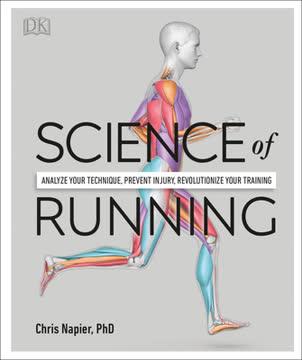
by Chris Napier
Premium summary · Opens in the app · 30 min read
Running looks simple. Put one foot in front of the other. Repeat. Humans have been doing it for thousands of years, and most of us learned to run before we learned to read. Yet beneath this apparent simplicity lies a remarkable complexity. Every stride involves a coordinated effort between muscles, tendons, bones, nerves, and energy systems. Every run places stress on the body that can either make you stronger or break you down. The difference between these outcomes is not luck. It is understand
**Author:** Chris Napier, PhD with Jerry Ziak
**Estimated Reading Time:** 45 minutes
**What You'll Learn:**
- How your body actually works when you run, from muscle mechanics to energy systems - Why most running injuries happen and how to prevent them before they start - The essential strength exercises that make you a more durable, powerful runner - How to structure training that consistently produces results without burnout - What to eat and drink to fuel your runs and races effectively - How to refine your running form for greater efficiency - The racing strategies that help you execute on the day that matters
**Who This Book Is For:**
This book is for the runner who wants to understand what is happening beneath the surface. It is for the beginner who wants to start correctly, the intermediate runner who keeps getting injured, and the experienced athlete who wants to optimize performance. It is for anyone who has ever laced up a pair of shoes and wondered if there is a better way to do this.
Running looks simple. Put one foot in front of the other. Repeat. Humans have been doing it for thousands of years, and most of us learned to run before we learned to read. Yet beneath this apparent simplicity lies a remarkable complexity. Every stride involves a coordinated effort between muscles, tendons, bones, nerves, and energy systems. Every run places stress on the body that can either make you stronger or break you down. The difference between these outcomes is not luck. It is understanding. Most runners do not lack motivation. They lack a framework for making good decisions. They run too much too soon and wonder why their knees hurt. They eat poorly and wonder why they feel flat. They train without structure and wonder why their times plateau. They run the same pace every day and wonder why they never improve. The problem is rarely effort. The problem is almost always knowledge. Chris Napier wrote *Science of Running* to close that gap. As a physiotherapist, researcher, and competitive runner, he has spent his career studying how running affects the body and how runners can train smarter. His co-author Jerry Ziak brings the perspective of an elite coach and former competitive marathoner. Together, they bridge the divide between laboratory science and the practical reality of daily training. What makes this book different is its foundation in evidence. Running is full of myths, fads, and contradictory advice. One guru says to land on your forefoot. Another says heel striking is fine. One coach prescribes high mileage. Another swears by intensity. One diet promises fat adaptation. Another insists on carbohydrate loading. Faced with this noise, many runners…
Continue reading in the MinuteRead app
Get the complete 30-minute summary of Science of Running
Get the complete summary in the appIncrease mileage gradually, no more than 10 percent per week.
Most injuries come from training errors, especially doing too much too soon.
Strength train two to three times per week, focusing on squats, lunges, planks, calf raises, and glute bridges.
Build your training on a foundation of easy runs; hard workouts are the icing, not the cake.
Eat enough carbohydrates to fuel your training and enough protein to support recovery.
Aim for a cadence of 170 to 180 steps per minute.
"Science of Running" is a strong fit if you want practical ideas around health, sports, science, especially themes like increase mileage gradually, no more than 10 percent per week; most injuries come from training errors, especially doing too much too soon. The MinuteRead summary distills these concepts into a focused read, whether you're deciding whether to buy the book or applying its lessons at work.
Chris Napier, PhD is a physiotherapist, researcher, and runner based in Vancouver, Canada. He co-owns Restore Physiotherapy and serves as a Clinical Assistant Professor at the University of British Columbia. Napier specializes in running injury prevention and has worked with national athletic teams. As a runner, he competed at the university level and has since transitioned to marathons. His co-author, Jerry Ziak, is an experienced runner and coach who owns a running specialty store. Ziak's comp…
View all summaries by Chris NapierContinue Reading
Access the complete 30-minute summary and thousands more nonfiction books in the MinuteRead app.

Continue reading the complete summary in the MinuteRead app.