MinuteRead
30 min
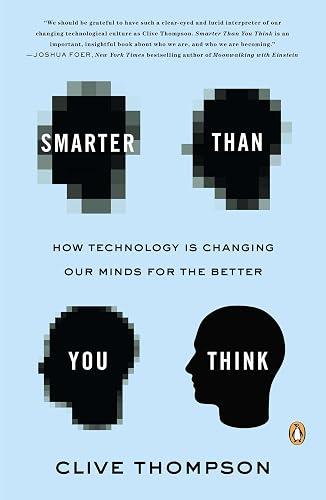
Book summary
by Clive Thompson
Premium summary · Opens in the app · 30 min read
Every few decades, a new technology arrives that seems poised to destroy human intelligence. When writing was invented, Socrates worried it would weaken memory. When the printing press spread books across Europe, scholars fretted that people would stop thinking deeply and simply consume whatever was printed. When television entered homes, critics warned it would rot brains. Each time, the fear was the same: the technology would replace thinking rather than enhance it.
**Author:** Clive Thompson **Estimated Reading Time:** 45 minutes
**What You'll Learn:**
How digital tools are expanding human intelligence rather than diminishing it. Why the most powerful thinking happens when humans and computers work together. What new literacies are emerging in the digital age. How ambient awareness is transforming relationships and communities. Why our relationship with memory is fundamentally changing. How to navigate the risks and rewards of our technological future.
**Who This Book Is For:**
Anyone who has worried that smartphones, social media, and search engines are making us shallower thinkers. Anyone curious about how technology actually affects cognition, creativity, memory, and social connection. Anyone who wants to understand how to use digital tools more thoughtfully and effectively.
Every few decades, a new technology arrives that seems poised to destroy human intelligence. When writing was invented, Socrates worried it would weaken memory. When the printing press spread books across Europe, scholars fretted that people would stop thinking deeply and simply consume whatever was printed. When television entered homes, critics warned it would rot brains. Each time, the fear was the same: the technology would replace thinking rather than enhance it. Today, the same anxieties swirl around computers, smartphones, and the internet. We worry that Google is making us stupid. We fear that social media is destroying attention spans. We suspect that constant connectivity is eroding genuine human connection. These concerns are understandable. They are also, for the most part, wrong. Clive Thompson spent years investigating how digital tools actually affect human cognition. What he found surprised him. The evidence suggests that technology, used well, makes us smarter rather than dumber. It extends our memory, amplifies our creativity, connects us to collaborators we would never have met, and enables forms of thinking that were previously impossible. The problem is not the tools themselves. The problem is that we have not yet learned how to use them well. We are living through a profound transformation in how humans think, learn, remember, and create. Like every major technological shift before it, this one requires new skills, new habits, and new ways of understanding what it means to be intelligent. Thompson's central insight is that the most powerful thinking does not happen inside a single human brain or inside a computer. It happens when the two work together. He calls this the centaur model, named after the mythical half-human, half-horse creature. A centaur thinker combines human intuition, strategy, and creativity with a computer's speed, precision, and vast data-processing power. The result is a form of intelligence that neither could achieve alone. This book is not a naive celebration of technology. Thompson is clear-eyed about the risks: privacy erosion, digital addiction, misinformation, and the widening…
Continue reading in the MinuteRead app
Get the complete 30-minute summary of Smarter Than You Think
Get the complete summary in the appThe most powerful thinking happens when humans and computers work together, not when either works alone.
Intelligence is not confined to the individual brain. It emerges from the interaction between humans, tools, and other h
Digital tools are creating new literacies that are becoming as fundamental as reading and writing.
Public thinking exposes ideas to scrutiny and improvement. Sharing your thinking makes it better.
The internet has become a kind of external memory. Knowing where to find information is as important as knowing the info
Ambient awareness strengthens social bonds by creating a sense of connection at a distance.
"Smarter Than You Think" is a strong fit if you want practical ideas around technology, science, psychology, especially themes like the most powerful thinking happens when humans and computers work together, not when either works alone; intelligence is not confined to the individual brain. it emerges from the interaction between humans, tools, and other h. The MinuteRead summary distills these concepts into a focused read, whether you're deciding whether to buy the book or applying its lessons at work.
Motivated to help readers with "Human strategic guidance combined with the tactical acuity of a computer was overwhelming." Centaur chess, Clive Thompson wrote “Smarter Than You Think” to package those ideas for a fast, focused read. In “Smarter Than You Think”, Clive Thompson focuses on "Human strategic guidance combined with the tactical acuity of a computer was overwhelming." Centaur chess. Through “Smarter Than You Think”, Clive Thompson distills the core ideas on technology into lessons rea…
Continue Reading
Access the complete 30-minute summary and thousands more nonfiction books in the MinuteRead app.

Continue reading the complete summary in the MinuteRead app.